Published on
January 9, 2026
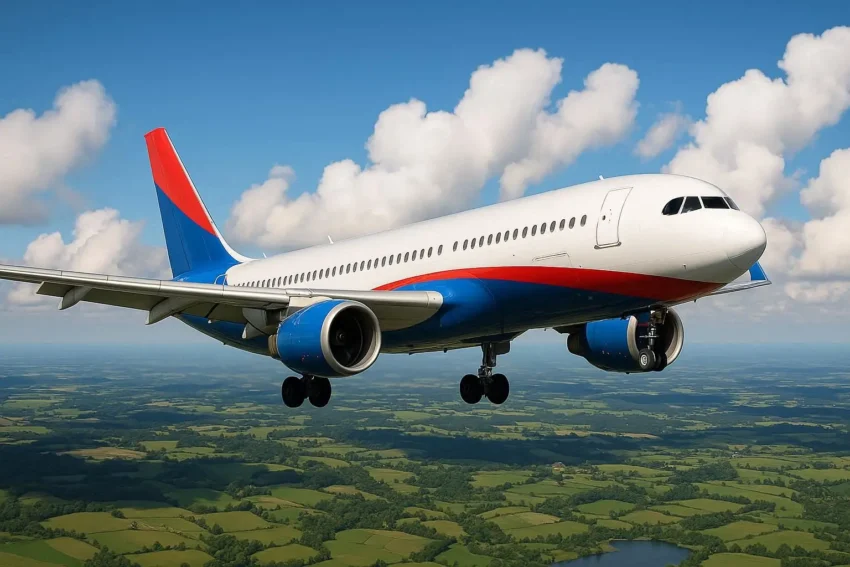
Within the evolving landscape of United Kingdom aviation and European travel, a notable shift has been observed in the premium short-haul experience offered by British Airways. A series of subtle yet far-reaching adjustments has been introduced across the airline’s Club Europe cabin, affecting how short-haul Business Class catering is delivered on flights connecting the UK with key destinations across Europe. These changes have been implemented through a recalibration of catering bands, a system that determines meal quality, service flow, and onboard interaction based on route length. While the modifications have been framed as operational refinements, they have been widely interpreted as part of a broader cost-management strategy within the UK flag carrier’s regional network. The impact has been felt most acutely by frequent travelers and business passengers, for whom Club Europe has long represented a differentiated premium product within European travel and tourism. As routes spanning France, Spain, Poland, Hungary, and other European countries are affected, the adjustments have triggered renewed debate about value perception in premium cabins. Against a backdrop of increasing demand for efficient regional connectivity from London Heathrow, these catering changes have become a focal point in discussions surrounding service standards, brand positioning, and the future of short-haul premium travel within the United Kingdom and Europe.
Overview of the Catering Reclassification Strategy
British Airways has revised its established catering band framework, a tiered system used to define onboard service levels in the Club Europe cabin. This structure has historically aligned meal complexity and service depth with flight duration. Through recent changes, several European destinations have been reassigned to lower catering bands, resulting in a reduction in both meal content and service elements. The reclassification has been applied quietly, without formal announcements, leading to heightened attention once the effects were noticed by passengers traveling between the United Kingdom and continental Europe.
Understanding the Catering Band System
The catering band system used by British Airways divides short-haul routes into multiple categories. Band 0 has been reserved for the shortest domestic flights within the United Kingdom, where only minimal service is provided. Bands 1 and 2 have traditionally offered light meals or limited hot options. Bands 3, 4, and 5 have been associated with longer European sectors, where a structured multi-course meal has been standard. Until recently, Bands 3 through 5 have delivered almost identical catering experiences, reinforcing a sense of consistency across longer short-haul routes linking the UK with major European cities.
Pre-Change Club Europe Experience
Before the latest adjustments were introduced, Club Europe passengers on Band 3 to Band 5 flights were provided with a clearly defined premium service. A proactive drinks service accompanied by warm nuts was offered shortly after departure. This was followed by a four-course hot meal consisting of a salad appetizer, a hot main course, a sweet dessert, and a cheese course. Morning departures from London Heathrow and other UK airports featured at least two hot breakfast options alongside a cold alternative. This structure had positioned Club Europe as a strong competitor within the European premium short-haul market.
Specific Reductions Introduced on Band 3 Routes
On Band 3 flights, a noticeable simplification of the meal service has been implemented. The salad appetizer and cheese course have been removed entirely, reducing the traditional four-course structure to a more compact offering. These changes have been applied across several routes connecting the United Kingdom with Central and Southern Europe, subtly altering the perceived value of the Business Class experience on mid-length European journeys.
Routes Downgraded from Band 3 to Band 2
A more significant impact has been felt on routes that have been downgraded from Band 3 to Band 2. On these services, the initial drinks and warm nuts service has been eliminated. Breakfast portions have been reduced in size, and on mid-afternoon departures, afternoon tea has been substituted in place of a hot meal. Destinations affected by this downgrade include Budapest in Hungary, Krakow and Warsaw in Poland, Madrid in Spain, and Split in Croatia. For travelers exploring these European countries from the United Kingdom, the onboard experience has been notably simplified.
Adjustments on Band 4 and Band 5 Services
Even on the longest short-haul routes categorized as Band 4 and Band 5, catering has been streamlined. The salad starter has been removed from the meal service, further narrowing the gap between longer and shorter European sectors. To offset this reduction, a cake service has been introduced on these routes. While presented as an enhancement, the overall structure remains less comprehensive than the previous four-course format, particularly for passengers accustomed to the former standard.
Removal of Hot Breakfasts on Key UK Routes
As of January 7, 2026, hot breakfast service has been removed on eight routes departing London Heathrow. Flights to Amsterdam in the Netherlands, Belfast in Northern Ireland, Brussels in Belgium, Paris in France, Dublin in Ireland, Jersey, Manchester, and Newcastle have all transitioned to a uniform cold breakfast offering. Passengers are now served a fruit plate, yogurt, and a single pastry such as a croissant, pain au chocolat, or pain au raisin. This change has standardized the morning experience across these high-frequency UK and European routes.
Reaction from Frequent Flyers and Business Travelers
A strong reaction has been observed among frequent flyers, particularly those who regularly travel between the United Kingdom and major European business hubs. Concerns have been raised about the diminishing distinction between premium and economy cabins on short-haul flights. While it has been acknowledged that many European full-service carriers do not offer hot breakfasts in short-haul Business Class, the reductions have been viewed as more pronounced due to British Airways’ previous positioning of Club Europe as a higher-tier product within European travel.
Operational Rationale Provided by British Airways
British Airways has indicated that the simplification of catering is intended to allow cabin crew to dedicate more time to passenger engagement. With Club Europe cabins often accommodating nearly 50 passengers and service windows limited to 20 or 30 minutes, efficiency has been prioritized. Rather than reducing cabin capacity on short-haul aircraft serving the United Kingdom and Europe, onboard offerings have been streamlined to align with operational constraints and cost considerations.
Implications for UK and European Travel and Tourism
From a travel and tourism perspective, these changes reflect a broader trend within the European aviation industry toward cost control and standardization. As British Airways continues to play a central role in connecting the United Kingdom with Europe, the evolution of its short-haul premium product will remain closely watched by travelers, corporate clients, and tourism stakeholders across multiple countries.