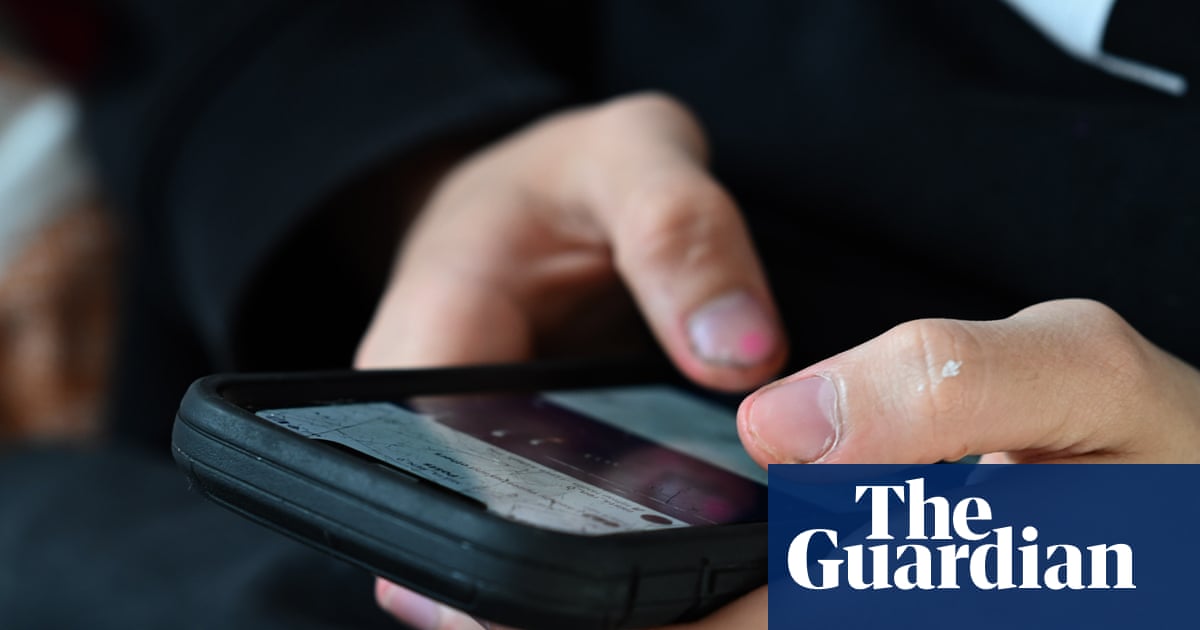
When Australian Christian College, a high school in the Melbourne outer suburb of Casey, implemented a phone ban on its campus, there were multiple reasons for the crackdown. Peer conflicts between students were escalating online, students were struggling to focus and teachers observed “notification-driven code-switching” in their students.
“When a phone is within reach, a student’s mind is only ever half in the room,” the school’s principal, Caleb Peterson, says. “We wanted their whole attention back.”
School mobile phones bans typically mandate that mobile devices are kept in bags or lockers during the school day and confiscated on sight and stored in the school office until the end of the day. This month marks two years of phone bans being in operation in most Australian states. Victoria moved early, banning phones in public primary and secondary schools in 2020. By term 4, 2023, WA Tasmania, NSW and South Australia had followed suit; Queensland restricted phones in term 1, 2024.
The announcement of the bans were lauded by parents and politicians, many of whom believed blocking access to phones would enhance focus and minimise distractions, while some experts were sceptical about their effectiveness. Now, two years on, what has actually happened in Australia’s phone-free schools?
“The impacts were clear,” says Peterson. “Since the ban, we’ve seen stronger lesson starts, fewer interruptions and better flow in teaching. Device-driven conflicts have fallen and recess and lunch look different now, [there are] more games, conversations, and positive student-staff interactions. It’s the kind of atmosphere you actually want for young people.”
One year after the ban was implemented, a survey of almost 1,000 public school principals led by the NSW Department of Education’s Centre for Education Statistics and Evaluation found that 95% of principals still supported the ban. 81% said that the ban has improved students’ learning, 86% said it has improved socialisation among students, and 87% believed that students were less distracted in the classroom.
Research from South Australia – released in March this year – revealed that 70% of teachers reported increased focus and engagement during learning time and 64% of teachers reported “a lower frequency of critical incidents” at school as a result of device use.
Ruqayah, who graduated from a western Sydney high school in 2024, thinks the bans were an “overreaction”. After going through high school with access to phones, she finished her final year with the phone ban in place and says that fellow students were still finding ways to use them in secret.
“Teenagers find their phones very important,” she says. “It makes them feel secure and safe, so taking away something that is important to them just causes more stress and more worry which makes situations worse at school and harder for teachers, supervisors [and] support workers to deal with.”
However, anecdotal conversations with other students and staff at both public and private schools shows widespread belief that the bans have had a positive impact. One high school teacher, who did not wish to be named, says the mere presence of phones in the classroom could be distracting, even if they were not used. “They just present an opportunity,” she says. “We do see a difference without them.”
Some students feel the bans levelled the school playing field. Amy, a year 11 student from a western Sydney public high school, says the removal of phones from classrooms has limited people’s ability to cheat while also offering social benefits for those who she said were “chronically online”.
“Students [are more comfortable] as it creates safe space and they’re not worried about a photo of them being sent around,” she says.
Mariam, a year 11 student at a public high school in southern Sydney, says although the students at her school found the phone ban to be “unreasonable” and felt that teachers “sometimes used the ban as a way to abuse their power”, she believed it had a positive impact on her learning. Aisha, a Year 11 student from a private Islamic school in western Sydney, says the phone bans at her school helped her “gain a longer attention span and perform better at school”.
This increased focus is something that Dr Tony Mordini, the principal of Melbourne high school, a selective public school, has seen first-hand. Melbourne high adopted a phone ban policy in January 2020 in compliance with the Victorian Department of Education’s directive.
“From a professional perspective, the ban has had a clear positive impact,” he says. “Students are more focused during lessons, and we’ve seen a reduction in distractions caused by online activity. The absence of phones has also significantly reduced opportunities for in-class cyberbullying or harassment.”
But Mordini says that the phone bans have also meant lesser opportunities for students.
“It’s important to acknowledge what we’ve lost,” he says. “Phones can be incredibly powerful learning tools – capable of storing large amounts of content, supporting research, taking photos, creating videos, and hosting useful apps. Their absence means we’ve had to rely more on school-provided devices and traditional resources.”
“We were told that phone bans would reduce cyberbullying, increase students’ concentration in class, and relieve teachers of having to discipline students over phone misuse,” says Prof Neil Selwyn, from the school of education, culture & society at Monash University. “Some politicians were promising improvements in student learning and mental health. But one of the main drivers of these bans was undoubtedly that they were popular.”
after newsletter promotion
He says schools can be a proxy for broader concerns about children and their use of devices, but he’s sceptical about schools being the best approach.
“Young people spend way more time outside school, so really we should be talking about how parents and families regulate their children’s device use at home,” he says. “Unfortunately, this isn’t something that most politicians want to do. So, school phone bans are a relatively pain-free way for people to feel that they are doing something about the wider problems we have with excessive digital device use.”
Selwyn says that phone bans in Australia were not set up “with the intention of properly testing their effectiveness” and says concrete research in this area is “inconclusive, and … not particularly rigorous”.
He also believes the latest government data from NSW and SA is “not particularly insightful”.
“The key question is how these bans play out over time,” he says. “Claiming that these bans are suddenly leading to dramatic improvements makes for a neat political soundbite, but we need a lot more in-depth and sustained investigation of what effects these bans are actually having.
“We need to do a lot better than simply asking principals whether they think students’ learning has improved. In particular, we need to go into classrooms and talk with students and teachers about their different experiences with the bans and what they think would be beneficial going forward.”
He cites a recent UK research from 30 schools and more than 1,200 students which “found no significant differences for students attending schools with smartphone bans in terms of their mental wellbeing, sleep, education performance in English and maths, or even disruptive classroom behaviour”.
“You will find some studies which point out correlations between phone bans and improvements in learning, but these cannot be seen as providing reliable evidence of direct causal relationships,” he says. “It is naive to think that a phone ban is going to directly and significantly shift the dial on any of these issues in and by itself.”
Peterson says he’s careful not to “oversell” the bans, but says they are about “creating conditions where learning and friendships can actually thrive”. While his school has made exemptions for medical management, disability support, or assistive and translation apps, he believes that academic flow is stronger, conflicts rarer and social cohesion better. “Wellbeing data” at his school has shown “reductions in psychological distress”.
“Phone bans aren’t a silver bullet,” he says. “But they are a critical lever, especially when paired with digital citizenship, mental-health promotion, and positive playground programs.”
Peterson says that many students have suggested that the ban gives them “a break”.
“The phone ban is now simply the norm and the gains are real, modest, and worth it.”