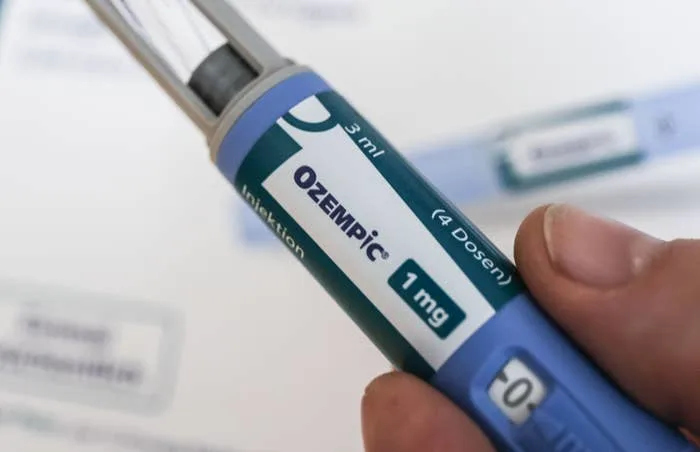
GLP-1 medications like Ozempic, Wegovy and Mounjaro have become something of a cultural lightning rod over the past few years — originally developed to treat Type 2 diabetes, these weekly injections work by mimicking a hormone that regulates blood sugar and appetite, leading to significant weight loss in many users. While they’ve proven genuinely life-changing for some, they’ve also become the weight-loss drug of choice for people across the weight spectrum, fueled by celebrity endorsements, viral social media trends, and an expanding telehealth industry that makes them remarkably easy to obtain.

Picture Alliance / Getty Images
A Reddit post sparked intense discussion about what happens when these powerful medications are used for cosmetic weight loss rather than medical necessity — and the psychological and relational complications that can follow.
In the post, u/Winter-Top-8348 described their partner’s two-year journey with Ozempic. “She was not prescribed by her doctor and is not diabetic, nor was she obese,” they began. “She decided to go on the drug after her weight loss began plateauing.” However, what began as a solution to break through that plateau has evolved into something far more complicated, affecting her finances, physical health, and their relationship.
Now, with the drug in full effect, she’s upset that her butt is flat, frustrated that her skin is wrinkly and looks gaunt — which the original poster has admitted affects their sex life. Her doctor has confirmed that she’s lost muscle mass. She no longer goes to the gym. But she has a “healthy BMI” now, which makes it all worth it to her. And because she’s been paying out of pocket for the drug, she’s gone from putting a bit of money in savings each month to debt, playing “whack-a-mole with bills,” despite making six figures.
Though the original poster feels like Ozempic has resulted in a net negative after two years, their partner remains intent on staying on the drug and has begun maintenance doses. “We don’t live together nor share finances, and she’s not a bad person,” they concluded the post, “but I am so uncomfortable, and I want to leave. I’m trying not to.”
Here’s the full post:
“I hate what Ozempic has done to my partner.
My partner jumped on the Ozempic trend about two years ago. She was not prescribed it by her doctor and is not diabetic, nor was she obese. She was going to the gym to lose weight and, because — I’m paraphrasing the best I can from memory — she did not want her attractiveness to be defined by her legs or butt, she decided to go on the drug after her weight loss began plateauing.
She was upfront with me about going on the drug and her reasons for it, and I was supportive.
Now, two years later, with the drug in full effect, she is not satisfied. She is upset that her butt is now flat. She’s frustrated that her skin is wrinkly. Her doctor has told her that she has lost muscle mass. She looks gaunt, and it has affected our sex life. She never goes to the gym.
But she has a ‘healthy BMI’ now, which makes it all worth it to her. She is also deeper in debt, as she has been paying out of pocket for the drug and has gone from being able to put a bit of money in savings each month to playing whack-a-mole with bills. She makes six figures.
It all seems like a net negative after two years, but she’s intent on staying on the drug and has begun a maintenance dose.
We don’t live together or share finances, and she’s not a bad person, but I am so uncomfortable, and I want to leave. I’m trying not to.”
The post struck a nerve, accumulating more than 4,000 upvotes and 257 comments. Commenters responded from multiple angles — some identifying signs of body dysmorphia and eating disorders, others emphasizing the importance of strength training while on GLP-1s, and many addressing the original poster’s ambivalence about leaving. Collectively, the thread became a reflection not just on one person’s experience with Ozempic, but on the broader complications surrounding these drugs when used outside medical necessity.

Ucg / Getty Images
The thread’s most upvoted response from u/CheezersTheCat cut straight to what many saw as the heart of the issue: “She’s got some deep-rooted body dysmorphia that the Ozempic is playing right into. Therapy ASAP, and evaluate if she can’t get a grasp on this,” wrote one user in the thread’s “Best” response. That comment alone received 5,100 upvotes — more than the original post itself.
Others drew parallels to eating disorders, with several users sharing their own experiences. “Yeah, parts of this remind me of bits of my experience dating a woman with anorexia,” u/InsignificantOcelo noted.
Another commenter explained how their own rapid weight loss became “an addiction.” After losing 100 pounds in eight months through keto and running, they found themselves weighing themselves 10 times a day and immediately burning off every calorie they consumed. “I didn’t think I had an ED because I was eating very healthily and working out,” they wrote, describing how they eventually passed out in a hallway and had to enter an eating disorder clinic:
“Rapid weight loss can trigger disordered eating and unhealthy habits, which is what I think your wife has. I lost 100 pounds in eight months after the birth of my first son by doing keto and running 5 kilometers a day. I’m short, 4’11. When I gave birth, I weighed 209 pounds. By my son’s first birthday, I was 98 pounds. No one could tell me anything. I thought I looked amazing. He’s 7 now, and I look back at the pictures and cringe. I was skin and bones. I looked sick.
I used to love taking baths, but I couldn’t anymore because my tailbone would push into the bottom of the tub. Boobs? Gone. Butt? We don’t know her. My husband has since told me it was gross to him when we had sex because he could feel all my ribs, my hip bones, and my tailbone in certain positions.
The weight loss became an addiction. I was weighing myself 10 times a day. I would eat something, then hop on the treadmill and run until I burned off the same number of calories I had eaten. The wake-up call was when my son was 18 months. I was home alone with him, put him to bed, and passed out cold in the hallway for an unknown amount of time. I had to go to an eating disorder clinic. I didn’t think I had an eating disorder because I was eating very healthy and working out.”
The question of body dysmorphia raised another: If she wasn’t obese or diabetic, how did she get approved for the medication in the first place? “What doctor is telling her she’s gaunt and losing muscle mass but still writes the RX?!” u/passivelyrepressed asked.
Related: How Confident Are You, Scientifically?
As one physician in the thread pointed out, “The issue is that OP’s partner was not obese, nor did she have CKD, CAD or HF. She should not have been approved to take GLP-1s.”
“Physician here. Yes, GLP-1 medications are life-saving and life-changing meds, absolutely. The issue is that OP’s partner was not obese nor did she have CKD, CAD or HF. She should not have been approved to take GLP-1s. I’m not even clear what OP’s partner was actually wanting to do regarding her body.”
Yet she was approved. Though it wasn’t recommended to her as medically necessary, the original poster’s partner is clearly seeing a doctor and paying out of pocket for the prescription, which points to the growing infrastructure of providers, telehealth services, and weight-loss clinics that prescribe GLP-1s to people who might not meet traditional medical criteria.

Peter Dazeley / Getty Images
Of course, the accessibility isn’t accidental. GLP-1 medications have been aggressively marketed as weight-loss solutions, with celebrity endorsements and ads even plastering public transit systems across major cities. Companies like Ro, Hims & Hers and others have made these medications remarkably easy to obtain through online consultations. What originated as a medication for diabetes and obesity has become a cosmetic product, readily available to anyone willing to pay, and the system has made that extremely easy to do.
The ease of access to these medications means people can use them to fuel existing body image issues without necessarily addressing the underlying psychological factors — something that would typically be caught in more rigorous medical screening. “She needs professional help that you (or strangers on Reddit) can’t give,” one highly upvoted comment read. “Her issues with her body are not physical but mental. She needs to unpick with a professional what’s actually going on here.”
As one commenter who had recovered from similar patterns explained, getting help required seeing “someone who specialized in eating disorders. I was able to somewhat learn how to live a healthier lifestyle. I still run into barriers every now and then, but it’s part of life. It started with baby steps.”
Several commenters emphasized that GLP-1 medications aren’t miracle drugs. They’re tools that require commitment to proper nutrition and strength training. “People think Ozempic and other weight-loss drugs are miracle cures. There is a lot more to it than that,” one commenter wrote. “Losing weight will always affect muscle mass. Without training and taking the right amount of protein, she will face major issues with her overall health. There is no reward without work and effort.”

Bloomberg / Getty Images
The consensus was clear: “If you take weight-loss drugs, you actually HAVE to go to the gym and eat right,” another user explained, noting that their wife uses Zepbound alongside regular exercise and proper protein intake. “It’s no miracle drug. It’s for people that genuinely need it, and when you’re on it, you have to commit to putting in the work.”
Multiple people stressed that losing muscle mass is inevitable during weight loss unless you actively work to preserve it through resistance training and adequate protein consumption — something the partner in question isn’t doing. “It’s basically the same thing as natural weight loss,” one commenter noted. “Our bodies don’t differentiate between fat and muscle, so if you’re not using the muscle, you’re going to lose it. You pretty much have to commit to the gym if you’re using these medications.”
Another recounted being told from the beginning of a weight-loss drug study: “I have a family member in a study for a weight-loss drug, and they pretty much told her from the beginning, ‘Start lifting weights NOW, or you will be all flabby.'”
The gap between how these medications are marketed and how they actually need to be used creates a dangerous misconception. “A lot of people conflate being ‘skinny,’ which the drug can absolutely help you achieve, with being healthy and fit,” one commenter observed. “You still need to put in the work to achieve those regardless of the drugs you take, including steroids.”
Beyond the immediate physical and relational effects, several commenters raised concerns about what widespread cosmetic use of GLP-1 medications might mean in the long term — both for individual users and for society.

Steve Christo – Corbis / Getty Images
“I 100% knew this was going to happen with people. It will be an issue in 20 years,” wrote one commenter in their second month of the medication, acknowledging how “watching the numbers on the scale go down is addicting.”
Others warned about the sustainability of weight loss achieved through GLP-1s without lifestyle changes. “What people don’t realize is that if you’re not conditioning your body to maintain your new body weight, it will all come back,” one user noted, suggesting that without lasting habit changes, the medication becomes a lifelong dependency rather than a tool.
Some raised more serious health concerns. “GLP-1s have known side effects of nausea, vomiting, early satiety and anorexia. Absolutely perfect setup for an eating disorder,” one commenter warned. “If you love her, you have got to find a way to do an intervention or else she will kill herself with this medication.”
The Reddit post and its hundreds of responses reveal that these medications have become so normalized, so accessible, and so aggressively marketed that people who never needed them medically can now use them to chase an ideal that remains perpetually out of reach — even as their health, finances, and relationships suffer in the process. Though the original poster’s partner achieved her “healthy BMI,” she’s purportedly unhappier, unhealthier, and more financially strained than when she started.
It’s a paradox that runs through much of the broader conversation around these drugs — the gap between what the scale says and what the body needs, between the promise of transformation and the reality of what gets lost along the way. These medications can be genuinely life-changing for people with diabetes and obesity, offering relief from chronic conditions and improving quality of life in measurable ways. But when they’re used cosmetically, without medical supervision or the lifestyle support they require, they risk becoming not a tool for health but a vehicle for the same destructive patterns they’re marketed to solve. This thread suggests society is only beginning to reckon with what happens when chemical intervention becomes a substitute for the harder work of addressing why so many people feel their bodies aren’t good enough in the first place.
What do you think? Have you or someone you know used GLP-1 medications? Share your thoughts and experiences in the comments below.
You Might Like: Just 35 Products You Probably Haven’t Seen Before
You Might Like: 34 Things That’ll Make Your Future Self Say “Thank Goodness I Bought These In March”

