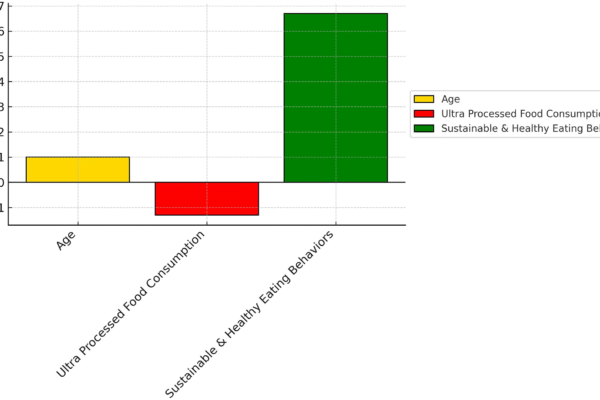
Association between ultra-processed food consumption, carbon footprint awareness and sustainable and healthy eating behaviors in adult: a cross-sectional study | BMC Public Health

Association between ultra-processed food consumption, carbon footprint awareness and sustainable and healthy eating behaviors in adult: a cross-sectional study | BMC Public Health

Given the increasing relevance of sustainable nutrition in protecting both individual health and environmental integrity, this study provides meaningful insights into the interrelationship between ultra-processed food (UPF) consumption, carbon footprint awareness, and sustainable and healthy eating behaviors. In recent years, sustainable nutrition has emerged as a central concept, aiming to safeguard both human health and…

Read More
Optimization-based dietary recommendations for healthy eating

Optimization-based dietary recommendations for healthy eating

Roberts CK, Barnard RJ. Effects of exercise and diet on chronic disease. J Appl Physiol. 2005;98:3–30. PubMed  Google Scholar  National Research Council (US) Committee on Diet and Health. Diet and health: implications for reducing chronic disease risk. 1989. https://books.google.com/books?hl=en&lr=&id=XWtsmmCks7AC&oi=fnd&pg=PR1&dq=diet+chronic+disease+review&ots=0DQ8Lb7Adn&sig=o018e6F34Y2NN-q9vW2Zs5MnLpk. Accessed 22 Nov 2024. Guenther PM, Kirkpatrick SI, Reedy J, Krebs-Smith SM, Buckman DW, Dodd KW,…

Read More
Several healthy eating patterns may reduce the risk of type 2 diabetes across diverse ethnic groups

Several healthy eating patterns may reduce the risk of type 2 diabetes across diverse ethnic groups

A large new meta-analysis of more than 800,000 participants to be presented at this year’s Annual Meeting of the European Association for the Study of Diabetes (EASD) in Vienna, Austria (15-19 September) shows that high adherence to three well-established healthy eating patterns is linked to a lower risk of type 2 diabetes, regardless of one’s…

Read More
Improving sleep and lifestyle could reduce heart disease risk in menopausal women

Improving sleep and lifestyle could reduce heart disease risk in menopausal women

During the menopause transition, only 1 in 5 women have optimal scores using the American Heart Association’s health-assessment tool, known as Life’s Essential 8 (LE8). Among the tool’s eight components, four of them – blood glucose, blood pressure, sleep quality and nicotine use – are key in driving future cardiovascular risks, with sleep being particularly…

Read More