
The bumpy trajectory of human aging may have a tipping point as we enter our twilight years, a new study has found.
Past the age of around 75, our bodies can no longer easily recover from injury or illness – a sharp decline in resilience that comes with a corresponding rise in the risk of dying, according to researchers at Dalhousie University in Canada.
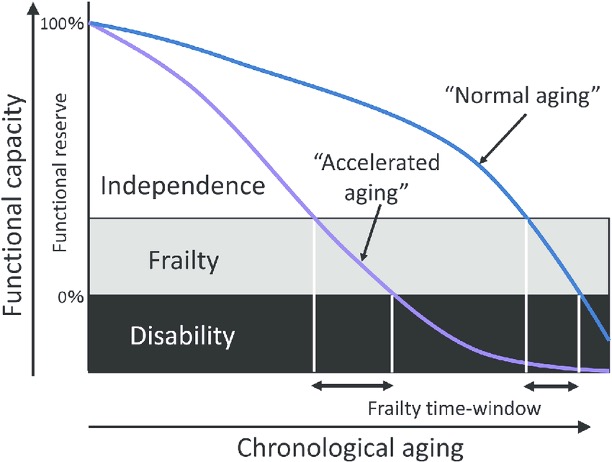
Their model looks at aging as a balance between damage and repair, with the breakdown of that balance marking the point of no return into frailty.
This finding could help researchers and clinicians better understand and plan for people’s health care needs as they approach this tipping point.
Related: Study Reveals The Surprising Age at Which Your Brain Reaches Its Peak
“We find that natural aging dynamics are non-trivial and include a tipping point near age 75 where robustness and resilience become insufficient and after which individuals tend towards worse health over time, marking an end to a robust and resilient youthful period,” writes a team led by physicist Glen Pridham of Dalhousie University, in a preprint available on arXiv.
 frameborder=”0″ allow=”accelerometer; autoplay; clipboard-write; encrypted-media; gyroscope; picture-in-picture; web-share” referrerpolicy=”strict-origin-when-cross-origin” allowfullscreen>
As several recent studies have revealed, the course of human aging isn’t as smooth as you might think. Rather, the human body appears to undergo periods of accelerated aging while we’re alive.
According to a recent study into the molecular changes associated with aging, humans experience two drastic lurches forward, one at the average age of 44, and the other at the average age of 60.
In addition, research also suggests there’s at least one turning point during life when organ aging accelerates. A study published this year found this turning point occurs at age 50, after which your tissues and organs age more rapidly than the decades preceding.
As we enter our twilight years, there’s no denying that health problems become more serious, both in their frequency and severity.
This increased vulnerability and susceptibility to health setbacks is clinically referred to as frailty, and doctors often use a tool called the Frailty Index, based on the number of health deficits a patient has, to predict that patient’s health outcomes.
Pridham and his colleagues used the Frailty Index in a different way: to construct a new mathematical model of human aging.
First, they needed a robust dataset. They used data from the University of Michigan Health and Retirement Study and the English Longitudinal Study of Ageing, which have tracked the health of thousands of people over many years.
Related: Scientists Reveal Turning Point When Your Body’s Aging Accelerates
From those surveys, the researchers included data on 12,920 individuals who visited medical facilities 65,261 times between them, with a median age of 67.
They quantified each participant’s health using a Frailty Index comprising more than 30 attributes, including chronic diseases, difficulties performing tasks and activities, and cardiovascular conditions.

Then, they built a mathematical model to analyze changes over time in two key health areas: adverse health events, such as illness or injury, and the time it takes for participants to recover from them, using the Frailty Index as a measure.
If the Frailty Index rose, it meant the participant was experiencing more health setbacks and recovering from them less effectively.
Broadly, they found that both health setbacks and recovery time increased with age, until the participant reached a tipping point at which the recovery rate could no longer keep up with the rate of health setbacks. The age range for this tipping point was about 73 to 76 years for both men and women.
“Beyond this tipping point, the ongoing loss of both robustness and resilience leads to a sharp increase in the Frailty Index and a commensurate increase in risk of mortality,” the researchers write in their preprint.
“We infer that robustness and resilience mitigate environmental stressors only up to an age of 75, beyond which health deficits will increasingly accumulate, leading to death.”
That’s not exactly cheery, but the good news is that this information could help soften or mitigate the effects of this tipping point.
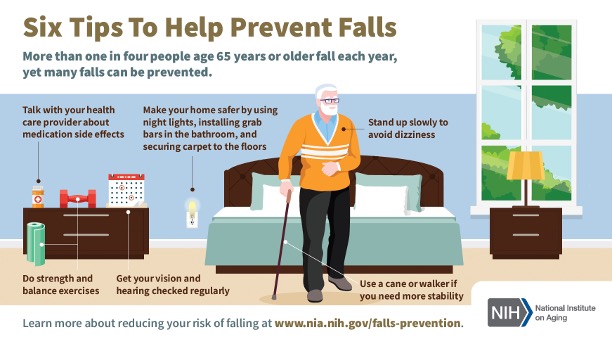
For example, the researchers note: “Crossing the tipping point dramatically increases risk for and accumulation of health deficits if stressors are not reduced.” This suggests that early intervention to remove stressors may prove medically beneficial.
Related: Study Finds Humans Age Faster at 2 Sharp Peaks – Here’s When to Expect Them
The findings also suggest that strategies designed to improve the patient’s baseline health before the tipping point is reached would be more beneficial than strategies that simply seek to extend the period of decline.
Finally, the results show how pure mathematics can be applied in new ways to biology to predict the long-term trajectory of human health, helping to plan for and delay the onset of frailty and ultimately helping us all live longer, happier, healthier lives.
The research has been published on arXiv.