Published on
February 20, 2026

Image generated with Ai
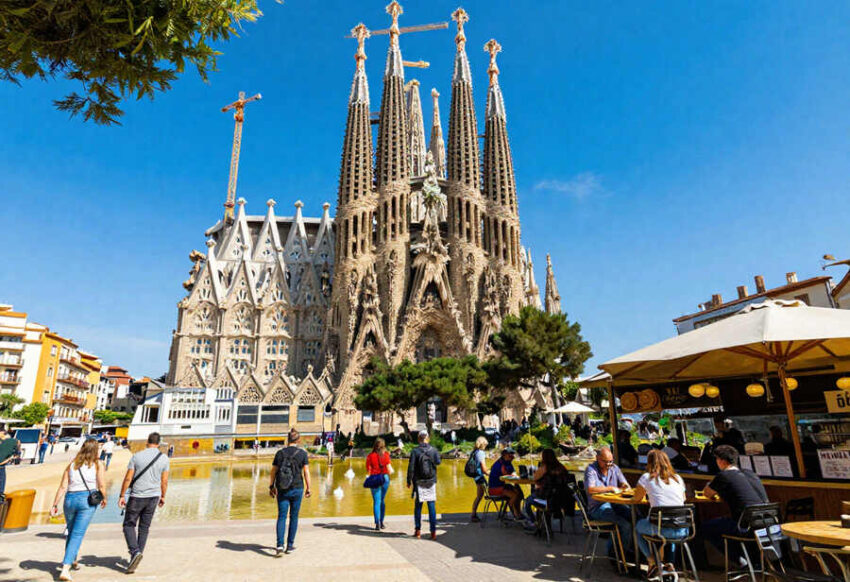
In a stunning turn of events, Spain has emerged as the new leader in global tourism revenue, surpassing giants like France, the United Kingdom, the United States, and Switzerland. In 2025, the Spanish tourism industry not only captured the hearts of millions of visitors but also set new benchmarks in revenue generation, solidifying its position as the world’s most lucrative destination for travelers. This remarkable achievement is driven by an unprecedented surge in international arrivals, bolstered by strategic government investments, cutting-edge infrastructure, and a diverse offering of cultural, historical, and natural attractions. Spain’s appeal has proven irresistible, with a growing number of tourists flocking to its sun-kissed beaches, vibrant cities, and scenic landscapes, making it the undisputed leader in global tourism.
In 2025, France continued to hold its title as the world’s most visited country, welcoming a record-breaking 102 million international tourists. Despite this remarkable achievement, Spain surpassed France in tourism revenue, generating significantly higher earnings. This has sparked interest in understanding the dynamics behind France’s tourism success, as well as the factors influencing its overall tourism performance.
Tourism revenue in France reached a historic €77.5 billion in 2025, marking a significant 9% increase from 2024. This growth is even more impressive when compared to 2019 figures, reflecting a 37% rise in tourism receipts over the past six years. These statistics highlight the sector’s strong recovery following the disruptions caused by the pandemic, as well as the increasing popularity of France as a travel destination.
The French government has set an ambitious target of €100 billion in tourism earnings by 2030. This goal is part of a broader strategy to continue building the country’s tourism industry as a key driver of economic growth. With such a target in mind, France aims to enhance its tourism infrastructure, expand its promotional efforts, and create new offerings to attract a diverse range of international visitors.
However, despite the increase in tourism receipts, France faces significant competition from Spain. With 97 million visitors in 2025, Spain remains close behind France in terms of total tourist arrivals. But the main difference lies in the earnings. Spain generated a staggering €135 billion in tourism revenue, nearly doubling France’s tourism receipts.
The discrepancy in earnings between the two countries is largely due to the nature of tourist stays in France. Many international visitors to France tend to have shorter stays compared to Spain, often using the country as a transit point on their way to other southern European destinations. For instance, tourists may choose to visit France for a few days before heading to destinations like Italy, Spain, or Greece. In contrast, Spain tends to attract tourists for longer stays, resulting in higher spending per visitor.
Advertisement
Advertisement
Another factor contributing to the tourism revenue gap is the types of tourism experiences available in each country. Spain offers a wide variety of beach resorts, luxury hotels, and entertainment venues that encourage longer stays and higher spending. France, on the other hand, has a diverse range of attractions, including cultural landmarks, world-renowned museums, and beautiful countryside, which often result in shorter visits. These differences in tourism offerings are a key consideration in understanding the disparity in revenue generation between the two countries.
Germany and Belgium were the largest source markets for French tourism in 2025, with both countries contributing 14.6 million visitors each. The United Kingdom followed closely with 13.1 million visitors, and Switzerland accounted for 9 million. These countries continue to be key markets for France, with proximity and well-established travel connections making them reliable sources of visitors.
Advertisement
Advertisement
The surge in tourism from the United States and Japan has also played a role in France’s growing popularity. American tourists, in particular, showed a notable 17% increase in their visits to France, contributing to the overall growth of international tourism. Japanese tourism has also seen a steady rise, as travelers from Japan seek to experience France’s rich culture, history, and cuisine.
While the international tourism sector performed well, domestic tourism also played a vital role in the country’s economic performance. In 2025, the total value of the tourism sector, including both international and domestic travel, reached €222 billion. This figure underscores the significance of tourism not only as an economic driver but also as a source of national pride. More than half of the commercial overnight stays in France were concentrated in the southern regions, with popular destinations such as the French Riviera, Provence, and the Languedoc region attracting significant numbers of visitors. The south of France continues to be a prime location for both international and domestic tourists, offering a combination of picturesque landscapes, historic towns, and world-class beaches.
Looking ahead, the French government is focusing on broadening its tourism offerings by promoting lesser-known destinations across the country. With so many tourists flocking to well-established attractions like Paris, the Eiffel Tower, and the Louvre, there is a growing need to encourage visitors to explore other regions. This strategy aims to reduce overcrowding in major cities and provide more balanced economic benefits to smaller towns and rural areas.
Efforts to promote lesser-known destinations are expected to focus on areas with unique attractions, such as hidden gems in the French countryside, less-visited historical sites, and regional culinary experiences. By encouraging tourists to explore these off-the-beaten-path locations, France hopes to distribute tourism revenue more evenly across the country and create sustainable growth in the industry.
In addition to promoting new destinations, the government plans to continue improving the overall tourist experience in France. This includes upgrading infrastructure, enhancing digital services for travelers, and ensuring that the country remains accessible and welcoming to visitors from all over the world. France’s rich cultural heritage, culinary traditions, and natural beauty are likely to continue attracting tourists for years to come, as long as the country adapts to changing trends in the global travel market.
In 2025, Spain surpassed France, the United Kingdom, the United States, and Switzerland to become the global leader in tourism revenue, driven by a surge in international visitors, strategic government investments, and a diverse range of cultural and natural attractions.
while France maintains its position as the most visited country in the world, it faces significant challenges in terms of tourism revenue generation. Spain’s higher earnings, driven by longer stays and greater spending per visitor, highlight the need for France to rethink its tourism offerings and focus on increasing the average length of stays and spending. With an eye on promoting lesser-known destinations and achieving its €100 billion target by 2030, France is poised to continue leading the global tourism market while ensuring that growth is sustainable and beneficial for all regions of the country.