After 66 minutes of Real Madrid’s 2-1 victory against Mallorca in La Liga last Saturday evening, some supporters at the Santiago Bernabeu began to chant, “Franco, Franco.”
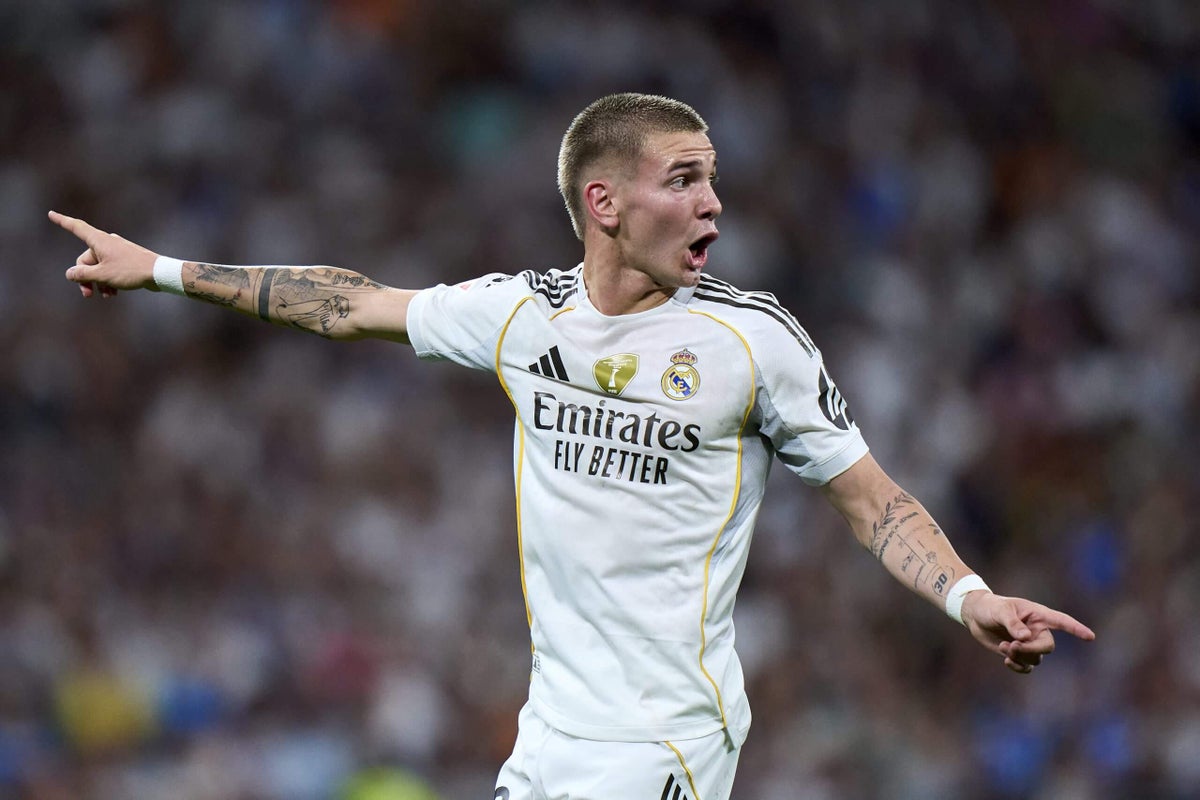
This came as Madrid’s new €63.2million (£54.9m; $73.6m) signing, Franco Mastantuono, was being substituted after another impressive display that showed the potential of the 18-year-old forward.
Supporters at the stadium also sang, “Franco, Franco” when Mastantuono made his debut in Madrid’s first game of the season, entering as a substitute during the 1-0 victory against Osasuna on August 20.
The chant has led to a debate in Spain, given that any mention of the name ‘Franco’ brings to mind Francisco Franco, a general among the leaders of the military coup that started the Spanish Civil War in 1936, who then ruled the country as a dictator from 1939 until he died in 1975.
Two of the main sports media outlets in Catalonia — Mundo Deportivo and Sport — immediately ran stories aimed at their readership of mostly Barcelona supporters. Reference to the name was also used on Real Madrid-backing tabloid TV show El Chiringuito de Jugones, with host Josep Pedrerol opening that night’s programme by saying: “The Bernabeu has a new hero — Franco.”
He added during the show: “A debate has started but I’m not going to renounce a name due to something that happened for 40 years in Spain. His parents called their kid Franco. Why can we not call someone Franco, if their name is Franco? What does an Argentinian have to do with what happened in Spain? And Mastantuono is more difficult to chant. Who cares?”
Others around Madrid were less happy to court controversy and attention. Well-established Madrid fan website La Galerna published an article describing Madrid as a club that “since its foundation has avoided politics like the plague” and suggested fans instead chant “Mastan, Mastan, Mastan” to avoid the “slanderous delusion” of bad-faith critics.
A very 2025 debate then took place in the comments section, where the consensus among posters appeared to be that Madrid’s fans had the right to name their players as they wished, and should not care what anybody else thought.
The Catalan media continued to run with the issue, with Sport reporting that some Madrid supporters had been unable to buy a shirt from the club’s online shop with the name ‘Franco’ and Mastantuono’s No 30.
Madrid’s club website does not allow anybody to purchase jerseys with certain names, including ‘Franco’, printed on the back. Anyone who tries to do so gets the message: “Apologies, this name or term is not available for personalisation.”
The names of other 20th-century dictators, including Hitler, Stalin, Mao and Mussolini, are also unavailable, nor will the Madrid website let you buy a club shirt with the Barcelona-connected names of ‘Messi’, ‘Cruyff’, ‘Lewandowski’ or ‘Rashford’.
Real Madrid came from behind to beat Mallorca 2-1 (Alberto Gardin/NurPhoto via Getty Images)
There is a degree of artificiality to this whole debate, given that the player himself wears ‘Mastantuono’ on his Madrid jersey, as he has previously done with River Plate and the Argentina national team.
Nevertheless, the conversation continued into the pages of established left-leaning Spanish newspaper El Pais, in a column written by former Madrid player, coach and sporting director Jorge Valdano.
“The ‘Franco, Franco, Franco’ unleashed consequences worthy of anthropological analysis,” wrote 69-year-old Valdano, the Argentinian who best understands Madrid’s place in Spanish football culture and history.
“If the chant was a joke, it is well aimed. There is no better exorcism than humour. If anybody intoned the name with particular passion, as it carries ideological nostalgia for them, we are up against a previously unknown type of stupidity. One which strengthens the arguments of the rival tribe.”

Mastantuono celebrates with Arda Guler after his goal against Mallorca (Maria Gracia Jimenez/Soccrates/Getty Images)
The article also pointed to how some at Barcelona have previously referred to Madrid as the “team of the regime”, and argued this was mistaken, given that other Spanish clubs had received much more support from Franco’s dictatorship. The idea of Madrid as the “team of the regime” was recently and infamously brought up again by Barca president Joan Laporta in April 2023.
“Madrid was historically favoured in refereeing decisions, it was the team of the regime, close to political, economic and sporting power for 70 years,” Laporta said. He was speaking at a press conference called to explain his club’s payments totalling over €7million made between 2001 and 2018 to companies owned by the former vice president of Spain’s refereeing committee, Jose Maria Enriquez Negreira.
Barca have always insisted these payments were for legitimate services, with Negreira’s businesses providing the Catalan club with scouting reports and technical information on refereeing. Spanish public prosecutors alleged Barca were buying favour from match officials, intending to influence results, something the club strongly denied.
Madrid’s hierarchy responded to Laporta’s words by ordering staff at its TV station to quickly assemble and publish a video that apparently showed Franco meeting with Barca officials. The video ended with former Madrid president Santiago Bernabeu saying: “Whenever I hear Real Madrid described as ‘the team of the regime’, it makes me want to s**t on the father of whoever says it.”
— Real Madrid C.F. 🇬🇧🇺🇸 (@realmadriden) April 18, 2023
Chants of “Negreira, Negreira” are common at the Bernabeu whenever a big refereeing decision goes against their team, especially in the ‘grada popular’ section behind one goal that is organised by the club hierarchy. They were heard again last Saturday, along with chants of “corruption in the federation”, after Madrid had three goals disallowed following VAR interventions during their win against Mallorca.
As for the Franco chants, Mastantuono has not commented on them, and Madrid head coach Xabi Alonso dismissed the issue when asked whether he had spoken to the teenager about the controversy they have generated.
“I just focus on the player, and I see Franco training very well, integrating very well with his team-mates,” said Alonso, who won the World Cup as a player with Spain in 2010.
“When I see he is smiling, I’m not concerned by anything.”
(Top photo: Diego Souto/Getty Images)