In Greek mythology, the gods condemned Sisyphus to endlessly push a rock to the top of a mountain, from where it would roll back down to the base under its own weight.
The story was used by French writer and philosopher Albert Camus as a device to reflect on the absurdity of human existence — our futile search for meaning in places where none can be found.
Enter: Raphinha. Bear with us here.
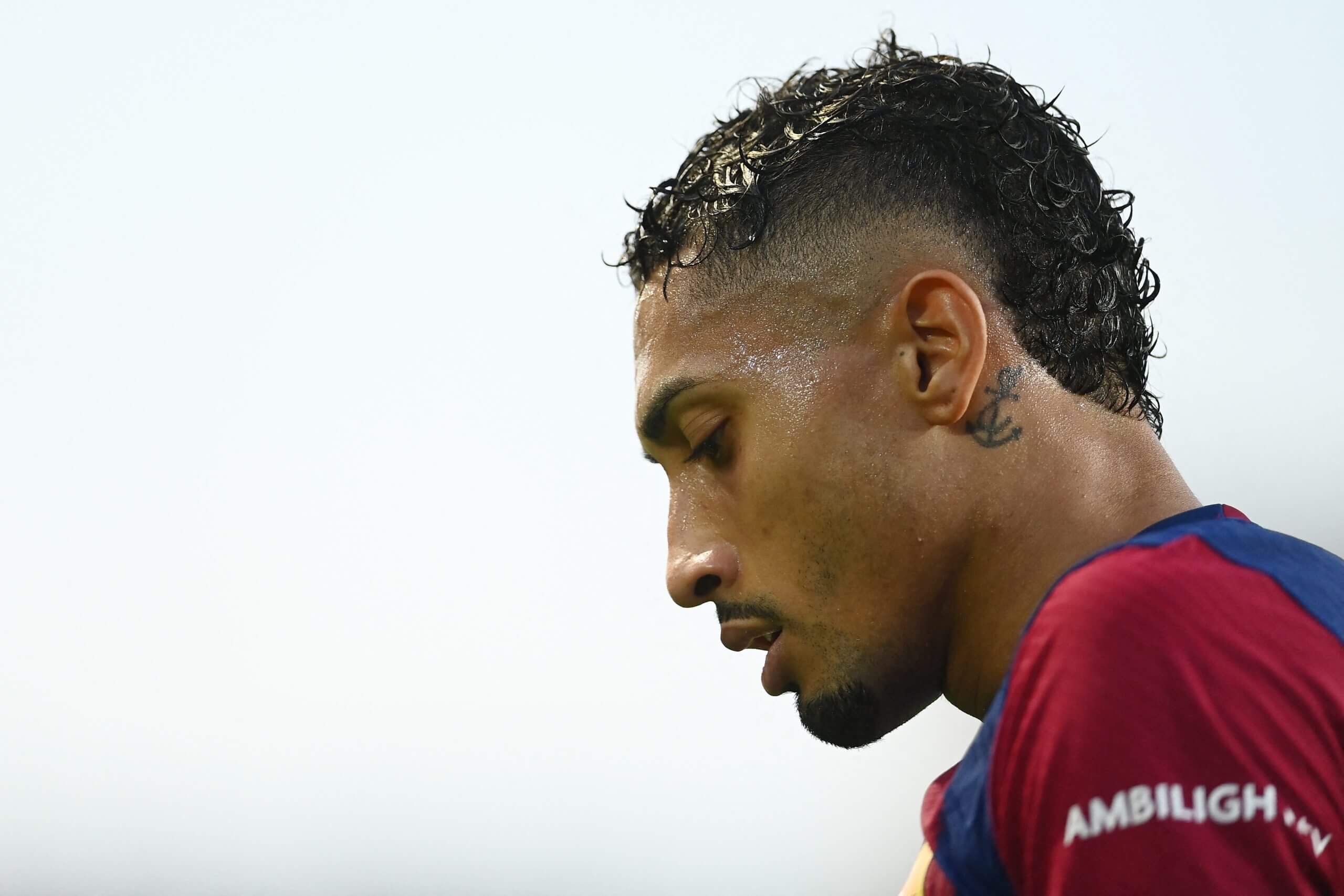
For a good while, Raphinha’s Barcelona career seemed destined to follow a similarly fruitless path. Despite the incredible effort he put in since arriving in a £55million ($74.2m at the current rate) transfer from Leeds United in 2022, recognition and reward seemed out of reach. Just a year ago, he was being pushed out of the Spanish club.
With the arrival of Hansi Flick to replace Xavi as manager for the 2024-25 season, however, things began to change for him.
The Brazil international forward was one of Barcelona’s best players last season as they won a domestic treble. Yet still, there is a sense he has not fully received the wider praise he deserves.
Raphinha was nominated for this year’s Ballon d’Or, which reflected that 2024-25 campaign, but finished fifth in the voting, behind Ousmane Dembele, Lamine Yamal, Vitinha and Mohamed Salah.
The 29-year-old was more recently among the 11 nominees for the men’s trophy in the FIFA Best Awards, yet did not make the same event’s all-star select XI for the calendar year 2025, published this month. His wife, Natalia Rodrigues Belloli, in comments shared on social media, wondered: “Do they think he’s a basketball player?”
Flick felt he had to act. In his pre-match press conference before last weekend’s trip to Villarreal, the Barca manager said he was “not happy” that “no one had asked him” about a situation he “wanted to highlight”.
This was what he wanted to say: “FIFA’s Best XI is a joke. It’s unbelievable that Raphinha isn’t in it. His influence on our team was incredible. He was the top scorer in the Champions League (on 13 goals, level with Serhou Guirassy of Borussia Dortmund). It’s unbelievable. And the most important thing is his influence. It’s a joke. I can’t believe he’s not in it. After this season, he deserved it. It’s unbelievable.”
So, as the year comes to a close, The Athletic decided that, if nobody else was going to celebrate Raphinha, we would sort it out ourselves.
When Raphinha arrived at Barcelona in summer 2022, he did so quietly. Initially, his appearances were limited to filling in when Xavi’s first-choice right-winger Dembele was out injured.
When Dembele returned to action, the Frenchman regained his place for the remainder of the season as the Catalans won La Liga and Raphinha went back to his support role.
But in a surprise move, Dembele then decided to leave Barca, halfway through the club’s 2023 pre-season tour in the United States, to sign for Paris Saint-Germain for his €50million (£43.6m/$58.9m at the current rates) release clause.
It was Raphinha’s moment to shine.
Again, however, he faced an early obstacle.
He sustained a hamstring injury in the September which kept him out of action until the end of the following month. A 16-year-old boy who was already showing promise saw his chance and took it: Lamine Yamal took over Raphinha’s right-winger position in his absence, and although Xavi wanted to pace the kid, he could not hold him back.

Raphinha playing for Barca in August 2023 (Pau Barrena/AFP via Getty Images)
Dembele was one thing for him to face; a skilful winger with plenty of pedigree. But Yamal was not even old enough to drive. Raphinha had two options: try to reclaim his role from a player who looked set to be a Barcelona star for years to come, or adapt. He chose the latter.
The Brazilian did not complain. In the face of criticism, he kept quiet and worked hard. Xavi played him where he could; as a left-winger or an attacking midfielder. By the end of that 2023-24 campaign, his improvement was noticeable, but the season ended badly. Barcelona did not win any trophies, and Xavi was sacked.
The club also found themselves in a critical financial situation once more and needed big offers to buy some of their players. A new coach was coming in, and many were calling for Raphinha to be sold.
But there were signs of his commitment to the cause. When he was with the national team at the Copa America in the United States that summer, he confronted a fan who was mocking the club, demanding respect. And despite their poor season and losing his spot in the team, he wanted to stay.
Once Flick replaced Xavi, there was widespread surprise when Raphinha was voted by his team-mates as one of the side’s new captains. Barcelona had more experienced players than him and, from the outside looking in, he did not appear to have much dressing-room influence.
It did not take long for him to show why they had chosen him. Raphinha had suffered the previous season, and he later said in interviews that the criticism began to affect him mentally. Even methods he previously used to disconnect from football, such as walking in nature, no longer seemed to work.
Dressing-room sources, speaking anonymously to protect relationships, say he is an obsessive person. His obsession was succeeding as a Barcelona player.
Three months into last season, he had scored 10 goals and provided nine assists. Those in the Barca ‘entorno’ — environment or surroundings — who had criticised him started to praise him after an October hat-trick against Bayern Munich in the league phase of the Champions League. The club’s fans chanted, “Capitan! Capitan!”
Raphinha went from being a player many wanted out to receiving messages of apology from supporters and journalists. He became part of Barcelona’s most exciting attacking trio since the MSN (formed by Lionel Messi, Luis Suarez and Neymar in the previous decade) alongside Yamal and Robert Lewandowski. He posted career-best numbers last season, with 34 goals and 26 assists across all competitions.
At least La Liga recognised his quality. He was named its player of the year for 2024-25.

Raphinha celebrates scoring against Atletico Madrid in December (Eric Alonso/Getty Images)
In May, Barcelona renewed his contract until 2028, extending his deal by a season. But he did not have the easiest of starts to the new campaign.
In September, he again sustained a hamstring injury. The original thought was that this would keep him out for only three weeks, but he did not return until the end of November after suffering two setbacks in his recovery.
As The Athletic covered in an article discussing tensions at Barcelona over the number of injuries the team have had this season, Raphinha was given a heavy workload in training too soon as he made a bid to return for El Clasico away to Real Madrid on October 26.
Flick was not happy. It was the last straw for the manager, who requested a return to the medical protocols in place last term.
That, and his recent comments about the FIFA Best Awards, reflect Raphinha’s importance to Flick. He is fully aware that the Brazilian was affected by missing out on individual success, and that is why he wanted to come to his defence.

Flick and Raphinha embrace after winning last season’s La Liga title (Josep Lago/AFP via Getty Images)
Raphinha returned to action in the game where Barcelona reopened the Camp Nou after more than two years of renovation works, against Athletic Club on November 22. He only played for nine minutes at the end but received a standing ovation when he came on. Since then, it has become crystal clear why the team missed him so much. He has brought back its soul.
Barcelona are now flying high offensively, riding his energy in attack. He has four goals and one assist in his past seven matches in La Liga and the Champions League.
In his early years in Spain, Raphinha was rarely seen smiling. Now, he has a completely different attitude. He has enjoyed taking on a different role as captain and leading a group of young players with a bright future. It says it all that many Barcelona fans saw him as worthy of winning the Ballon d’Or.
He scored the team’s first goal of the season against Real Mallorca and, when Flick punished him for arriving late to a warm-up session by starting him on the bench against Valencia in September, his response was to score twice in 13 minutes after coming on at half-time.
The word resilience might have been created for Raphinha. And the rock is no longer rolling back down.