Hong Kong is one of the easiest big cities in Asia to navigate, thanks to a dense public transport network, clear English signage and a range of cashless payment options. Whether you are arriving for a quick business trip or planning a longer stay, understanding how the MTR, buses, trams, taxis and ferries fit together will save you time and money, and help you experience the city like a local.
Understanding Hong Kong’s Transport System
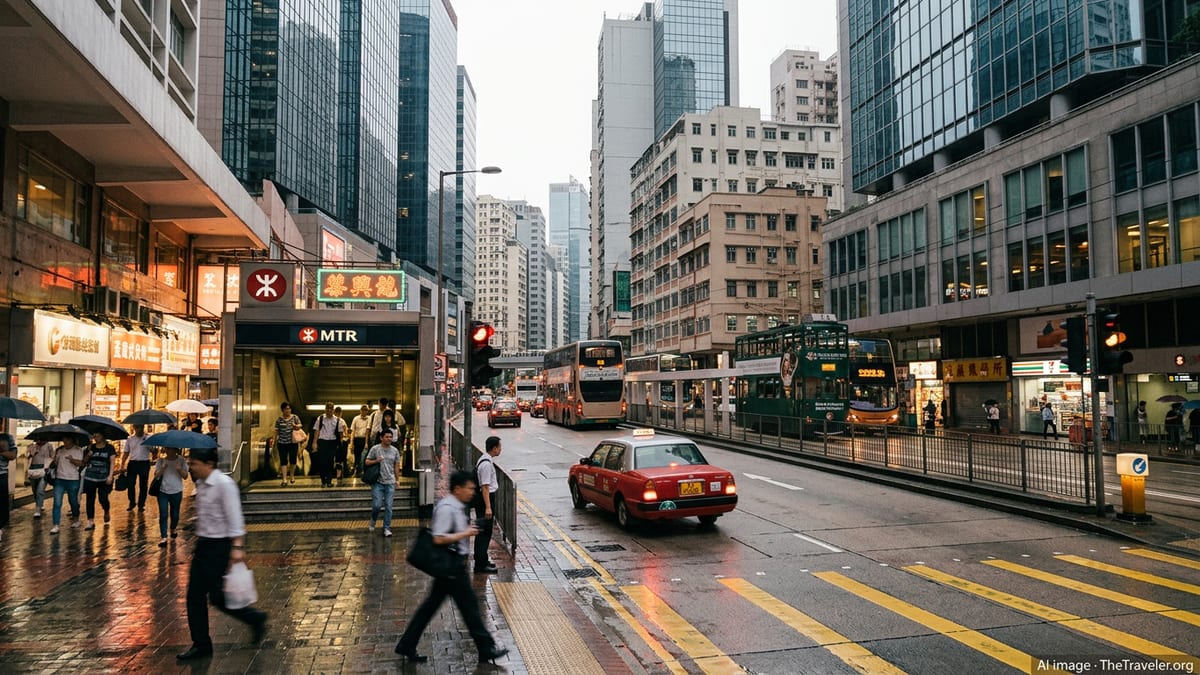
For a compact territory, Hong Kong has an unusually rich mix of transport: an extensive MTR metro network, double decker buses, heritage trams, minibuses, three types of taxis, and iconic harbour and outlying island ferries. Services are frequent, reasonably priced by global standards, and heavily used by residents, so visitors can rely on public transport for almost all journeys.
Most major attractions, business districts and hotel areas sit on or near an MTR line, with buses and trams filling the gaps. Ferries connect Hong Kong Island, Kowloon and the outlying islands, while taxis are widely available for late night trips or door to door convenience. Ride hailing platforms such as Uber also operate, although the government approved licensing regime for these services is still being phased in and fully licensed platforms are not expected until at least late 2026, so rules may continue to evolve.
Transport information is easy to access in English. MTR and bus stations display bilingual signs, and announcements on most services are made in Cantonese, English and Mandarin. Journey planners built into map apps are generally reliable for real time departures and route choices. The key decision for visitors is how to pay: with an Octopus stored value card, contactless bank card, mobile wallet, QR code ticket, or a mix of all four.
Because of the variety of modes and payment options, it is sensible to decide your basic strategy on day one. If you will be in Hong Kong for several days and using public transport often, an Octopus card or mobile Octopus remains highly convenient. If you prefer not to manage stored value, using your existing Visa or Mastercard directly at gates and card readers is increasingly practical, especially on the MTR and major bus routes.
Octopus is Hong Kong’s best known transport smart card and is still widely used by residents for trains, buses, ferries, trams and small purchases in shops. Visitors can buy an on loan physical Octopus at most MTR customer service centres in town and many convenience stores. A small refundable deposit is charged, and unused stored value can be refunded with a handling fee if the card is returned after a short stay. Android and some mobile wallet users can also add a digital Octopus to their phones and pay with a tap, which is accepted at hundreds of thousands of transport and retail points across the city.
For short visits, the Octopus for Tourists app and visitor focused “travel super pass” products occasionally marketed by Octopus offer time limited packages that bundle public transport rides and, in some cases, additional benefits such as attraction discounts. These promotions and their exact coverage change periodically, so check the latest details at the time of purchase and confirm whether they cover all the modes you plan to use.
Since 2024, the MTR has allowed passengers to tap in and out with contactless Visa and Mastercard credit or debit cards, as well as certain UnionPay cards, without needing to buy a separate transport card. Many franchised bus routes and some ferries also accept international contactless bank cards stored in physical form or in mobile wallets. This makes it realistic for visitors to skip Octopus entirely if they prefer, though a physical or mobile Octopus can still be faster on busy buses and in small shops that may not take foreign cards.
Mobile wallets such as Apple Pay, Google Pay and AlipayHK can be linked with Octopus or bank cards to pay on MTR gates and transport readers. In addition, QR code ticketing through the official MTR app and partnered payment providers is expanding. For most travellers, however, the simplest approach remains either a single Octopus used for everything or direct contactless payment with the same bank card every time, which avoids confusion at the gates. Whichever method you choose, always use the same card or device to tap in and tap out on each journey to avoid incomplete trips and penalty fares.
Riding the MTR, Light Rail and Airport Express
The MTR is the backbone of urban transport in Hong Kong, linking the airport and major districts on Hong Kong Island, Kowloon and the New Territories. Trains are fast, clean and frequent, often every two to four minutes in the daytime. All stations have clear bilingual maps and signage, and platforms have screen doors and markings that make boarding orderly even at peak times.
For most journeys within the city, you simply tap your Octopus, bank card or mobile wallet on the reader at the entry gate, ride to your stop, then tap again at the exit gates. Fares are distance based and deducted automatically. Transfers between lines inside paid areas are free, so you can follow the coloured line signs and platform arrows without worrying about extra charges, as long as you do not exit to the concourse.
In the northwestern New Territories, the MTR Light Rail system runs as an at grade tram like network with open platforms and an honour based fare system. Passengers tap on card readers before boarding and again when alighting, but there are no entry barriers. Random inspections are carried out, so always remember to tap to validate your trip. The Light Rail is especially useful if you are staying in Tuen Mun, Tin Shui Wai or Yuen Long and want to explore local neighbourhoods beyond the heavy rail stations.
The Airport Express line links Hong Kong International Airport with the central business districts in around 24 minutes to Hong Kong Station, with intermediate stops at Tsing Yi and Kowloon. Trains typically run every 10 minutes. Fares are higher than for ordinary MTR lines, reflecting the dedicated service and luggage friendly carriages, but there are occasional promotions such as discounted same day return tickets or event linked specials. Many travellers choose the Airport Express to reach the city swiftly, then transfer to the regular MTR or a taxi from Hong Kong or Kowloon Station for the final leg.
Buses, Trams and Minibuses
Hong Kong’s double decker buses fill in many of the gaps between MTR corridors and reach hilly neighbourhoods that rail lines cannot serve. Operating companies run dense networks on both sides of Victoria Harbour and into the New Territories. Routes are numbered and signposted in English and Chinese, with major stops listed at each bus stop. On most urban routes you board at the front, tap your Octopus or contactless card on the reader, then exit at the middle or rear door. Fares are usually distance based and charged on boarding, so there is no need to tap off unless specifically indicated.
For many scenic journeys, buses are as much an experience as a means of transport. Routes to The Peak, Repulse Bay, Stanley, Shek O and Sai Kung pass through steep mountain roads and coastal scenery, especially from the upper deck. Traffic can be heavy during weekends and holidays, so allow extra time and avoid cutting it too close for airport or train departures. Air conditioning is standard, but seats can fill up quickly on popular lines and at rush hour.
On Hong Kong Island north shore, the iconic electric trams, known locally as ding ding, run on fixed tracks between Kennedy Town and Shau Kei Wan. Trams are slower than the MTR but provide an atmospheric, very inexpensive way to see the city at street level. You board at the rear, ride as long as you like along the line, then pay with Octopus or exact change when alighting through the front door. Unlike buses, tram fares are a flat rate regardless of distance, which can be excellent value for longer rides.
Green and red minibuses complement the main bus network, running fixed or semi fixed routes with smaller vehicles, typically seating around 16 passengers. Green minibuses usually have set fares and routes posted in English and Chinese, and payment is made with Octopus or exact cash when boarding. Red minibuses operate more flexibly, often without full English signage, and can be confusing for first time visitors. Unless you are with a local or know the route well, green minibuses and regular franchised buses are usually the more straightforward choice.
Taxis and Ride Hailing
Taxis remain a convenient option in Hong Kong, especially late at night when MTR services wind down, during heavy rain, or when you are travelling with luggage or in a group. All taxis are metered and air conditioned, and most drivers accept Octopus as well as cash. Some vehicles also take contactless cards or mobile wallet payments, but this is not yet universal, so it is wise to carry sufficient cash or confirm payment methods before setting off if you are relying on card or app payments.
There are three types of taxis, distinguished by colour and operating area. Red urban taxis can operate almost everywhere except some parts of Lantau Island, and are the most common. Green taxis focus on the New Territories, while blue taxis mainly serve Lantau Island, including Hong Kong International Airport and Tung Chung. Flagfall fares were last adjusted in mid 2024, with a higher starting price for red urban taxis than for New Territories or Lantau cabs, followed by incremental charges per distance travelled. For most central journeys, taxi fares remain modest compared with many large cities, but congestion can increase travel times significantly at peak hours.
You can hail taxis on the street, wait at designated ranks outside major hotels, shopping centres and transport interchanges, or book through phone and app based booking services. Taxis display a red “For Hire” sign when available. Drivers may decline trips that take them far from their licensed operating area, such as a New Territories taxi being asked to take a passenger to some parts of Hong Kong Island, so be prepared to wait for the appropriate colour cab in fringe locations.
Ride hailing platforms such as Uber operate in a grey area but are popular among some locals and visitors for app based booking and non cash payment. The Hong Kong government passed legislation in 2025 to license and regulate ride hailing platforms, vehicles and drivers, with the first fully licensed services expected no earlier than late 2026. Until that framework is fully implemented, availability, pricing and consumer protections may differ from what travellers are used to in other cities. If you choose to use ride hailing, check current regulations and always confirm meeting points, vehicle registration and driver details carefully before boarding.
Ferries Across the Harbour and to the Outlying Islands
Hong Kong’s harbour and island geography makes ferries an integral part of the transport system. For many residents of Lantau, Lamma, Cheung Chau and Peng Chau, ferries are daily commuter services rather than sightseeing experiences, and visitors can benefit from the same frequent, straightforward links. Most ferries accept Octopus for payment, and some also allow contactless bank cards, though small operators may still prefer cash.
The best known route is the Star Ferry across Victoria Harbour, linking Central and Tsim Sha Tsui. The short crossing offers panoramic skyline views and is a nostalgic way to travel between Hong Kong Island and Kowloon. Fares are low, with slightly higher prices on the upper deck and for air conditioned cabins where offered. Service frequency is generally every few minutes at peak times, tapering off later at night.
Beyond the Star Ferry, outlying island services depart mainly from Central Piers on Hong Kong Island and from a few locations in the New Territories. Ferries to Lamma Island, Cheung Chau, Peng Chau and Mui Wo on Lantau have both ordinary and fast services, with travel times typically ranging from around 25 minutes to under an hour, depending on destination and vessel type. Timetables vary between weekdays and weekends, with extra sailings at busy times, so it is prudent to confirm the last return ferry before committing to a late night island dinner.
In the inner harbour, additional ferry routes connect North Point and Kwun Tong, and other neighbourhood pairs, providing an alternative to congested road tunnels and bridges. These services can be particularly useful during rush hour when cross harbour road traffic slows significantly. Weather conditions such as typhoons or very strong monsoon winds can disrupt or suspend ferry operations altogether, so always check official notices during severe weather signals and have a backup plan by rail or road where possible.
Typical Travel Times, Peak Hours and Practical Tips
Despite its density, Hong Kong is relatively compact in terms of travel times. From Central to Tsim Sha Tsui, a cross harbour MTR journey typically takes under 10 minutes platform to platform, with similar times between Central and Causeway Bay. Central to Mong Kok is usually under 20 minutes on the MTR, while bus journeys covering the same routes can take longer during heavy traffic. From the airport to Hong Kong Station, the Airport Express journey is around 24 minutes, while airport buses cost less but may take 45 minutes to more than an hour depending on traffic and final destination.
Peak commuting hours on weekdays are roughly from 8:00 to 9:30 in the morning and 5:30 to 7:30 in the evening, when MTR trains and main bus routes become crowded and station platforms can be busy. Sunday afternoons and public holidays can also be congested on lines and routes serving popular hiking trails, beaches and shopping districts. If your schedule is flexible, starting journeys slightly before or after the core peak can make a noticeable difference in comfort.
Etiquette on Hong Kong public transport is straightforward: queue at marked lines on platforms and at bus stops, let passengers alight before boarding, stand on the right side of long escalators if you are not walking, and avoid eating or drinking inside MTR paid areas where it is not allowed. Priority seats are clearly marked and should be yielded to the elderly, pregnant, disabled or passengers with young children.
Finally, always factor in a margin for weather. Hong Kong’s wet season runs roughly from May to September, with intense but often brief downpours that can slow traffic and crowd covered walkways and stations. During very strong thunderstorms or typhoon signals, ferry services and some road operations may be disrupted. In those conditions, the MTR usually remains the most reliable mode, though some above ground sections can be affected by high winds or flooding in extreme cases.
The Takeaway
Getting around Hong Kong is straightforward once you understand the basic structure of the network. The MTR forms the fast, reliable spine of urban transport, supported by extensive bus routes, historic trams, a varied ferry network and an ample supply of taxis. Payment is increasingly flexible, with a choice between the long established Octopus system, digital Octopus on phones, QR code tickets and international contactless bank cards.
For most visitors, the combination of MTR and buses will cover the majority of journeys, with trams and ferries offering atmospheric alternatives along the harbour and to the outlying islands. Taxis remain useful for late night trips, luggage heavy transfers and hard to reach destinations, while ride hailing options are evolving as new regulations take effect. By planning around peak hours, checking the latest fare offers and weather advisories, and choosing a simple, consistent payment method, you can move confidently through one of Asia’s most dynamic cities.
Above all, Hong Kong’s transport system rewards curiosity. A tram ride through the neon streets of North Point, a bus winding up to a hilltop temple, or a ferry gliding across Victoria Harbour can all become memorable parts of your trip, not just ways of getting from one place to another. With a bit of preparation and a willingness to explore, every journey in Hong Kong can add another layer to your experience of the city.
FAQ
Q1. Do I still need an Octopus card, or can I just use my contactless bank card?
Many visitors now rely entirely on contactless Visa or Mastercard for the MTR and major buses, but an Octopus card or mobile Octopus remains more widely accepted, especially on smaller operators and in shops that may not take foreign cards. If you will use public transport heavily or visit outlying areas, having an Octopus is still convenient.
Q2. What is the easiest way to get from Hong Kong International Airport to the city?
The Airport Express is the fastest and most straightforward option for many travellers, reaching Hong Kong Station in around 24 minutes with frequent departures. Airport buses cost less and can be useful if they stop close to your hotel, but journey times vary with traffic. Taxis offer door to door convenience, particularly late at night or with heavy luggage.
Q3. Are taxis in Hong Kong safe and do they use meters?
Licensed Hong Kong taxis are generally safe, regulated and required to use meters. The driver should start the meter when the journey begins, and the final fare is based on distance and any surcharges, which are listed inside the cab. If you need a receipt, you can request one at the end of the ride.
Q4. How late do the MTR and buses run at night?
MTR services usually run from early morning until around midnight, with last trains varying slightly by line and station. Main bus routes often continue later or operate overnight services on key corridors. If you plan a very late evening out, check the last train times in advance and be prepared to use a taxi or night bus for the return.
Q5. Can I use the same card for all types of public transport?
A single Octopus card can usually be used on the MTR, Light Rail, most buses, trams and many ferries, as well as in convenience stores. If you use a contactless bank card instead, it will generally be accepted on the MTR and major franchised bus routes, but coverage is not yet universal across every operator, so some smaller services may still require Octopus or cash.
Q6. What is the difference between the red, green and blue taxis?
Red taxis, often called urban taxis, operate across most of Hong Kong, including the main urban areas. Green taxis mainly serve the New Territories, while blue taxis operate primarily on Lantau Island, including the airport area. Fares and permitted operating zones differ slightly, so drivers may decline trips that take them well outside their authorised area.
Q7. How do I pay on trams and minibuses?
On the Hong Kong Island tram system, you board at the rear and pay the flat fare with Octopus or exact change when you exit through the front. On green minibuses, you usually pay on boarding with Octopus or exact cash, based on the posted fare. Red minibuses can be more informal, and unless you know the route and local customs well, they are best approached with caution.
Q8. Are the ferries suitable for everyday use or mainly for sightseeing?
Harbour and outlying island ferries are essential commuter services used daily by residents, and visitors are simply sharing the same practical routes. The Star Ferry across Victoria Harbour is both a commuter route and a classic sightseeing experience, while island ferries are the primary way to reach places like Lamma and Cheung Chau for hikes, beaches and seafood restaurants.
Q9. What should I watch out for during typhoons or heavy rain?
During strong monsoon rains or typhoon signals, ferry services may be reduced or suspended and road traffic can slow significantly. The MTR usually remains the most reliable option, particularly for cross harbour travel, but above ground sections can be affected in extreme weather. Always check official announcements and allow extra time when severe weather is forecast.
Q10. Is English widely used on Hong Kong public transport?
Yes. Station names, maps and directional signs are printed in both Chinese and English, and announcements on most MTR trains, many buses and ferries are made in Cantonese, English and Mandarin. This makes it relatively easy for English speaking visitors to navigate the network and confirm stops and interchanges.