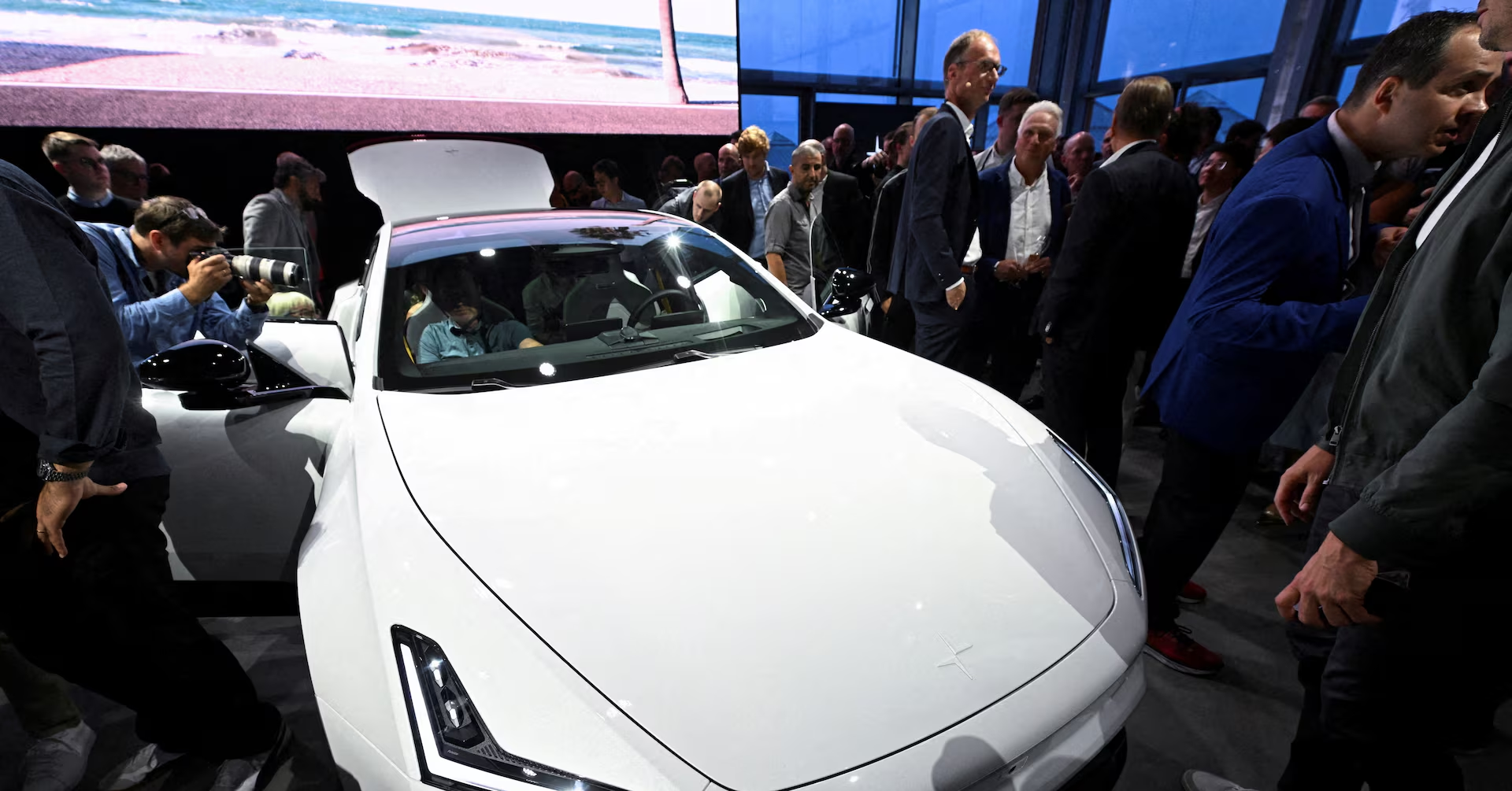
Q3 net loss widens to $365 million from $323 million a year ago
Revenue jumps 36% in Q3, but tariffs and costs hit margins
Shares drop as much as 17%
Nov 12 (Reuters) – Polestar reported a wider third-quarter loss on Wednesday and said it would conduct a reverse stock split – reducing the number of its existing shares while increasing their value – in an attempt to retain its Nasdaq listing.
Shares in the company, majority-owned by China’s Geely Holding (GEELY.UL) and chair Li Shufu, dropped as much as 17% in early New York trading.
It also reported a third-quarter net loss of $365 million, compared with a $323 million loss a year earlier.
RESULTS ‘CLEARLY DISAPPOINTING’, CFO SAYS
Polestar’s shares, hit by U.S. tariffs, model delays, debts and fierce competition, are languishing below $1, prompting Nasdaq to warn it could be delisted from the exchange for failing to meet listing requirements.
A reverse split does not change the value of investors’ overall holdings but can mechanically lift the share price above $1 to regain compliance.
“The result of Q3 has been clearly disappointing for us… we are continuing suffering pricing pressure on our vehicles in addition to having a higher cost of production due to the duties,” said Polestar’s finance chief Jean-Francois Mady in a call for analysts.
While third-quarter revenue rose 36%, Polestar was hit by costs related to so-called residual value guarantees in North America. Common in EV leases, they force Polestar to cover the gap when resale values fall short of promised levels – a growing burden as used EV values slide.
The company has this year cut about 20% of its previous 2,500-strong workforce, recently slashing hundreds of jobs in research and development to lean more on Geely, echoing moves by former co-founder Volvo Cars.
The donut chart shows Polestar’s sources of revenue in 2024, U.S for 11%, Europe for 75% and the rest for 14%.
Polestar has also shifted to a dealer-focused model and is leaning harder on Europe to offset weak U.S. demand, where buyers increasingly favour hybrids and gasoline cars.
When unveiling the Polestar 5 GT in September, the company said it would skip launching in the U.S. and China, two of the world’s most lucrative markets.
Polestar’s shares have fallen over 93% since its stock market debut in 2022. The company has also struggled with its debt covenants, having to negotiate amendments with lenders to stay compliant.
Reporting by Marie Mannes in Stockholm and Zaheer Kachwala in Bengaluru. Editing by Mark Potter
Stockholm-based company news correspondent who mainly covers anything to do with retail and industrial companies in Sweden as well as other sectors with Swedish companies. She previously covered the general Nordic stock market from Gdansk, reporting on a range of subjects, from companies exiting Russia to M&As and supply chain concerns. Marie has degrees in journalism and international relations and is keen on finding stories that drive the market and that have unreported elements to it.