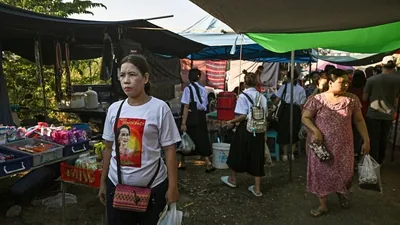
DELICIOUS SMELLS of Myanmar rise from bamboo stalls: mohinga fish soup, spicy pork sausages, fermented fish paste. People sip beers and smoke cheroots around a campfire while a guitarist plays popular Burmese songs. This night market, in Chiang Mai in northern Thailand, takes place on land that was once occupied by a junkyard. Ko Thet began clearing up the space a year ago; he planted trees and laid down turf. It is symbolic, he says, of what his fellow Burmese in exile have to do: take “root in foreign soil”.
DELICIOUS SMELLS of Myanmar rise from bamboo stalls: mohinga fish soup, spicy pork sausages, fermented fish paste (Getty)
Mr Thet fled his home in 2021 after the armed forces took power in Myanmar in a coup and launched a crackdown on their opponents. Like many Burmese who have sought refuge from hunger, forced conscription, attacks from the army and last year’s devastating earthquake, he ended up in Thailand. The UN thinks there are 4.6m Burmese in that country. About half of them have arrived since 2021. Some 40% are undocumented. They include entrepreneurs and skilled professionals: doctors, teachers, engineers.
Some of the arrivals are more fluent in English and better with technology than their Thai peers. Most are prepared to accept lower wages. An increasing number of Burmese work in businesses that cater for Thailand’s numerous foreign tourists.
Nye Chi is one of them: she sells a pickled-tealeaf salad from a stall she runs with her fiancé in Chiang Mai. She studied IT at university and dreamed of becoming a journalist. She says the coup “stole” her future. When the conflict began she joined a rebel army’s medical team and trained as an anaesthetist. But she found it impossible to save lives with only paracetamol as a painkiller and with basic medical tools, so she left for Thailand to earn money for her family. It is too dangerous for her to go home. But like many Burmese, she does not feel safe in Thailand either.
Thailand has not signed the 1951 UN Refugee Convention and does not formally offer protection to asylum-seekers. The influx has led to a surge of xenophobic rhetoric in which the migrants are portrayed as a burden on local services and a threat to locals’ jobs. Many of the new arrivals risk being arrested in raids and bundled back across the border. In some cases men who have fled conscription in Myanmar have been handed straight back to the generals they escaped from. Thai security forces are sometimes accused of extorting refugees, including by selling them unofficial “police cards” that are supposed to protect them from deportation.
In theory migrants from Myanmar—even undocumented ones—may apply for a so-called “pink card” issued by Thai authorities that offers the right to stay for a limited time while working in a blue-collar job. The point of this is to serve Thailand’s need for workers who can do “dirty, dangerous, demanding” jobs that locals spurn. That need has only grown since last year’s military conflict between Thailand and Cambodia. In its wake, hundreds of thousands of Cambodian migrants went home. But the process for acquiring one of these permits is expensive, convoluted and involves middlemen.
Ideally Thailand would make it much easier for refugees to find white-collar jobs. International institutions and academics believe the recent influx of educated brains could boost Thailand’s moribund economy. The country is ageing rapidly; it has a fertility rate of just 1-1.2 children per woman and needs new blood. But nationalists oppose the idea.
“Every Person Here Carries a Story”, reads a banner Mr Thet hangs at his market. “Someone Here Might Become Your Friend”, says another. These slogans sum up his aim: to build bridges between Burmese and Thai people. “We do want to go home,” he says. But he knows that this might not be possible for years to come.