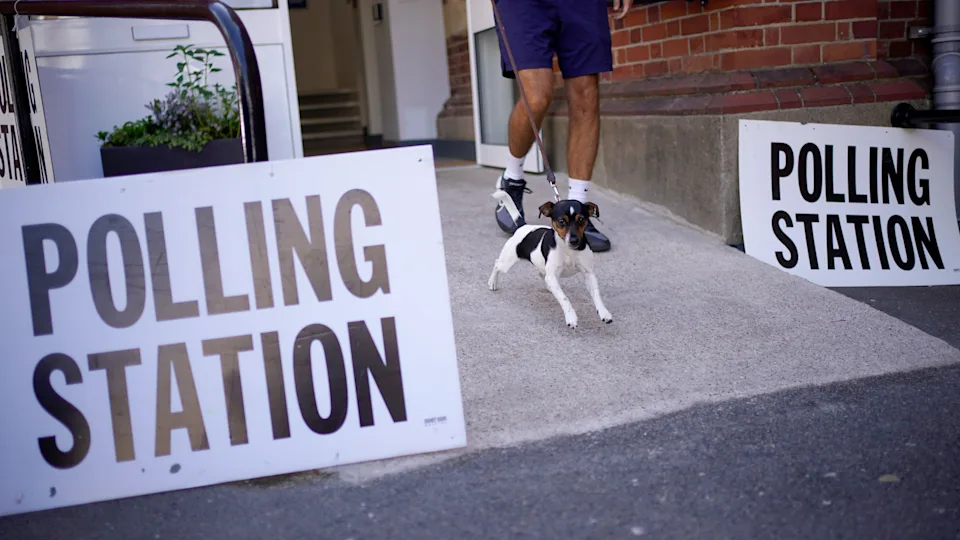
This year’s elections in the UK are much more important than you might think – and the results could have a huge impact in both the immediate aftermath and in years to come.
On May 7, millions of people in England, Scotland, and Wales will elect over 5,000 politicians in elections that could produce a set of results the UK has never seen before.
The Welsh and Scottish national elections could set a path for the breakup of the UK, England’s council elections could decimate Labour and the Conservatives, and the results across the board could be the end of Prime Minister Sir Keir Starmer.
What’s happening where? And what’s changed?
In England, elections are being held for 4,851 council seats across 134 of England’s 317 council areas.
The areas include big cities like London, Manchester, Birmingham and Newcastle, as well as counties including Essex, Norfolk, and Suffolk.
For the first time, people will be able to vote in person on the weekend before polling day, in trials that are being run in Cambridge, Tunbridge Wells and North Hertfordshire.
PM calls for ‘community over division’ in Easter message of ‘renewal’
Student loan interest rates to be capped at 6% for Plan 2 and 3 borrowers
Another trial will allow people in Milton Keynes to vote in a central hub – a shopping centre – which will be open to all residents, rather than restricting them to a single designated polling station.
These trials will be the first time polling booth voting has changed since 1872.
What is happening in Scotland and Wales?
In Wales, the electoral system has changed for the first time since its first devolved election in 1999.
The number of Senedd seats up for grabs is increasing from 60 to 96, but the number of constituencies is decreasing from 40 to 16, and each will elect six politicians.
People in Wales will now only cast one vote, rather than the two in previous elections – and ballot papers will only display party names rather than candidates. Previously, people were able to issue a vote for a candidate and another for a party.
It’s designed to create a fairer system where a party’s number of seats more closely aligns with their vote share, but critics say it will benefit smaller parties.

People in Milton Keynes won’t have to go to a polling station – a government trial means they can attend a central hub instead. Credit: PA
Chancellor promises help is coming – but not yet, and not for everyone
Scotland, which is electing 129 members to the Scottish parliament, is still using the Additional Member Electoral System, which Wales has scrapped, meaning Scots will cast two votes – one for a candidate and another for a party.
In Scotland and Wales, 16-year-olds can vote. The voting age in England will still be 18 until the government lowers it across the UK ahead of the next general election.
Delayed elections
Several elections are taking place in England despite the government previously agreeing to postpone them due to capacity issues.
However, a legal challenge by Reform UK means they are still going ahead.
Politicians elected in Wales and Scotland will make decisions that affect their whole country, while councillors in England only preside over their local areas.
All of these elections are critical for the Labour Party and could be fatal for Starmer.
Labour at risk – the end of Starmer?

A leadership challenge against Prime Minister Keir Starmer could be launched if Labour performs poorly. Credit: PA
A poor performance in May really could be the beginning of the end for the prime minister, who has insisted he would never resign.
Parties of government often perform badly in mid-term elections – and that’s what Labour spinners will be saying after the elections – but Labour’s dramatic fall from a landslide general election in 2024 is remarkable.
Just under two years ago, Labour looked set to dominate the UK. It was expected to take Scotland back from the SNP for the first time since 2007 and was going to continue its winning streak in Wales.
But Starmer’s unpopularity means Labour looks set to not win in Wales for the first time, behind Plaid Cymru and Reform UK.
‘I gave birth then got cancer’: Mums demand the right to pause maternity leave
‘Really unfair’: Lack of parental leave forcing kinship carers to quit work
Starmer is so unpopular in Scotland that in February, the leader of Scottish Labour, Anas Sarwar, held a press conference demanding he quit as prime minister.
But that did not shift the dial, and Labour could end up with not only fewer seats than the Scottish National Party, but Reform UK too.
If Labour loses significant ground in England, and fails in Wales and Scotland, it’s likely his MPs will seek to replace him with either Angela Rayner, Wes Streeting, or someone else.
Nationalist control – the breakup of the UK?
Starmer’s survival is not the only thing on the line here – results in Scotland and Wales could spark the breakup of the United Kingdom.
If Plaid Cymru and the SNP win their elections, it would be the first time that each devolved nation is run by nationalist parties that want to leave the UK – along with Sinn Féin, which has the most seats in Northern Ireland.
The SNP says winning a majority in May would be proof Scots want another independence referendum after they voted to remain in 2014.
‘Disgusting’: Greens’ Polanski slams PM’s drug comments in economic speech
New recycling rules come into force across England – what is changing?
Plaid wants independence for Wales as well, but the nationalist party says it will not be calling for a referendum immediately if it wins in May.
Leader Run ap Iorworth says they need to prove themselves as a party that can run Wales before campaigning for independence if it wins a second consecutive election.
Sinn Féin, which is in power in Northern Ireland, also wants to leave the UK however, that would be more complicated because of the Good Friday Agreement.
Subscribe free to our weekly newsletter for exclusive and original coverage from ITV News. Direct to your inbox every Friday morning.
Labour, however, has already insisted there will not be another referendum in Scotland and would be extremely unlikely to allow one in Wales or Northern Ireland.
However, if nationalist parties continue to win for years to come, calls for independence will only grow louder.
Reform and the Greens – the end of two-party politics?
It’s been said since the general election in 2024 that the UK’s two party system could be coming to an end – and these elections are a chance for Reform UK and the Greens to prove that.
Reform UK’s Nigel Farage has pledged to replace the Conservatives and Zack Polanski says the Greens want to do the same with Labour.

Nigel Farage and Zack Polanski are leading two insurgent parties seeking to dramatically disrupt the UK political landscape. Credit: PA
Both parties are still considered small in the grand scheme of things; they have very little representation across the UK – but by beating Labour and the Tories, they will show their supporters an alternative could be possible.
But a lot is at stake for them too – if Reform UK fails to emulate its poll rating in these upcoming elections, people might wonder whether their support has peaked and may start considering other parties.
If the Greens perform poorly it could show voters the environmentalists can only win in pockets of the UK.
Both parties are predicted to do well; Reform thinks it can win in Wales and Polanski thinks he can turn London Green.
But we can’t forget the Liberal Democrats, traditionally the UK’s third party. They often perform well outside general elections when Labour or Conservative supporters want to try something else.
Aside from the wider political implications, the elections on May 7th are hugely important for choosing who’s in charge of things like education and health in Scotland and Wales, and who will make local decisions on things like road works and planning applications in England.
So now its for you to decide which party will run your bin collections, and which party you want to put in the bin.
Have you heard our podcast Talking Politics? Tom and Robert dig into the biggest issues dominating the political agenda in every episode…