After reports in Chinese official media claimed on Monday that US planes crashed and some naval vessels were damaged “after being hit by Iranian missiles”, questions came up again about the origin of such advanced missiles. But China has now denied that it had finalised a deal with Tehran to sell CM-302 supersonic anti-ship missiles before the joint US-Israeli airstrikes began on the West Asian.

Follow: Live updates on the conflict
If these were delivered, the missiles would be among the most advanced military hardware to be transferred to Iran by China in recent years.
Chinese foreign ministry spokesperson Mao Ning, however, said all the talk of such a deal is part of a disinformation campaign, news agency PTI reported. “As a responsible major country, China always abides by its international obligations. China opposes ill-intentioned association and the spread of disinformation, and hopes relevant sides will choose the course of action conducive to de-escalating the tense situation,” she also said.
Also read | Saudi Aramco shuts down Ras Tanura refinery after drone strike
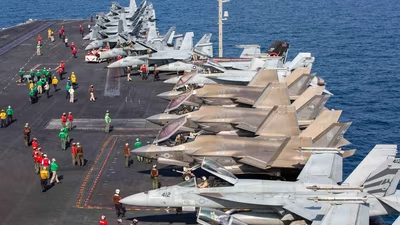
The US has assembled a flotilla of naval groups, including aircraft carriers, close to Iranian waters to carry out the current military campaign against Iran. These become targets for such missiles, if indeeed Iran has them.
Considering the close ties Tehran enjoys with Beijing — Iran is one of the biggest oil suppliers to China — the focus has been on whether superpower China will go beyond condemnation of the killing of Ayatollah Ali Khamenei, and continue close ties with the new leadership in Tehran.
Also read | US confirms its three F-15 fighter jets shot down, says Kuwait did it mistakenly
China appears guarded in its reactions so far. It was not aggressive about the recent capture of its close ally, Venezuelan leader Nicolas Maduro and his wife, and the assassination of Khamenei, by American forces.
US President Donald Trump is due to visit Beijing on March 31. But will that go ahead as planned? Mao said China and the US are in communication regarding interactions between the two heads of state.
To a question from an Iranian journalist about how China can play a role in preventing the US from carrying out unilateral actions, such as assassinating leaders of sovereign countries, Mao reiterated China’s firm opposition to the use of force in international relations or infringement on other countries’ sovereignty and security.
“China stands ready to work with the international community to call for peace and stop the conflict, resolve issues through dialogue and negotiations, and maintain peace and stability in the Middle East and the world at large,” she said.

