The US-Iran war in West Asia has not just caused an oil and gas supply crisis and sent energy prices soaring amid a near closure of the Strait of Hormuz, but it has also affected items products made from plastic and glass. The conflict has unsettled the global plastics and glass market, as disruptions in oil supply and key components used in manufacturing affect availability worldwide.
Rising oil prices linked to the Iran war are driving up the cost of plastic production. (Getty Images via AFP)
Notably, plastic items are partially made from oil, the price of which has climbed by over 40% since the war began in late February. Glass container makers rely heavily on commercial gas supplies to keep their furnaces running. US-Iran war.
Meanwhile, there are growing fears that the cost of many consumer goods could rise as key raw materials become more expensive.
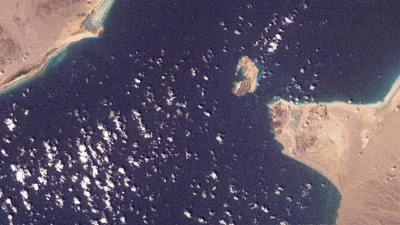
The rise in material prices is being driven by higher oil and natural gas prices, which have jumped partly due to Iran’s threats to shipping in the Strait of Hormuz. This route is crucial for global energy and petrochemical supply chains.
More than 99% of plastics worldwide are produced using fossil fuels, according to the Center for International Environmental Law.
As a result, higher energy costs are increasing both production expenses and the price of raw materials. This includes polyethylene (PE) and polypropylene, two of the most commonly used plastics globally.
West Asia remains a key supplier of plastic raw materials. The region contributes nearly 25% of global exports of polyethylene and polypropylene, as per data from S&P Global Energy. Buyers have shown caution over delivery timelines from West Asian suppliers due to delays in transit through the Strait of Hormuz and congestion at ports in the region, as per the data.
While prices for plastic resins have already risen across most manufacturing sectors worldwide in the past 30 days, another issue is the lack of substitutes for plastics.
Plastics are used widely across industries such as packaging, construction, automobiles and healthcare. Shifting to substitutes like paper or glass is costly and takes time, as it requires major changes in production systems, CNN said in a report.
West Asia crisis and its impact on glass manufacturing
The glass industry has also been hit hard by the West Asia crisis due to its heavy energy requirements. Gas-fired furnaces must run continuously at temperatures above 1,000 degrees Celsius (1,832 degrees Fahrenheit) to keep glass in a molten state and avoid defects.
India’s strong dependence on gas across sectors such as industry, households, farming and public transport makes its factories among the most exposed in Asia.
Suraj Mehta, chief strategy officer at Hindusthan National Glass & Industries, told The Economic Times, “Even a brief interruption in fuel supply can result in severe structural damage, significant production losses and prolonged recovery timelines. Disruptions are cascading into critical supply chain bottlenecks.”
In Uttar Pradesh’s Firozabad, the long-standing glass and bangle industry is facing a deep supply chain problem, causing factory shutdowns, lower output and fewer global orders.
Of the 200 registered glass units in the city, only 130 to 140 are still functioning. The remaining units have shut down completely, as mentioned in an earlier HT report.
The fuel crisis has worsened due to a sharp fall in global demand, especially from the United States, which has long been the largest buyer of Firozabad’s glassware, making up 60% of the city’s total exports.