Editor’s note: Moses Becker is a special political commentator for News.Az. He holds a PhD in political science and specializes in interethnic and interreligious relations. The views expressed in this article are the author’s own and do not necessarily reflect the position of News.Az.
After the collapse of the USSR and the achievement of independence, the countries of Central Asia found themselves in an ideological and political vacuum. They had to undergo a difficult transition from a planned system and state ownership of property to a market economy, where everyone survives as best they can.
Naturally, this created confusion and a loss of direction. A significant part of the population became impoverished and was forced to migrate to other countries in search of work. The Russian Federation itself found itself in no less difficult a situation.
It is therefore not surprising that China moved into the newly formed states. Possessing significant resources, the PRC began to actively develop this new space.
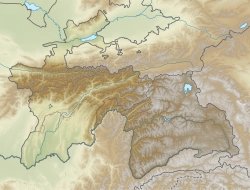
In addition to economic factors, a significant role in strengthening ties between Beijing and Dushanbe was played by the establishment of diplomatic relations in 1992, as well as the existence of a shared 414-km border. This border also contained the seeds of future disputes due to its unresolved status. On August 13, 1999, the “Agreement on the Tajik–Chinese State Border” was signed between Dushanbe and Beijing, under which Tajikistan retained full jurisdiction over a disputed section in the area of the Karzak Pass but ceded about 200 sq. km near the Markansu River to China.
Wikipedia
In May 2002, an additional agreement, “On Border Demarcation and Settlement of Territorial Disputes,” was signed, under which Tajikistan agreed to transfer 1,000 sq. km of the 28,000 sq. km of disputed territory in the Eastern Pamirs to China. On October 6, 2011, the transfer of 1,158 sq. km of Tajik territory under Chinese jurisdiction was completed. On May 6, 2013, according to several international media reports, Chinese troops allegedly entered the Murghab district of the Gorno-Badakhshan region. No official denials of this information were issued.
Ultimately, in any dispute, the stronger side prevails — namely, the one with a more developed economy and a stronger military. It is enough to note that Tajikistan’s GDP in 2025 amounted to only $19 billion, while China’s exceeded $20 trillion. A significant portion of Tajik exports consists of ore concentrates and metals.
Trade turnover between China and Tajikistan in 2013 amounted to $682.1 million, while Tajik exports accounted for only $86.3 million. These exports mainly consisted of raw materials, while China supplied furniture, plastic products, polymers, technical equipment, and vehicles.
China provides Tajikistan with significant loans. For example, in 2012, Dushanbe’s debt to Beijing amounted to $878.5 million. As a result, most of the gold and silver extracted in Tajikistan is produced by the joint Chinese–Tajik enterprise Zarafshan. In 2009, the Zarnisor lead-zinc processing plant was launched, with 51% Chinese capital. In 2012, it produced more than 23,400 tons of lead concentrate and over 37,300 tons of zinc powder for Chinese industry.
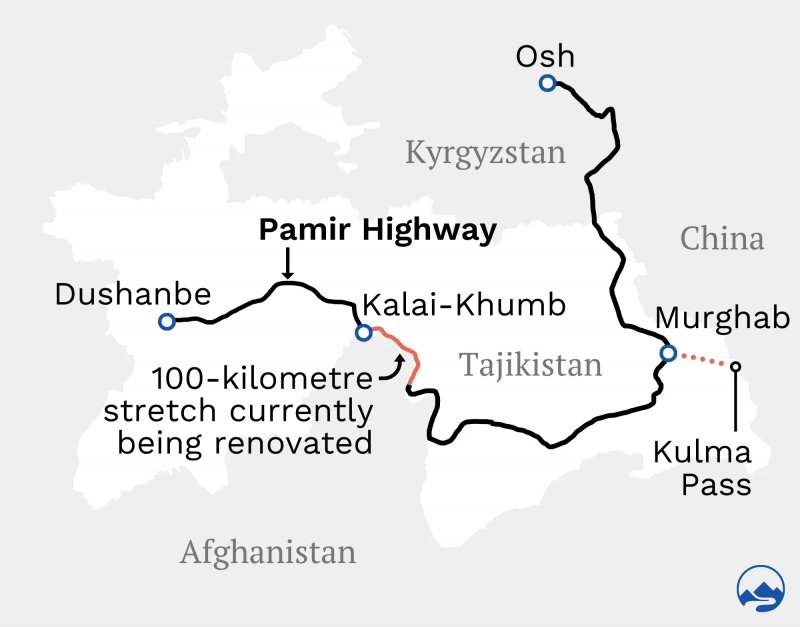
Currently, China is involved in a number of investment projects, including road reconstruction, bridge construction, and infrastructure development connecting different regions of Tajikistan. In addition, several major grant-funded projects are being implemented, including the reconstruction of the Kalai Khumb–Rushon highway worth $120 million, part of the international Dushanbe–Kulob–Kalai Khumb–Khorog–Kulma (border with China) route.
Wikipedia
In recent years, 10 joint projects have been completed, including the construction of the Dushanbe-2 thermal power plant, the Chuntai–Dangara–Sinsilu textile spinning enterprise, a metallurgical plant, the Huaxin Gayur–Sughd cement plant, the Vahdat–Yavan railway tunnel, and factories producing aluminum fluoride and cryolite, among others.
In order to create a favourable environment for Chinese capital, a model of “investment in exchange for access to resources” has been developed. China uses this approach effectively, ensuring access to cheap raw materials for its rapidly growing economy. With vast financial resources, skilled labour, and scientific capacity, China is gradually increasing its presence in Tajikistan’s resource sector through loans and investment projects.
According to expert Zulfikor Ismoiliyon, the danger lies in the possibility that the country may be unable to repay its debts, and that China could, in the near future, legally gain access to its deposits. However, experts close to the government do not see such a threat and describe Beijing as a “reliable partner.”
For example, in a 2017 interview with Radio Ozodi, the then-director of the Center for Strategic Studies, Khudoyberdi Kholiknazar, stated that “China always keeps its promises. All agreements it signs are implemented, contributing to our country’s development.”
This may well be true. Nevertheless, any debt dependency leads to a limitation of sovereignty. As mentioned earlier, there are also territorial disputes involving China and Tajikistan. Currently, Dushanbe owes Beijing more than $1.5 billion, which is difficult to repay. Since the territorial issue has not been fully resolved, the matter remains sensitive.
At one point, on January 11, 2011, the Tajik foreign minister told parliament that China initially claimed 28,500 sq. km of Tajik territory, “almost 20% of the country’s total area.” After the agreement, China received only about 3% of the disputed lands.
However, according to media reports in Central Asia since 2020, China still allegedly maintains claims to parts of Tajik territory. This is reportedly reflected in an article by Chinese journalist and historian Chu Yao Lu, who wrote that Tajikistan began returning China’s “ancestral lands,” allegedly lost under Western pressure at the end of the Qing dynasty (1644–1912). Chinese authorities did not condemn this publication, which some interpret as tacit approval.
Today, Tajikistan’s territory is of interest to Beijing not only for the above reasons. A key issue is the growing integration of Tajikistan’s economy into China’s, which, by leveraging the weaknesses of its partners, gradually increases its access to resources and deepens financial dependency. Tajikistan’s trade balance with China has consistently been negative. For example, in 2019 exports to China amounted to $55 million, while imports reached $605 million; in 2021, $159 million and $679 million respectively.
Most loans are tied loans, requiring the use of Chinese materials, equipment, machinery, technologies, and labour. Moreover, China invests primarily in projects whose output is linked to its own supply chains. In this way, Tajikistan’s resources effectively serve as input for the Chinese economy without equivalent returns.
Recently, China has been actively developing Tajik gold deposits, which are being used as a form of debt repayment. The principle of “investment in exchange for natural resources” is widely applied.
Practice shows that China does not engage in charitable lending, and therefore expectations of debt cancellation or even deferment are unrealistic. In the near future, increased claims by Chinese financial institutions over mineral resources, land, real estate, and other assets cannot be ruled out.
Tajikistan is repaying China not only through transferred territory but also through long-term land leases to Chinese farmers. For example, in 2014, the Chinese state corporation Xinjiang Production and Construction Corps leased 500 hectares of land in the Khatlon region for 50 years.
It is noteworthy that China is relocating some of its textile production to Tajikistan, as labour costs in China are significantly higher. Despite the risks, Dushanbe continues to pursue further rapprochement with Beijing. The country remains locked in a cycle of dependency from which it sees no clear exit.
(If you possess specialized knowledge and wish to contribute, please reach out to us at opinions@news.az).