Published on
September 16, 2025
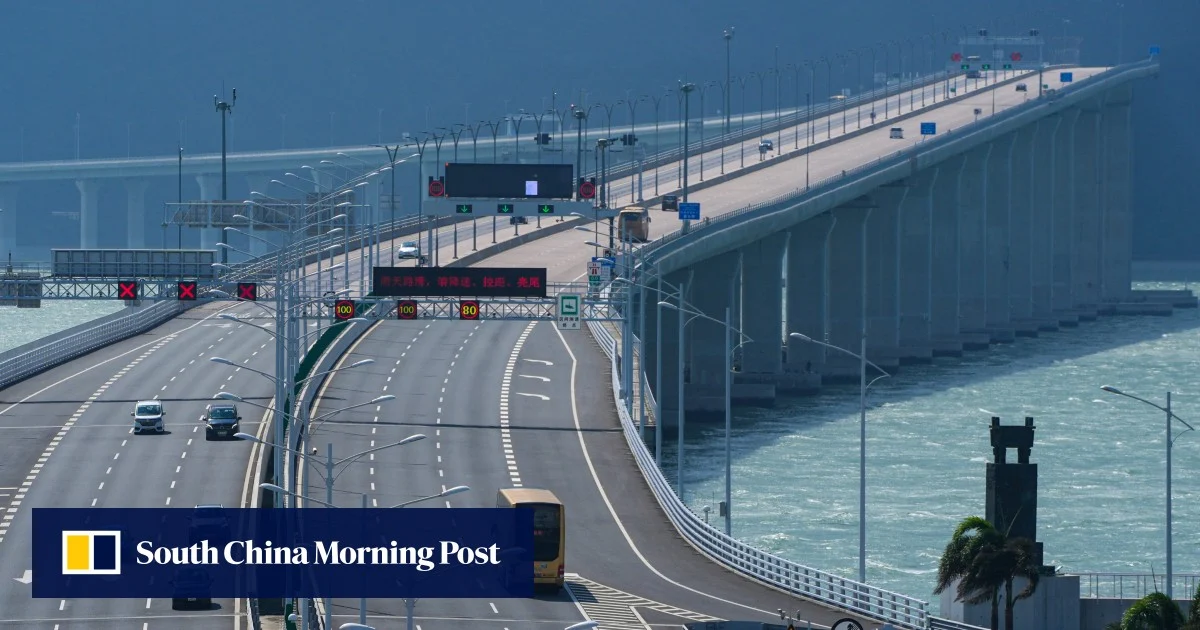
Travel between Hong Kong, Zhuhai, and Macao—three important cities in Southern China—has been completely changed by the Hong Kong Zhuhai Macao Bridge (HZMB), one of the most ambitious infrastructure projects in the area. The astounding 55-kilometre HZMB, which was formally opened on October 24, 2018, connects these cities through an intricate network of bridges, tunnels, and man-made islands. Travelling between these busy metropolises is made easier and faster by the bridge, which is the longest sea-crossing bridge-and-tunnel system in the world.
Since it opened, the bridge has significantly improved travel for tourists, business travellers, and families by facilitating easy travel between Hong Kong, Zhuhai, and Macao for millions of passengers. The bridge has actually already handled more than 90 million passenger trips and more than 18.68 million vehicle trips as of September 2025, which is a significant milestone in its continuous success. With estimates suggesting that passenger numbers could surpass 30 million per year by the end of 2025, its traffic growth is showing no signs of slowing down.
Remarkable Growth in Passenger Traffic
Over the past seven years, the Hong Kong-Zhuhai-Macao Bridge has been a catalyst for significant growth in regional cross-border travel. According to official reports from the Zhuhai port, which serves as a critical entry and exit point for passengers, more than 90 million trips have been recorded since the bridge’s inauguration in 2018. This includes both individual passengers and vehicles, highlighting the bridge’s broad appeal for both personal and commercial travel.
In 2024 alone, passenger traffic reached an impressive 27 million, showcasing the bridge’s popularity. The momentum has carried into 2025, with 21.2 million passenger trips recorded by mid-year. This figure represents a notable 19 per cent year-on-year increase compared to 2024, underscoring the bridge’s growing importance in facilitating cross-border movement. With such remarkable growth, the bridge is poised to exceed 30 million trips by the end of 2025, a new benchmark that further demonstrates its role as a cornerstone of cross-border infrastructure.
Tourism Boom and Economic Benefits
One of the most profound impacts of the Hong Kong-Zhuhai-Macao Bridge has been its ability to boost tourism across the region. The ease of travel between the three cities has been a game-changer for tourism, enabling visitors to move effortlessly between Hong Kong, Zhuhai, and Macao for leisure, business, education, and family reasons. For years, travellers in this region faced long travel times, making it difficult to explore multiple destinations in one trip. The bridge has transformed this dynamic, offering a convenient and efficient way to traverse the region.
In 2025, over 9 million mainland Chinese residents used the bridge for travel, significantly benefiting from the expansion of individual travel policies between the mainland, Hong Kong, and Macao. This increased accessibility has allowed tourism to thrive in all three cities, attracting both local and international visitors. The surge in travel has not only stimulated the tourism industry but has also benefited the retail, hospitality, and transportation sectors, providing a significant boost to the economy.
Particularly noteworthy is the growth in travel by Hong Kong and Macao residents. In 2019, the total number of trips made by residents of these regions was 4.5 million. By 2024, this number had skyrocketed to 16.2 million, reflecting the bridge’s transformative impact. For 2025, projections suggest that the number of trips made by Hong Kong and Macao residents will exceed 18 million, further demonstrating the importance of the bridge in facilitating regional movement.
Enhancing Regional Connectivity and Reducing Travel Time
Before the construction of the Hong Kong-Zhuhai-Macao Bridge, travelling between Hong Kong and Zhuhai was a time-consuming journey that could take up to three hours. The opening of the bridge has dramatically reduced travel time, cutting it down to just 30 minutes. This time-saving innovation has made the bridge particularly attractive to residents of Hong Kong and Macao, who now have the ability to commute between cities with ease and speed. The bridge has become an increasingly popular route for tourism, business, study, and family visits, providing a more efficient alternative to the previous time-intensive methods of transportation.
The reduced travel time has also enhanced the accessibility of these cities for residents and tourists alike. For instance, Hong Kong’s business district is now just a short trip away from the tourism centres of Zhuhai and Macao. Similarly, people travelling for leisure can now easily hop between Hong Kong’s shopping malls, Macao’s casinos, and Zhuhai’s cultural and recreational sites without wasting precious time on lengthy commutes. The new infrastructure has made the region more interconnected than ever before.
Record-Breaking Traffic and Future Projections
The traffic growth has not been limited to annual numbers; it has also seen record-breaking daily figures. On January 31, 2025, the Zhuhai port set a new high, with 156,000 passengers crossing the bridge in a single day. This exceptional figure highlights the bridge’s capacity to handle large volumes of traffic, making it a reliable and vital transport link for the region.
Looking to the future, the Hong Kong-Zhuhai-Macao Bridge is set to continue its role as a key driver of growth and regional integration. With ongoing efforts to enhance cross-border policies and improve transportation services, the bridge will continue to play an essential role in connecting the economies and cultures of Hong Kong, Macao, and Zhuhai. The bridge is also part of China’s broader strategy to foster development in the Greater Bay Area, a region that includes nine cities in southern China, aiming to create a world-class economic zone that fosters collaboration and innovation.
The expansion of cross-border travel plans, especially for mainland residents, is expected to further boost the volume of passengers in the coming years. It is anticipated that as these policies evolve, the number of travellers will continue to rise, strengthening the bridge’s status as one of the most important infrastructural projects in the region.
Conclusion
Without a doubt, the Hong Kong-Zhuhai-Macao Bridge has transformed travel in Southern China by offering a quick, easy, and effective link between three important cities. With more than 90 million passenger trips completed to date and growth anticipated, the bridge has established itself as an essential resource for daily, business, and tourism travel. The bridge will continue to play a significant role in fostering economic integration and cross-border connectivity as the region expands. The Hong Kong-Zhuhai-Macao Bridge has revolutionised accessibility for both locals and visitors, and it will continue to influence travel in the Greater Bay Area.
[Image Source: Government Portal of Macao Special Administrative Region of the People’s Republic of China Official Website]