Published on
March 23, 2026

Image generated with Ai
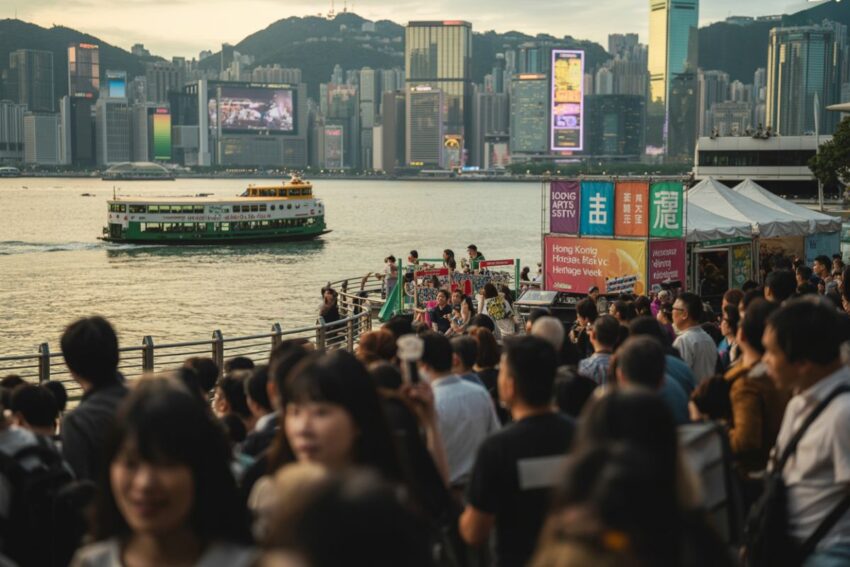
Hong Kong 2026 Tourism Reset Culture, Mega Events and Smart Travel Power Asia’s Revived Gateway City: All You Need To Know captures how the city is using culture‑rich neighbourhood experiences, blockbuster mega events and seamless smart travel upgrades to fully reboot its visitor economy and reclaim its role as Asia’s revived gateway city. In 2026, this tourism reset is not just a marketing refresh but a policy‑driven transformation that links new arts districts, year‑round festivals and digital‑first services into one coherent vision for the future of travel to Hong Kong.
Hong Kong’s 2026 Tourism Reset: Government-Led, Three-Dimensional Vision
Hong Kong’s tourism authorities have entered 2026 with a refreshed blueprint that puts culture, events and smart travel at the center of the city’s next growth chapter. Backed by the Culture, Sports and Tourism Bureau and the Hong Kong Tourism Board (HKTB), the plan seeks to consolidate Hong Kong’s status as a premier international city and a world‑class destination for both leisure and business visitors. The approach is explicitly “three‑dimensional”: diversify source markets, deepen and broaden visitor experiences, and enhance competitiveness through innovation and major events.
Financial support in the 2026–27 Budget gives the strategy real momentum, with HK$1.66 billion allocated to the HKTB to scale up flagship promotions, extend event durations and roll out new themed festivities that showcase Hong Kong’s East‑meets‑West identity. This investment underpins the city’s ambition to turn short‑term visitor traffic into long‑term economic value.
Culture, Neighbourhoods and Year‑Round Experiences
Cultural depth now sits at the heart of Hong Kong’s official tourism narrative, with policy aimed at turning the city into an “East‑meets‑West centre for international cultural exchange”. Authorities are advancing the Blueprint for Arts and Culture and Creative Industries Development and the Tourism Industry Blueprint 2.0 to nurture creative sectors, bolster cultural venues and weave arts into the everyday visitor journey.
Advertisement
Advertisement
Key directions include:
- Strengthening the West Kowloon Cultural District as a must‑visit hub for arts, performance and harbourfront experiences.
- Expanding mega arts and cultural events through a dedicated committee, attracting international shows and home‑grown festivals.
- Partnering with global platforms such as Art Basel to stage immersive Hong Kong culture showcases and connect the city to worldwide arts networks.
This cultural thrust is designed to complement traditional attractions with neighbourhood‑level stories, festivals and immersive events, ensuring visitors encounter living heritage alongside world‑class contemporary culture.
Advertisement
Advertisement
Diversified Markets and Stronger Tourism Infrastructure
On the demand side, Hong Kong is deliberately broadening its visitor base, with HKTB reallocating resources to attract high‑value overnight guests from a wider spread of international and Mainland markets. The aim is to reinforce the city’s role as a tourism hub for the Greater Bay Area while drawing more travellers who stay longer, spend more and explore beyond classic sightseeing corridors.
Infrastructure policy backs this shift. Hong Kong International Airport is entering a new phase of expansion with its three‑runway system, enhanced terminal facilities and closer integration with other Greater Bay Area cities. The opening of upgraded Terminal 2 departure facilities and “Fly‑Via‑Zhuhai‑HK” style schemes are designed to funnel regional passengers through Hong Kong as a major international gateway. Government documents also highlight cruise development, support for the meetings and events sector, and closer coordination across departments to position Hong Kong as a world‑class destination for both leisure and business visitors.
Advertisement
Advertisement
Together, these measures recast Hong Kong as a flexible “multi‑purpose” city that can serve urban explorers, culture lovers, business travellers and Greater Bay Area visitors on a single integrated platform.
Smart Tourism and Innovation‑Driven Competitiveness
The official tourism roadmap also leans strongly on smart tourism to keep Hong Kong competitive in a digital‑first travel market. Under the Tourism Industry Blueprint 2.0 and related smart tourism initiatives, authorities are working with the industry to promote seamless experiences, from digital information access and cashless payments to more personalised itineraries.
Government papers highlight several priority areas:
- Promoting smart tourism solutions that simplify trip planning, navigation and on‑the‑ground spending.
- Using technology and data to support trade partners, package new products and respond quickly to changing visitor behaviour.
- Enhancing mega events with interactive elements and cross‑sector collaborations that link culture, sports and tourism into unified experiences.
The overall goal is to differentiate Hong Kong not only through physical attractions, but also through a consistently smooth, digitally enabled journey that appeals to younger and tech‑savvy travelers.
Seasons, Events and Planning a 2026 Visit
While Hong Kong welcomes visitors year‑round, government‑backed tourism promotions increasingly spotlight a calendar of mega events and traditional festivals spread across all seasons. The HKTB is tasked with extending event durations and layering themed promotions such as strengthened Mid‑Autumn and festive campaigns to attract visitors in different months and encourage longer stays. This approach supports smoother visitor flows and better use of hotels, venues and attractions over the course of the year.
Prospective visitors can access official planning information, event highlights and neighbourhood ideas through Hong Kong’s government‑endorsed tourism platforms and the HKTB’s global channels. As 2026 unfolds, these sources will be the most reliable way to track new cultural programmes, mega events and transport enhancements introduced under the city’s three‑dimensional tourism strategy.
Hong Kong 2026 Tourism Reset Culture, Mega Events and Smart Travel Power Asia’s Revived Gateway City because the city is deliberately using culture, mega events and smart travel as integrated policy tools to rebuild and upgrade its visitor economy. The 2026–27 funding boost for the Hong Kong Tourism Board enables large‑scale campaigns, extended festivals and neighbourhood‑based cultural programmes that give real substance to this tourism reset. By elevating museums, arts districts and home‑grown festivals alongside international showcases, culture becomes a core reason to visit rather than a secondary add‑on.
Mega events now run through the calendar as anchors for Hong Kong 2026 Tourism Reset Culture, Mega Events and Smart Travel Power Asia’s Revived Gateway City, drawing both regional and long‑haul visitors and encouraging longer stays across different seasons. Government policy explicitly treats these large‑scale events as strategic assets, tying them to hospitality, retail and creative industries so that tourism growth supports wider economic diversification. At the same time, airport expansion, cruise support and Greater Bay Area connectivity ensure that surging event demand can be handled smoothly.
Smart travel completes the picture for Hong Kong 2026 Tourism Reset Culture, Mega Events and Smart Travel Power Asia’s Revived Gateway City by making the entire journey more seamless and data‑driven, from digital information and cashless payments to smarter product design for trade partners. These innovation‑focused measures help Hong Kong stand out in a crowded regional market and particularly appeal to younger, tech‑savvy visitors who expect frictionless experiences. Taken together, the cultural depth, event‑led appeal and smart travel infrastructure give solid reasons why Hong Kong can credibly reclaim its role as Asia’s revived gateway city in 2026 and beyond.