Editor’s Note: The following is part of a series from the Sierra Nevada Ally, called Vet Voices, where military veterans in our region share their diverse perspectives, experiences, and ideas–in their own words.
The word “soldier” might conjure up stereotypical images of figures like John Rambo or G.I. Joe. However, veterans are a far more varied population than these pop culture depictions suggest. It’s even been said that the American military contains more diversity than perhaps any other organization in the world. Those who served come in all sizes, skin colors, sexes, and shapes.
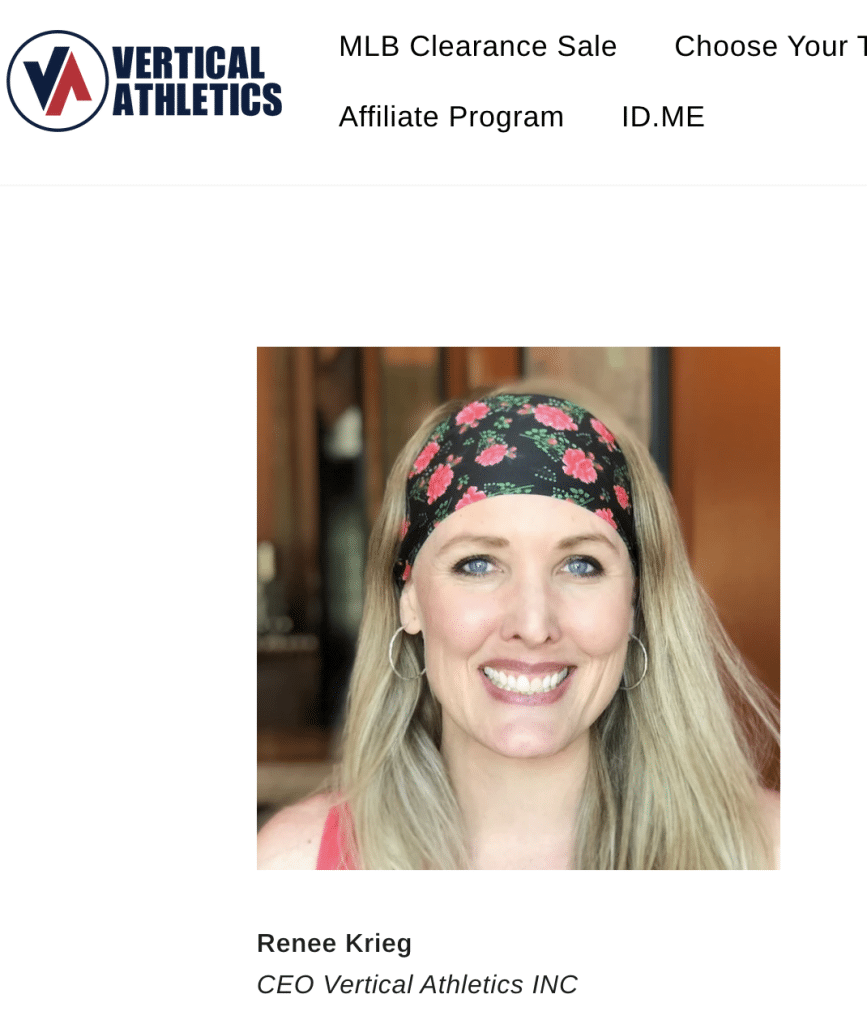
For Reno resident and U.S. Army veteran Renee Krieg, it was her tall, athletic frame that would set her on the path to military service, fashion design, and international entrepreneurship.
Although Krieg’s last name coincidentally means “war” in German, the former military intelligence analyst has always preferred creating beautiful clothing over inflicting destruction.
“I always loved fashion,” Krieg said. “I’m a creative person at heart. I used to take my grandpa’s clothes, cut them up, change them, and sew them into other things when I was in middle school.”
Nowadays, Krieg’s team creates high-quality, stylish garments through her company, Vertical Athletics. She started what is now an international operation in 2008 as a tall-sized athletic apparel company. In the early days, Krieg would travel the country in an RV to exhibit the products at volleyball tournaments, paving the way for the brand’s future successes.
Despite her company’s name, however, Krieg’s path to success was anything but a straight vertical line.
Early Life and Military Service
Growing up in a conservative Michigan household where she played volleyball in school, Krieg completed her undergraduate studies in political science and loosely expected at one point to become a lawyer. Carrying some student loans and ultimately not feeling like pursuing further studies immediately after graduation, she enlisted in the Army in April 2001 in the military intelligence field to help pay off her student debt.
Conflicts in both Afghanistan and Iraq would break out during her first years in the Army. Despite the critical need for intel analysts, Krieg found herself stationed in Hawaii, where she was able to perform her job without deploying to a combat zone. Given her athletic background, Krieg also competed in the elite All-Army Volleyball team.
Despite obtaining high-level security clearances, Krieg ultimately finished her time in active duty and decided not to go work for one of the “alphabet agencies” (CIA, FBI, etc.) that she would have been qualified for.
“I felt that starting my own business would make a bigger impact on the world,” she said.
Krieg left the Hawaiian sun and surf and ventured to Los Angeles where she enrolled at the Fashion Institute of Design & Merchandising (FIDM)—now part of Arizona State University’s fashion program. She studied as she fulfilled her remaining military service as a reservist at a nearby base, this time only working part-time with the military. Krieg experienced the same culture clash so many veterans do upon pursuing collegiate studies post-military service.
“97% of the student body [at FIDM] was 19-20 year old girls,” Krieg chuckled as she recalled. “I was 27-28 at the time, and I had a tremendous amount of life experience.”
Despite this, she credits her full-time studies amidst young women – coexisting with her part-time military reservist duties – as playing a balancing influence.
“Those two extremes brought me back to center and allowed me to adjust to civilian life more quickly than my friends did,” Krieg said.
Krieg made full use of her studies and the hard work ethic she exercised in the Army to start her own business. Yet, she credits much of her success to her own benign ignorance rather than to her savvy.
“It [entrepreneurship] is the ultimate test in grit,” Krieg said. “You’re figuring it out, you’re falling on your face all the time, but it’s what you want, what you love. Had I started working for somebody else, I would have realized how friggin’ hard it is, and I may not have actually started my own company.”
But in 2008, she did start her own company, launching a clothing company centered around making tall-size athletic apparel.
“It’s the classic story,” Krieg reminisced. “I did it because I needed it and it wasn’t out there. I was tall, I couldn’t find pants that were long enough, and I got made fun of [as a young girl] when I had pants that were too short. So that made me feel bad, and it made everyone I know who was tall feel bad.”
Feeling the Need, Answering the Call
Krieg said that when she started her company, most women’s yoga pants had a 30-31 inch inseam. This size serves most women well, given U.S. government data indicating that the average height for American females is approximately 5 foot 4 inches. However, it excludes taller women like Krieg, whose clothing company thus designed athletic pants with 34-inch and even 37-inch inseams, perfect for women in the upper 5-feet range or even taller than 6 feet.
Krieg also originally designed high-quality athletic apparel for men, although she soon discontinued those products. She wryly remarked that lagging sales and anecdotal evidence showed her that “men don’t care what they look like when they’re working out.” Unlike women, most men were unwilling to pay premium prices for her apparel.
As happens in the world of business, Krieg soon found herself pivoting her company’s direction again. After some time selling tall-sized women’s apparel, she and her sister started making adjustable-strap, non-slip headbands. Krieg called them Bani Bands (pronounced “bonnie,” but Krieg said people commonly mispronounced them as “ba-nee,” so the name unofficially stuck). Coincidentally, Taylor Swift was wearing that same style of headband at that time, so many women flocked to this trend.
“[Headband sales] went off … it really grew like crazy,” Krieg said. “It didn’t really make sense to make the clothes anymore because from a profit margin standpoint, I was basically breaking even on the clothes, whereas I was actually making money on the headbands.”
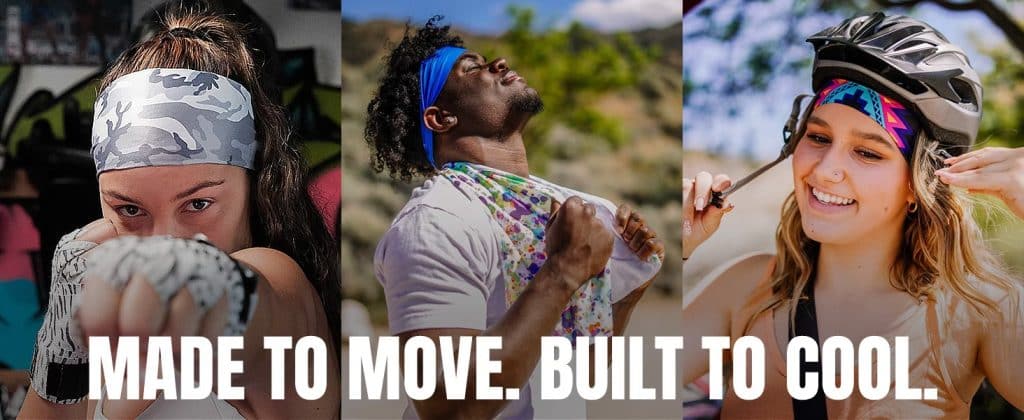
By 2012, Krieg had obtained Major League Baseball licensing rights and thus started printing team logos on headbands, and then in 2016, she started making them with cooling fabrics. Krieg said these two shifts pivoted her business to where more than 50% of her sales came from men. Professional athletes and fans alike were now wearing Vertical Athletics apparel.
“It was kind of wild to go from this women’s brand to men [and] players overnight wearing them,” she said.
Despite the company’s newfound success in men’s apparel, Krieg continued making attire for women, such as cooling sun scarves–lightweight wraps made with moisture-wicking fabric. Her original vision of making high-quality apparel that people feel both comfortable and stylish in continued being her principle mission.
“Nowadays, being in my late 40’s, the hot flashes are all there,” she said, referencing how many of her business decisions continue being informed by her personal experiences. “There’s a need for something that’s fashionable that makes you feel better. Women don’t want to wear a cooling towel around their neck at the office. That’s not professional and certainly not elegant. It doesn’t make you feel good, and it’s a little embarrassing. So we make stuff that’s both really pretty and functional.”
Krieg added that the positive effect people feel from wearing comfortable, quality clothing ripples out into their personal lives and even fosters greater connectedness with their children. Vertical Athletics also prints custom team logos on their items, including youth sport league branding. Krieg said parents can thus stay comfortable in personalized cooling apparel while enjoying their kids’ games, which often take place in hot astroturf fields and summer weather.
“You’re present, your kid knows you’re there, you’re cheering, you’re happy.” she said. “They’re not thinking ‘oh, Dad doesn’t want to be here because it’s too hot outside.’”

On Trump, Tariffs, and the Road Ahead
These days, Krieg’s hopes for the dignity and comfort customers might find in her apparel has run into challenges from her own nation’s federal government. She said the tariffs put in place under the Trump administration — and the uncertainty they created — ended up hurting many small American businesses, even the ones those tariffs were supposed to help.
One 2020 academic research paper – bluntly titled “Are tariffs bad for growth? Yes, say five decades of data from 150 countries” – concludes that tariffs, trade tensions, and trade policy uncertainties erode business confidence and negatively impact investment decisions. This in turn leads to supply chain disruptions, all of which ”should dispel the notion that tariff increases are costless.”
The economically conservative George W. Bush Institute echoes this point, surmising that tariffs are “raising prices, undermining jobs, and inhibiting innovation.”
Krieg said this has unfortunately all proven true with the current administration’s policies. Like most manufacturers, several of her raw materials and production processes originate overseas due to the price, availability, and expertise of countries like China that have focused on often hyper-specialized tasks for the past several decades.
Krieg said she has built excellent working relations with several companies stateside, so her company does everything it can to keep as much of the production process as close to home as possible. Historically, this has sometimes meant making blank (no logos/non-printed) clothing in China to then import to the U.S. for American companies to then add the appropriate pictures and lettering.
For example, Krieg was designing a line of temperature-regulating clothing geared toward people who work manual labor jobs in the heat and wear clothing out quicker, such as construction workers. The fabric comes from China, since she said only they have the specialized material that is at the unique intersection of quality and price such a clothing line requires.
“Now I’m twice as expensive, because I just had to pay double for my fabric to come in [to the U.S.] because of the tariffs,” Krieg said. “So it makes more sense for me to just make the whole product in China and then import it.”
Krieg would still pay the tariffs on any shirts coming into the United States, but the cost savings of making the entire product in China and entirely cutting out American labor would be found in paying Chinese labor rates for the printing/logo additions that would normally be done stateside.
Krieg argues that tariffs intended to protect American workers may actually drive companies to move more production overseas.
“It’s already very hard for U.S. manufacturers to make it, and when stuff like this happens, it just makes it even harder,” she said. “The reality is the American consumer doesn’t want to pay made-in-USA prices.”
She added that this is often not because Americans are stingy, but because their own financial situation makes it very difficult to pay higher prices for most goods.
For Krieg, this is not the first time tariffs have caused her business trouble.
“I actually had fabric on the water in 2018 that, with the stroke of a pen, became twice as expensive,” she said, recalling how the first Trump administration’s tariffs affected some of her products that were already in transit to the U.S. “So that happened already once. It was already on a boat, already in the water. I get so pissed about this inconsistency.”
She’s not just an angry business owner. Krieg learned U.S. Constitutional law as part of her political science undergraduate studies, and calls many of the Trump administration’s policies, including its heavy use of tariffs, “a broad overreach of executive power.”
Other small business owners around the U.S. are facing similar dilemmas and reaching comparable conclusions as Krieg. Beth Benike is the co-founder of Busy Baby LLC, a Minnesota-based company that makes a variety of baby products. Given the relatively small number of female veteran business owners, Krieg knows Benike through mutual entrepreneurship networks.
Like Krieg, Benike’s company has faced existential threats due to the economic uncertainty and tariffs that small businesses are far less equipped to handle than multibillion-dollar companies. A May 2025 Newsweek article described how $158,000 in Benike’s paid-for inventory was stranded in China, where she was initially unable to import it to the U.S. for sale given the unexpected and meteoric rise in tariffs the Trump administration passed in early 2025. In response, Benike launched a GoFundMe campaign to help raise money to pay these import taxes.
As of the time of this article, Benike’s company is still in business. However, Benike’s GoFundMe remains open to continued donations, citing ongoing supply chain disruptions and drops in revenue due to the still-uncertain business climate.
“The decisions that are being made are having the opposite impact of the results they say they want to have,” Krieg said. “To not have stability and confidence in leadership to know what your laws are going to be – that’s what’s really harming small businesses. We’re already operating on shoestring budgets, and when we can’t make informed decisions because there are changes being made so randomly … what do you do?”
Perhaps it’s the soldier as much as the businesswoman in Krieg who compels her to speak out about these challenges. Krieg said she witnessed Benike get viciously attacked on social media following Benike’s criticism of the Trump administration’s economic policies.
Despite the consequences of sharing political opinions in the current highly polarized climate, Krieg wants the government to advance sound business policies. She believes being critical about unjust economic policy is her patriotic duty as an American small business owner and a military veteran.
“It’s scary … you don’t want to get cancelled as a business owner, but you also want to make sure you’re speaking up about the things that match your core values,” she said.
“I love America, and I just want her to do the right thing. I want us all to have the freedom to express ourselves in the way that we want to as long as we’re not hurting somebody else.”