President Donald Trump on Monday announced a $12 billion farm aid package aimed at helping producers squeezed by rising costs and shrinking export markets following his decision to raise tariffs on China as part of a broader trade war.
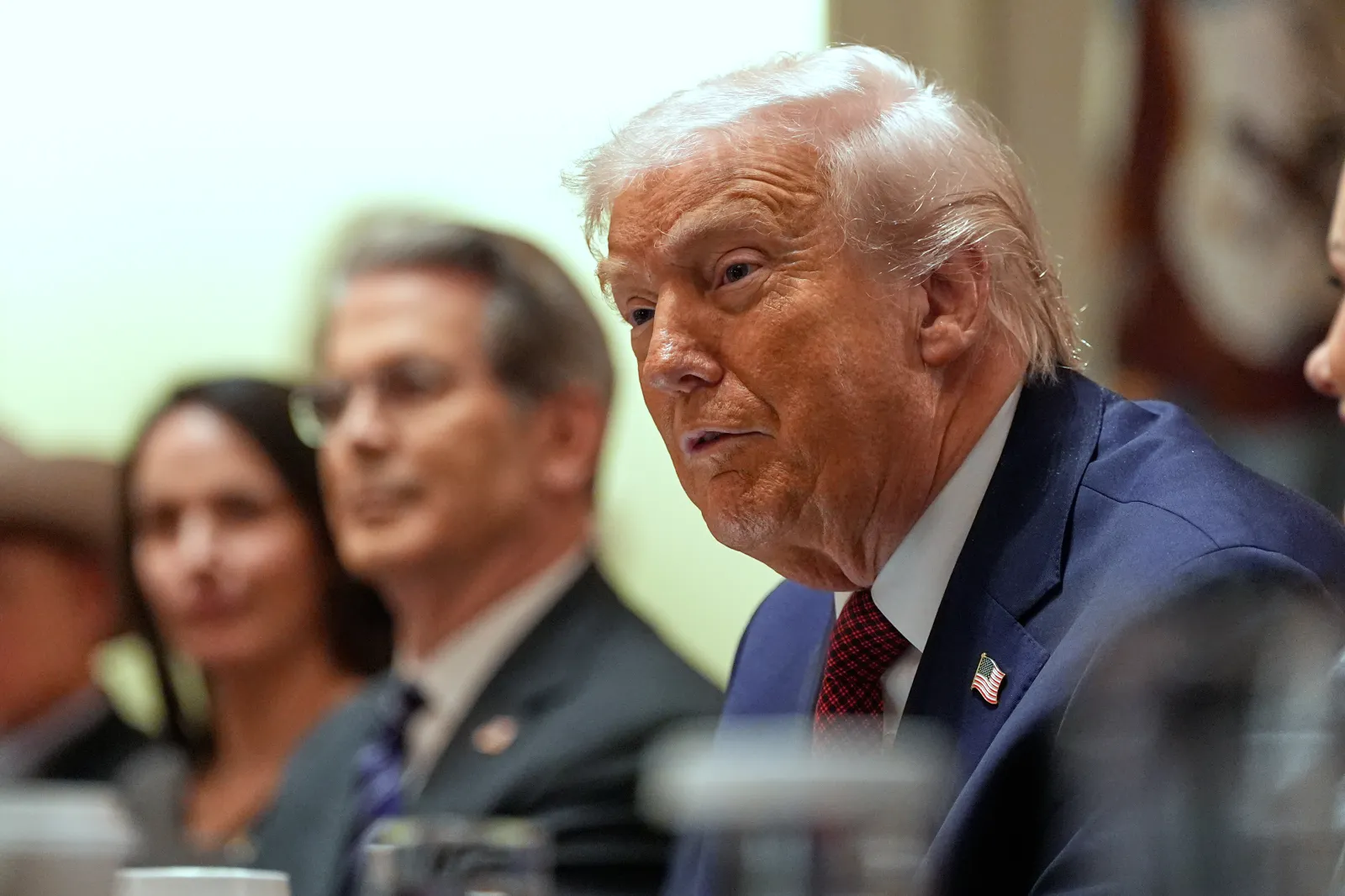
Trump unveiled the plan during a White House roundtable with Treasury Secretary Scott Bessent, Agriculture Secretary Brooke Rollins, lawmakers and farmers who raise cattle and grow corn, cotton, sorghum, soybeans, rice, wheat and potatoes.
“$12 billion is a lot of money,” Trump said, adding that the new aid would provide “certainty” for farmers dealing with unpredictable global markets. He said the funding would come from tariff revenue. Rollins, in her remarks, said $11 billion would be allocated immediately, with another $1 billion reserved for specialty crops.

Farmers have been among Trump’s most reliable political supporters, but his sharp tariff increases and rapidly shifting trade policies have drawn heightened scrutiny from within the agricultural sector. Producers say they face unprecedented challenges from foreign retaliation, inflation, and soaring input costs. The aid package is the administration’s latest attempt to defend Trump’s economic leadership and address voter frustration over rising food prices, even as the president continues to dismiss affordability concerns as a Democratic “hoax.”
What is the Farmer Bridge Assistance Program?
According to the White House, about $11 billion of the new funding will flow through the Agriculture Department’s Farmer Bridge Assistance program, which will provide one-time payments to farmers growing row crops. Soybean and sorghum producers were hit hardest after China imposed retaliatory tariffs; more than half of the U.S. soybean crop is typically exported, much of it to China. The remaining $1 billion will go toward producers of crops not covered under the bridge program, a White House official said, noting the funds are intended to give farmers more stability as they market their current harvest and plan for the next.
The announcement comes amid sluggish Chinese follow-through on purchase commitments that the administration has touted as a win for U.S. agriculture. After Trump met Chinese President Xi Jinping in South Korea in October, the White House said Beijing had pledged to buy 12 million metric tons of U.S. soybeans by year’s end and 25 million metric tons annually over the next three years. Since then, China has purchased more than 2.8 million metric tons — roughly a quarter of what officials said was promised. Bessent has insisted China remains on track to meet its targets by late February.
“These prices haven’t come in, because the Chinese actually used our soybean farmers as pawns in the trade negotiations,” Bessent said Sunday on CBS’ “Face the Nation,” defending the need for bridge payments.
Still, many farmers say aid alone is not a long-term solution. During Trump’s first term, producers received more than $22 billion in 2019 at the height of the trade war and nearly $46 billion in 2020, though much of that year’s aid was related to the COVID-19 pandemic. Farmers argue they need functioning markets — not ongoing government relief programs — to stay profitable.
“That’s a start, but we need other funding avenues and we need our markets back,” said Caleb Ragland, a Kentucky farmer who serves as president of the American Soybean Association. “That’s where we want to make a living.”
Democrats quickly criticized Monday’s announcement, with Senate Minority Leader Chuck Schumer saying the president “wants credit for trying to fix a mess of his making.” On X, Schumer argued that Trump’s tariffs “are hammering our farmers, making it more expensive to grow food and pushing farmers into bankruptcy.”
Food policy advocates voiced similar concerns. Rebecca Wolf, a senior analyst at Food & Water Watch, said bailouts amount to “a denigrating Band-Aid” for farmers weakened by years of volatile trade policy. “Trump’s tariff tantrum and belittling bailouts will deepen agricultural sector consolidation,” she said, “funneling money to a powerful few corporations while running farmers further into the ground.”
Trump has also faced growing pressure to confront record beef prices driven by strong demand, drought-reduced U.S. herds and declining imports from Mexico due to a parasite. He has said he will allow more imports of Argentine beef and has called for a Department of Justice investigation into foreign-owned meat packers, though he has not provided evidence for his allegations.
On Saturday, Trump signed an executive order directing the Justice Department and Federal Trade Commission to investigate “anti-competitive behavior” across food supply chains — including seed, fertilizer and equipment — and consider enforcement actions or new regulations.
This article includes reporting by the Associated Press.