As someone with a highly unusual name, I know from experience that too many syllables can scar you for life.
For an artist like Gordon Matthew Sumner (also known as Sting), it was the difference between fame and obscurity.
But when it’s the name of a new car company, it’s got to be especially memorable. The UAE is currently learning a lot of new names as the ever-growing onslaught of Chinese brands deluge consumers. From Nio to BYD, each has a relatively short operating history but offers many exciting and unusual products.
Now, into this heady mix, arrives another new name: Faraday Future from the United States, which aims to assemble its FX1 Super One luxury minivan at a proposed 108,000-square-foot plant in Ras Al Khaimah.
Unlike the alien-sounding Nio or the random three-letter acronym BYD (yes, I know it stands for Build Your Dreams, but I wish I didn’t), Faraday Future practically blooms with promise, in my opinion.
And no less a luminary than Elon Musk agrees with me, since Faraday was the back-up name for his electric car company while he attempted to buy the Tesla trademark from original rights holder, Brad Siewert.
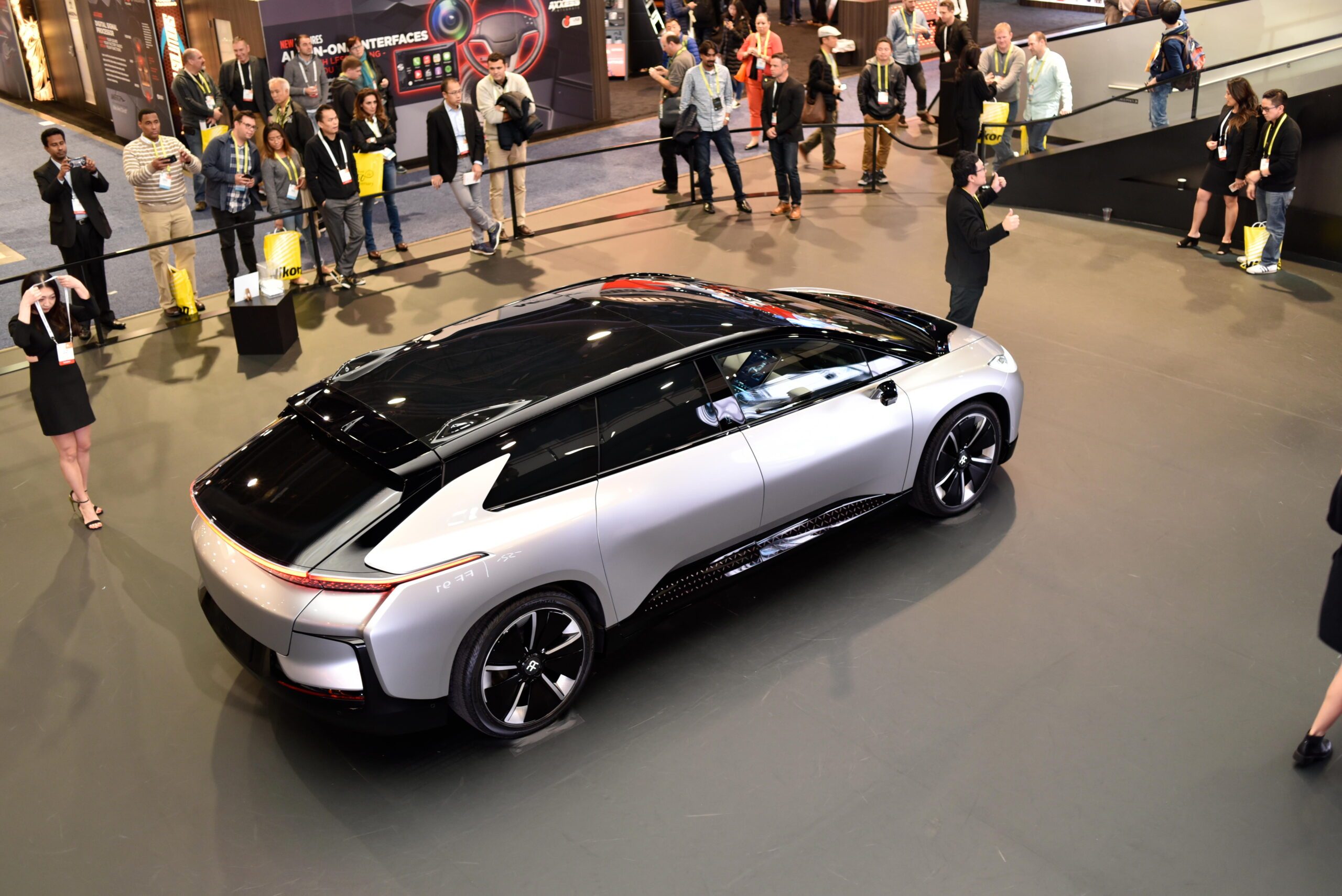
However, while Elon’s intuitive bet on the Tesla brand name turned out to be marketing genius (he eventually convinced Siewert to part with it for US$75,000 in 2004) with Tesla going on to build the world’s best-selling electric cars, Faraday Future has had slightly less success. Over the past 11 years, it has sold just 16 examples of its FF91 luxury crossover. Not exactly a scorching sales rate, is it?
And what’s their big product push for the Middle East? A luxury minivan, which, according to Motor Trend, is not even a ground-up Faraday product but a variant of the Wey Alpine 9 produced by Great Wall Motors. Let me repeat: a minivan, similarly-styled to the familiar Toyota Granvia or GAC M8.
Meanwhile, what is the electric Chinese competition delivering in the UAE? BYD’s Han, a handsome and conservative electric saloon, is taking the fight directly to the best-selling Tesla Model 3.
Want to charge faster? Nio’s electric cars can swap their entire batteries in just under three minutes at a Yas Island charging station.
We now look to Chinese carmakers for global innovation
And newcomer Xpeng is even promising electric flying cars, having successfully flown its AeroHT eVTOL in Ras Al Khaimah this September.
Against this frankly awesome array of technology, what’s Faraday Future’s counter-gimmick? A massive LED grille on the front of their minivan, which uses AI to display emojis (while parked).
Honestly, what happened to American innovation in electric cars? GM’s EV1 was the first mass-produced electric vehicle, all the way back in 1996. Yes, Tesla has given us a lot of silly features over the years, but the Americans also gave us the worldwide Supercharger network, easy over-the-air software updates and the widespread adoption of self-driving technology.
All that was a long time ago, and we now look to Chinese carmakers for global innovation. Admittedly, brands like Rivian make great lifestyle EV trucks, while Lucid is building super-long-range luxury saloons in Saudi Arabia – but why are they not available in the UAE, a key taste-maker market?
I asked Salman Hussain, CEO of Fuse EV Conversions, what he made of Faraday Future’s chances.
“Faraday entered a market that was far less crowded when they started. Now they’re up against competitors who’ve had years to refine their offerings based on customer feedback,” he said.
“It’s difficult to stand out unless you have a truly unique USP. The Chinese have the pricing edge, while Americans – like Rivian, with VW – benefit from tech transfer and solid sales. Faraday really needs a niche to survive.”
Assembling cars in the UAE is a commendable effort, Hussain says, but much depends on how they’re built back in China.
“Industry leaders like Ford’s Jim Farley already know that stripping these Chinese cars reveals no magic sauce on making them work. They’re just working with optimised supply chains and a highly trained labour market, which drives down production costs.”
Further reading:
A lot depends on the broad metal shoulders of that Super One minivan, with its adorable LED fascia. But if I’m being brutally honest, it’s in for a tough fight.
The Chinese competition has been ruthlessly slashing prices, so they’re very hard to beat on value. Next, a minivan is not exactly a slam-dunk play in a region that, to my mind, has definitively chosen SUVs as the way forward.
And finally, its American roots – once a major selling point in the Tesla era – don’t count for much any more. These days, almost everyone I speak to has a Chinese car at the top of their wish list.
Given the mountain Faraday has to climb, perhaps they should have called it the Faraday Future Superman. Now that’s a name you wouldn’t forget in a hurry.
Imthishan Giado is partner at Motoring Middle East