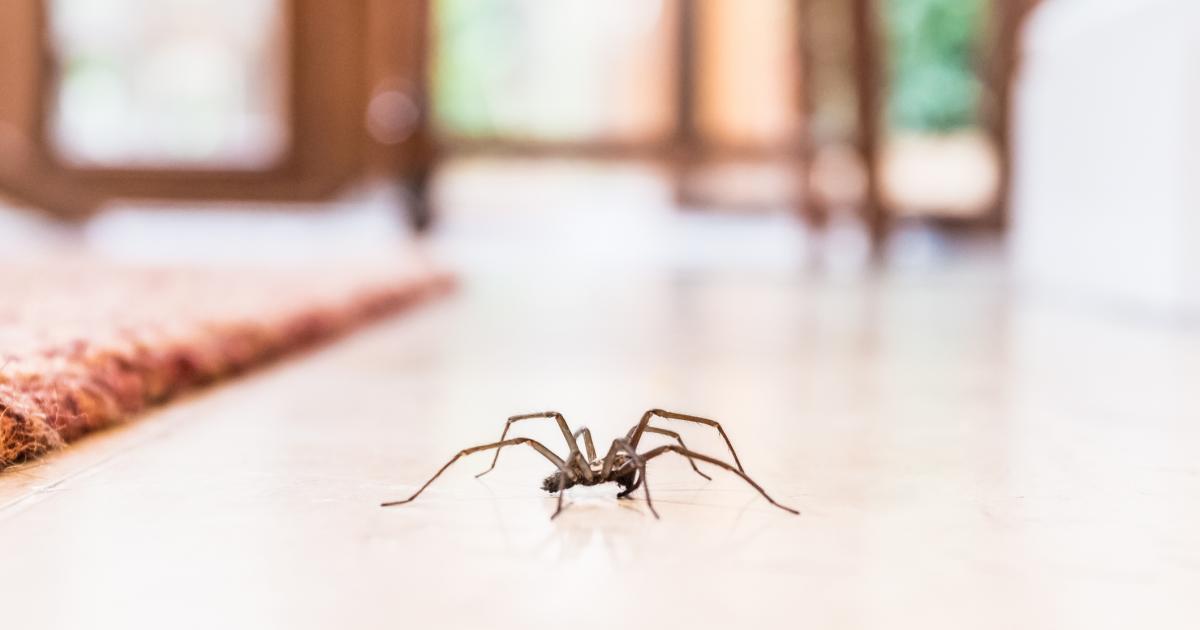
August to October is typically seen as the mating season for male spiders.
They will leave their nests to search for mates and seek out warm, sheltered indoor spaces, leading to more frequent sightings of larger house spiders.
But don’t worry, spider expert and broadcaster Dr Tim Cockerill insists that there is really nothing to fear.
i need spider season to be over im so on edge right now
— lu ☆ (@bratzg0re) September 5, 2025
The entomologist told the BBC that spiders in the UK are “only dangerous if you happen to be a fly, or another small insect”.
Dr Cockerill continued: “Lots of people are afraid of spiders, and one of the interesting things is that we’re not entirely sure why.
“We know that babies are not born with a fear of spiders, so it’s probably something that is inherited from our family or from our parents.
“Because of this strange psychological quirk, it means that by using a bit of psychology, we can often find a way around it.”
“This time of year we always see spiders in our homes far more often than we would do for the rest of the year,” Dr Cockerill said.
“Most people think it’s because spiders are coming in and invading our homes, but this is almost certainly not the case.
“Almost all of the spiders that we see in our homes at this time of year have been there all year round, hiding in the cupboard under the stairs or under the sofa.
“What you are seeing in your houses are adult male spiders out looking for love.”
Recommended reading:
Fruit fly warning issued to millions of homes nationwide
Royal Mint : ‘Error’ £1 King Charles coin worth £600
Aldi bringing in huge change at 600 stores nationwide
How do you get rid of spiders?
Dr Cockerill said a glass and card was the way to go.
“Just slip it underneath and then pop it outside – the spider will go and live its life very happily outside in the garden,” he added.
However, Dr Cockerill said there were benefits to leaving them be – especially cellar spiders – more commonly known as daddy long-legs, a non-native species which needs the warmth from our homes.
“I prefer just to leave them in the corner of the room where they do a good job eating all the flies and mosquitoes,” Dr Cockerill explained.