Overview of the Market
The EV Charging Equipment Market is witnessing significant momentum in the wake of the accelerating transition towards electric mobility. As electric vehicles (EVs) gain global popularity, the demand for reliable, efficient, and widely accessible EV charging infrastructure continues to expand. This tremendous growth trajectory is driven by rising EV adoption, stringent government emission regulations, and substantial investments in EV charging network expansion.
Get a Sample PDF Brochure of the Report (Use Corporate Email ID for a Quick Response): https://www.persistencemarketresearch.com/samples/25654
Among the various segments, the fast charging category dominates the market owing to the increasing need for reduced charging time, especially for long-range electric vehicles. Geographically, Asia Pacific leads the market with China being the largest contributor, driven by aggressive government mandates, high EV penetration, and robust infrastructure development. North America and Europe are also witnessing rapid growth, spurred by green energy initiatives, subsidies, and advancements in charging technology.
Key Highlights from the Report
✦ Fast charging infrastructure is expected to witness the highest growth due to rising demand for high-speed EV charging solutions.
✦ Asia Pacific leads the global market, with China accounting for the largest share of installations and EV adoption.
✦ Government subsidies and incentive programs are driving investments in EV charging infrastructure worldwide.
✦ The commercial segment, especially public charging stations, is rapidly growing owing to urbanization and smart city projects.
✦ Innovations in wireless and ultra-fast charging technologies are reshaping the future landscape of the industry.
✦ Integration of IoT and smart energy management systems is enhancing the efficiency and scalability of EV charging stations.
Market Segmentation 🔀
The EV Charging Equipment Market can be segmented based on product type, installation type, and application. By product type, the market is categorized into AC charging and DC fast charging equipment. AC chargers are widely used for residential applications, while DC fast chargers are preferred in commercial and highway infrastructure due to their rapid charging capabilities. Portable and wireless chargers are emerging categories as well, fueled by convenience and innovation.
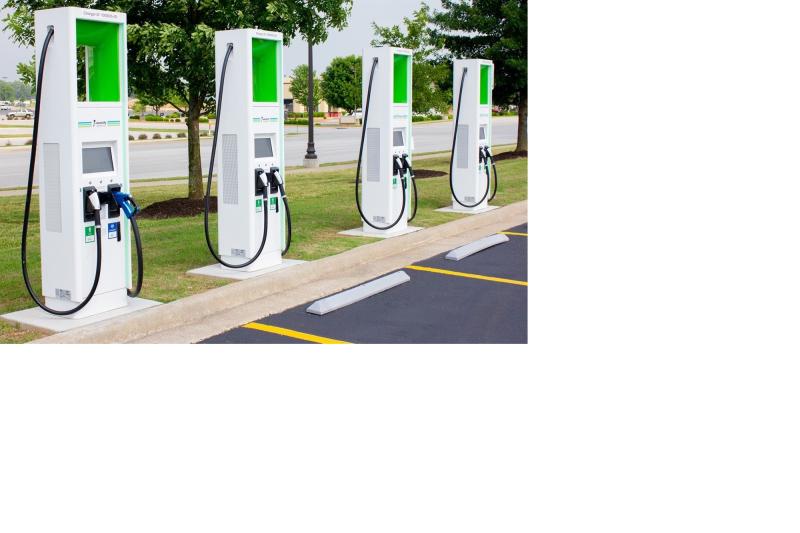
In terms of installation, the market is divided into wall-mounted and pedestal-mounted units. Wall-mounted chargers dominate residential spaces, offering compact solutions for home users. Pedestal-mounted chargers, often found in commercial settings, cater to higher user volumes and are designed for public accessibility.
By application, the EV charging equipment market includes residential, commercial, and fleet operations. While residential remains a strong segment, the commercial sector is anticipated to witness the fastest growth, especially in urban centers and transport hubs. Fleet operations, such as electric buses and taxis, are also contributing to demand for high-capacity charging infrastructure.
Read More In Detail: https://www.persistencemarketresearch.com/market-research/ev-charging-equipment-market.asp
🌐 Regional Insights
Asia Pacific remains at the forefront of the EV charging equipment market, primarily led by China, Japan, and South Korea. China’s commitment to carbon neutrality and EV dominance has resulted in aggressive infrastructure rollouts and government-backed initiatives. South Korea and Japan are also investing in next-gen charging solutions and encouraging automakers to expand EV offerings.
North America is expected to witness substantial growth due to Biden administration policies focused on clean energy and sustainable transport. The U.S. has announced plans to build a nationwide network of 500,000 public EV chargers by 2030. Canada is also following suit with grants and incentives for both residential and public installations.
In Europe, countries such as Germany, the UK, Norway, and the Netherlands are spearheading EV integration with supportive policies, emission reduction targets, and collaborations with private players. The European Union’s commitment to end the sale of internal combustion vehicles by 2035 is driving urgent investments in EV infrastructure.
✨ Market Drivers
One of the primary drivers of the EV charging equipment market is the exponential growth of EV adoption worldwide. With increasing consumer awareness of environmental sustainability and cost-efficiency of EVs, the automotive landscape is rapidly shifting. Government support in the form of incentives, tax rebates, and mandates for EV usage is further bolstering the market.
In addition, technological advancements in charging solutions, such as ultra-fast chargers, bidirectional charging, and integration with smart grids, are enhancing user experience and supporting widespread adoption. Moreover, increased investments from automakers and energy companies are creating collaborative ecosystems that prioritize infrastructure development.
⚠️ Market Restraints
Despite rapid growth, the EV charging equipment market faces challenges such as high installation costs and infrastructure disparity across regions. In developing countries, the lack of adequate power grids and limited public awareness are hindering market expansion. Additionally, the compatibility issue between different EV models and charging standards poses a barrier to seamless user experience.
Concerns over grid overload, especially in urban centers with dense EV populations, further highlight the need for smart load management and infrastructure modernization. The high upfront cost for DC fast charging equipment remains a key deterrent for smaller businesses and individual adopters.
📊 Market Opportunities
There are numerous growth opportunities in the EV charging equipment market, especially in the integration of renewable energy sources and digital technologies. Solar-powered EV charging stations, for instance, are gaining traction in sustainability-driven regions. The emergence of vehicle-to-grid (V2G) technology enables two-way energy flow, opening up new business models and revenue streams.
Public-private partnerships (PPPs), urban mobility solutions, and government-backed funding programs offer a fertile ground for infrastructure expansion. Furthermore, the rise of subscription-based charging services and interoperable networks is making EV charging more accessible and profitable for stakeholders.
Do You Have Any Query Or Specific Requirement? Request Customization of Report: https://www.persistencemarketresearch.com/request-customization/25654
Reasons to Buy the Report
✔ Gain in-depth insights into the current and future trends driving the EV Charging Equipment Market.
✔ Understand the competitive landscape and strategic developments of top manufacturers.
✔ Identify high-growth segments and regions with significant investment opportunities.
✔ Analyze technological advancements and their impact on market dynamics.
✔ Access reliable market forecasts, historical data, and regulatory outlooks to support strategic planning.
Company Insights
• ABB Ltd.
• Siemens AG
• Tesla Inc.
• Schneider Electric SE
• ChargePoint Holdings Inc.
• Blink Charging Co.
• EVBox Group
• Delta Electronics Inc.
• Leviton Manufacturing Co. Inc.
• Webasto Group
Recent Developments:
In 2025, Tesla announced the expansion of its Supercharger network to accommodate third-party EVs, boosting accessibility.
ABB launched a modular fast-charging station designed to support simultaneous charging for multiple EVs using renewable energy integration.
Conclusion
The EV Charging Equipment Market stands at a transformative juncture, fueled by the convergence of sustainable transport, digital innovation, and regulatory support. As the world moves towards zero-emission mobility, the demand for scalable, intelligent, and accessible EV charging infrastructure is poised to surge. Stakeholders including governments, private enterprises, and consumers must collaborate to address challenges and leverage opportunities that shape a clean, connected transportation future. With technological advancements accelerating and investment pipelines growing, the EV charging equipment market promises to be a cornerstone of the global green energy ecosystem in the coming decade.
Persistence Market Research
G04 Golden Mile House, Clayponds Lane
Brentford, London, TW8 0GU UK
USA Phone: +1 646-878-6329
UK Phone: +44 203-837-5656
Email: sales@persistencemarketresearch.com
Web:
https://www.persistencemarketresearch.com
About Persistence Market Research:
At Persistence Market Research, we specialize in creating research studies that serve as strategic tools for driving business growth. Established as a proprietary firm in 2012, we have evolved into a registered company in England and Wales in 2023 under the name Persistence Research & Consultancy Services Ltd. With a solid foundation, we have completed over 3600 custom and syndicate market research projects, and delivered more than 2700 projects for other leading market research companies’ clients.
Our approach combines traditional market research methods with modern tools to offer comprehensive research solutions. With a decade of experience, we pride ourselves on deriving actionable insights from data to help businesses stay ahead of the competition. Our client base spans multinational corporations, leading consulting firms, investment funds, and government departments. A significant portion of our sales comes from repeat clients, a testament to the value and trust we’ve built over the years.
This release was published on openPR.