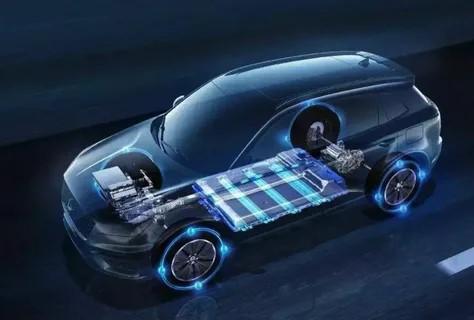
The global electric vehicle (EV) battery market is set for a decade of robust expansion, rising from USD 11.1 billion in 2025 to USD 25.0 billion by 2035, according to newly published industry projections. The sector will advance at a compound annual growth rate (CAGR) of 8.5%, driven by surging EV adoption, stricter carbon-neutrality mandates, and transformative innovations in battery technology.
EV batteries-predominantly lithium-ion systems-remain the central enabler of the global mobility shift. They power a widening spectrum of applications, from passenger cars and commercial fleets to e-scooters, motorcycles, and electric buses. As governments intensify zero-emission transportation strategies and automotive OEMs commit to all-electric product portfolios, the demand for high-performance, safe, and cost-efficient batteries is surging across all major regions.
Subscribe for Year-Round Insights → Stay ahead with quarterly and annual data updates
https://www.futuremarketinsights.com/reports/sample/rep-gb-5388
Technology Advancements Redefine Market Trajectory
Manufacturers are rapidly advancing next-generation chemistries to meet the industry’s expectations for extended driving range, improved thermal stability, and ultra-fast charging. Solid-state batteries, high-nickel formulations, lithium-sulfur cells, and cobalt-free technologies are progressing toward commercial maturity. These innovations are expected to address today’s critical constraints-charging times, safety risks, and raw material pressures.
Battery sustainability is emerging as an equally critical growth pillar. Companies are aggressively investing in recycling, materials recovery, and second-life energy storage solutions. Repurposed EV batteries are increasingly deployed in stationary storage systems that support demand response, renewable integration, and grid stabilization.
The ongoing development of Battery-as-a-Service (BaaS) models, as well as large-scale battery swapping networks in urban markets, is further reshaping operational models for fleets and shared mobility platforms.
Regional Growth Outlook
North America
The North American EV battery market is undergoing rapid acceleration, supported by manufacturing incentives, domestic sourcing rules, and federal policies such as the U.S. Inflation Reduction Act. Automakers and cell manufacturers are partnering to localize gigafactory footprints across the Midwest and Southeast. Strategic investments in semiconductor and battery R&D are reinforcing the region’s drive toward energy independence and supply-chain resilience.
Europe
Europe remains a global leader in clean mobility adoption, backed by stringent emissions regulations, robust EV incentives, and the EU Green Deal framework. Countries such as Germany, France, and the U.K. are expanding battery production capacity while advancing ESG-compliant, circular-economy manufacturing models. The region’s aggressive phase-out of internal combustion engine (ICE) vehicles by 2035 is expected to catalyze sustained battery demand throughout the forecast period.
Asia-Pacific
Asia-Pacific continues to dominate global EV battery production, led by China’s expansive manufacturing ecosystem and government-supported EV policies. Japan and South Korea remain innovation hubs, home to major industry players such as Panasonic, LG Energy Solution, and Samsung SDI. Rising urbanization, strong renewable deployment, and domestic EV adoption across APAC reinforce its long-term leadership in both production and consumption.
Rest of the World
Latin America, the Middle East, and Africa are emerging growth frontiers. Latin America’s abundant lithium reserves position it as a critical raw material supplier, while MEA’s transition to low-emission transport is progressing as infrastructure and regulatory frameworks mature.
Challenges Reshaping Industry Priorities
Despite strong market momentum, the industry faces persistent constraints:
• Cost barriers: Battery packs remain the single most expensive EV component. Continued cost reductions through scale, innovation, and material substitution are essential for achieving mass-market parity with ICE vehicles.
• Raw material pressures: Rising demand for lithium, nickel, and cobalt is creating supply-chain vulnerabilities. Ethical sourcing, geopolitical risks, and environmental concerns are intensifying scrutiny on mining and extraction activities.
• End-of-life management: The rapid expansion of the EV fleet is accelerating the need for efficient recycling pathways, materials recovery, and circular supply chain models.
Personalize Your Experience: Ask for Customization to Meet Your Requirements
https://www.futuremarketinsights.com/customization-available/rep-gb-5388
Competitive Landscape Intensifies
The market is characterized by consolidation among top global suppliers and aggressive expansion strategies:
• CATL: 30-35% market share
• LG Energy Solution: 20-25% market share
• Panasonic: 12-16% market share
• BYD: 10-14% market share
• Samsung SDI: 8-12% market share
• Others: 10-15% market share
CATL continues to lead the global market with advanced LFP and NMC
technologies and ongoing development of sodium-ion and solid-state systems.
LG Energy Solution is expanding its gigafactory footprint in North America and Europe while reducing cobalt dependence.
Panasonic maintains a strong strategic alliance with Tesla, focusing on high-density cylindrical cells.
BYD continues global expansion with its Blade Battery platform, known for its safety and longevity.
Samsung SDI is advancing premium prismatic and pouch cells alongside next-generation solid-state R&D.
Future Market Insights Inc.
Christiana Corporate, 200 Continental Drive,
Suite 401, Newark, Delaware – 19713, USA
T: +1-845-579-5705
For Sales Enquiries: sales@futuremarketinsights.com
Website: https://www.futuremarketinsights.com
Future Market Insights, Inc. (FMI) is an ESOMAR-certified, ISO 9001:2015 market research and consulting organization, trusted by Fortune 500 clients and global enterprises. With operations in the U.S., UK, India, and Dubai, FMI provides data-backed insights and strategic intelligence across 30+ industries and 1200 markets worldwide.
This release was published on openPR.