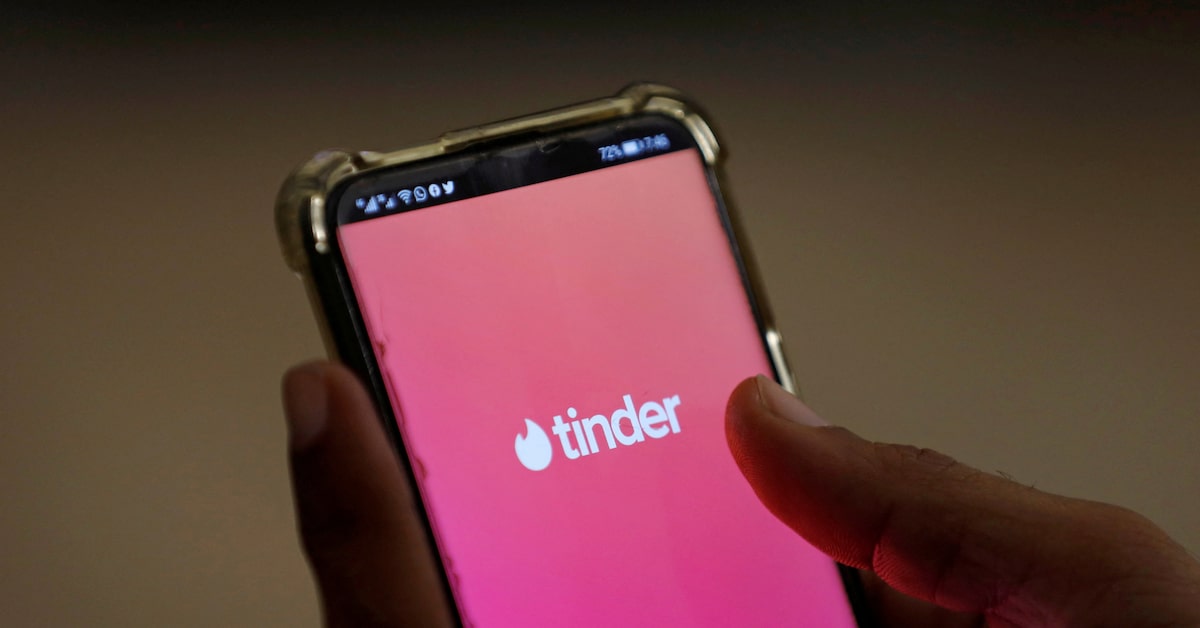
The dating app Tinder is shown on a mobile phone in this picture illustration taken September 1, 2020. REUTERS/Akhtar Soomro/Illustration/File Photo
Match’s share price woes are down to an exodus from Tinder – which lets users swipe right (for yes) or left (for no) on each other’s picture-based profiles. Paying users peaked at nearly 11 million in 2022, before dropping more than 10% to 9.7 million last year. Unlike ad-dependent social media platforms, matchmaking apps have monetised themselves by asking users to pay for premium features, like a boost to their profile’s visibility. These extras are offered via tiered subscriptions, with this model driving the majority of revenue at Match and its competitors.
Sign up here.
With dark clouds gathering, Match and Bumble have acted to cut costs and preserve margins. In June, the latter slashed 240 employees, close to one-third of its global workforce. Meanwhile, Tinder’s parent laid off 13% of its staff in May. Valuations reflect this uncertainty. As of Monday’s close, Match and Bumble trade on 14 and 8 times their respective forward earnings, according to an LSEG poll of analysts. That’s a huge drop from the 20 times and 50 times multiples they commanded just two years ago. And they may have further to fall. Tinder’s annual revenue is expected to stagnate at around $1.8 billion until 2029, according to analyst forecasts compiled by Visible Alpha.
Should these forecasts pan out, it could be tempting to proclaim that we’ve reached peak online dating. But that may not be entirely true. Hinge, a Match app geared towards building serious relationships, saw paying users reach 1.5 million in 2024 – a 23% year-on-year increase. Grindr, a dating app aimed at gay men, trades on 33 times forward earnings and analysts expect its paying user base to nearly double by 2028.
Editing by Aimee Donnellan; Production by Oliver Taslic
Our Standards: The Thomson Reuters Trust Principles.