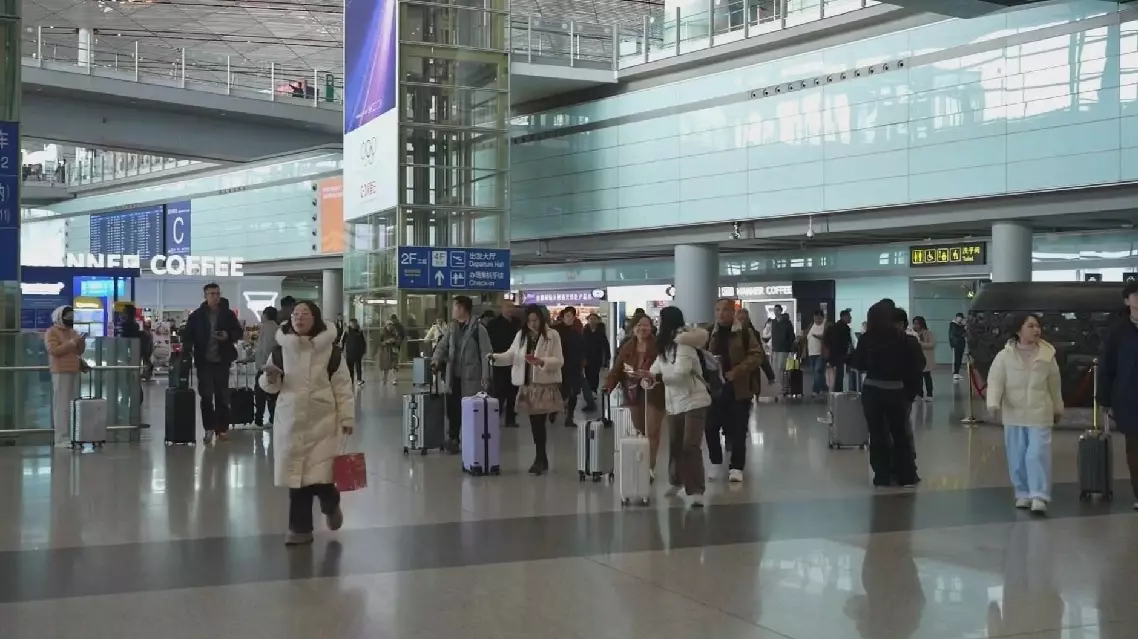
China saw a total of 17.796 million cross-border trips during the nine-day Spring Festival holiday period ending on Monday, official data showed.
According to data released by the National Immigration Administration, border authorities recorded an average of 1.977 million trips per day during the holiday, up 10.1 percent year on year on a daily basis.
The single-day peak for entry-exit crossings occurred on Feb 21, the fifth day of the Chinese New Year, reaching 2.259 million trips.
Residents from Chinese mainland accounted for 9.514 million trips, representing a 10.2-percent daily average increase year on year. Residents from Hong Kong, Macao, and Taiwan totaled 6.969 million trips, up 8 percent year on year on a daily average basis.
Foreign nationals accounted for 1.313 million trips, up 21.8 percent year on year on a daily average basis. A total of 460,000 foreign arrivals enjoyed visa-free entry policies, marking a 28.5 percent daily average increase comparing to last year.
China records nearly 17.8 mln cross-border trips during Spring Festival holiday
As the Spring Festival holiday drew to a close, transport hubs across China have stepped up capacity and services to cope with surging return traffic.
At Taiyuan Wusu International Airport in north China’s Shanxi Province, 336 flights were scheduled on Monday, the final day of the holiday, with passenger throughput expected to reach 51,000.
“On the last day of the Spring Festival holiday, Taiyuan airport plans to operate 336 flights. Peak traffic is concentrated on routes linking Taiyuan with major hubs such as Shanghai, Shenzhen, Guangzhou and Chengdu,” said Kong Rong, a staff member at the Taiyuan airport.
The airport optimized flight capacity based on passenger flow patterns and introduced tailored services, including priority assistance for first-time and urgent travelers, as well as coordinated support for late-arriving passengers to ensure smooth connections.
In south China’s Guangdong Province, China Railway Guangzhou Group also saw a peak in return passenger flow. On Monday, it handled 2.577 million passenger trips, up 14.5 percent year on year.
To manage demand, the railway operator ran 3,979 trains, including 747 additional services.
Highways also experienced heavy traffic on Monday.
In Tianjin, expressways recorded peak vehicle flow. At the Wuqing West toll station on the Beijing-Shanghai Expressway, traffic was dense but moving steadily without major congestion. Authorities issued real-time traffic updates to help drivers avoid bottlenecks.
In Shijiazhuang, Hebei Province, highways around the city saw increased traffic from Sunday. Police intensified video monitoring and patrols to quickly handle incidents and ease pressure on main routes.
In Jiangsu Province, several cross-river bridges experienced return traffic peaks. For the past week, the Jiangyin Yangtze River Highway Bridge recorded an average daily traffic volume of 125,000 vehicles.
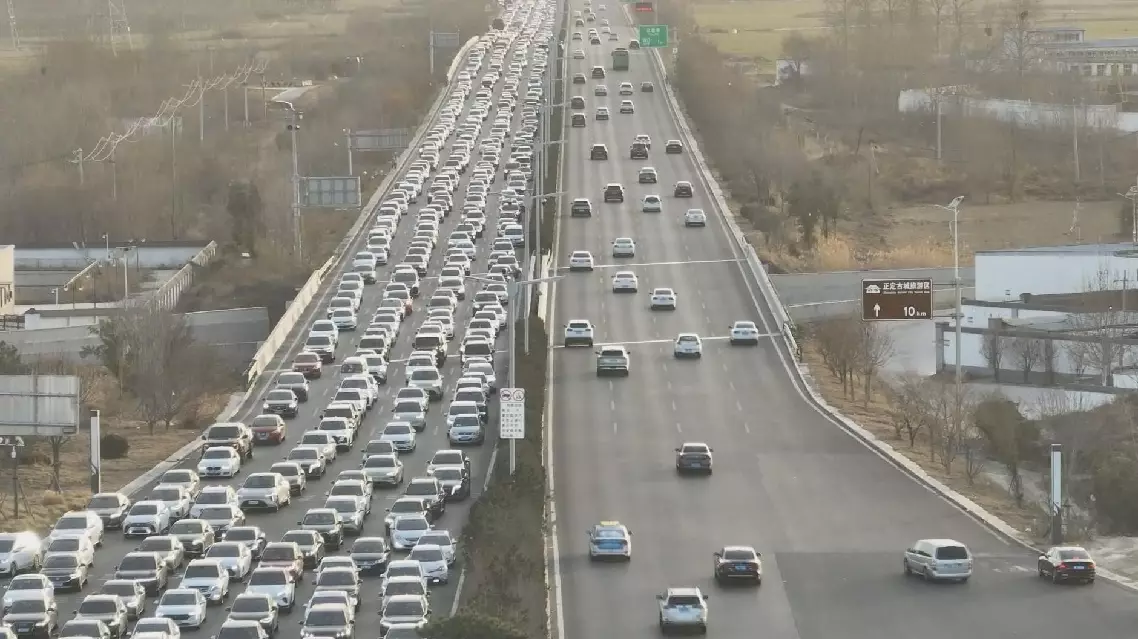
China’s transport network steps up services as return travel peaks