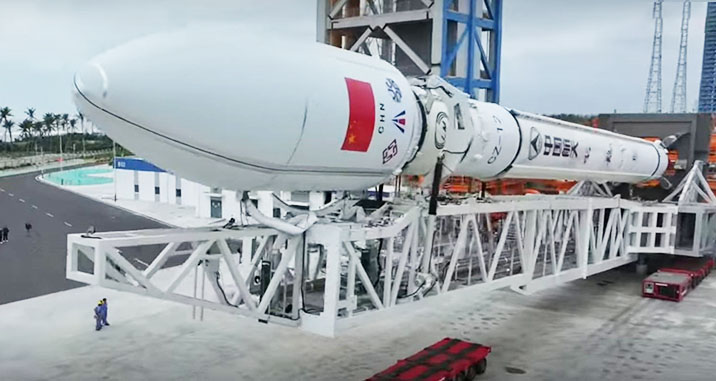
WENCHANG, China — In a definitive move that accelerates the deployment of its sovereign Low Earth Orbit (LEO) infrastructure, China successfully executed the maiden launch of the Long March 12 (LM-12) carrier rocket on Friday, December 12.
Lifting off at 7:00 a.m. local time from the Hainan International Commercial Aerospace Launch Center, the mission successfully placed a new group of internet satellites into orbit. This event marks a critical inflection point in the Asian Space Race, validating the “Surge in launch cadence” trigger for Trend 3: The Rise of Sovereign LEOs.
Disrupting the Launch Status Quo
The LM-12’s debut is operationally significant for two reasons:
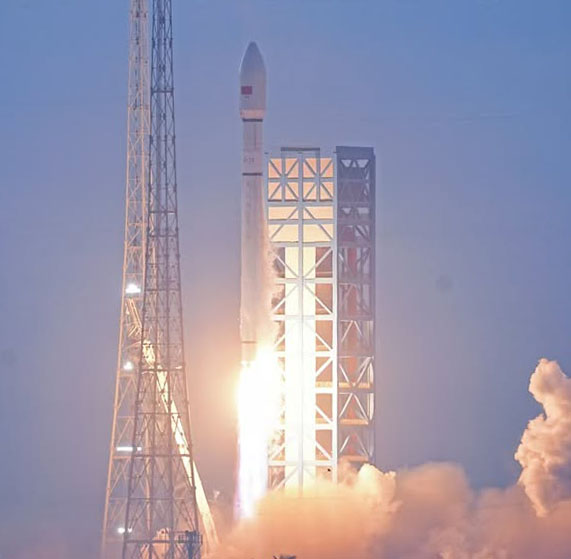
- Vehicle Capability: As a new medium-lift vehicle with 3.8-meter diameter tanks, the LM-12 is optimized for high-density constellation deployment, bridging the gap between lighter launchers and heavy-lift variants like the Long March 5.
- Commercial Infrastructure: The launch utilized the newly operational commercial pad in Wenchang rather than a traditional state-run military base. This aligns with the “State infrastructure” thesis of Trend 10, demonstrating Beijing’s strategy to create parallel launch tracks—one for state/military missions and another dedicated to the rapid commercial cadence required for the Guowang (SatNet) and G60 (Thousand Sails) megaconstellations.
Strategic Implications
By successfully decoupling constellation deployment from legacy launch bottlenecks, China has signaled a robust capability to rival Western hyperscalers in deployment speed. The 16th group of internet satellites aboard this flight joins a rapidly expanding orbital mesh that Beijing views as critical digital territory.
Regional monitors, including the Philippine Space Agency (PhilSA), tracked the launch trajectory, confirming the vehicle’s flight path and drop zones for the booster stages, further underscoring the geopolitical transparency challenges inherent in this increased launch tempo.
As the LM-12 enters regular rotation, industry observers should anticipate a sharp uptick in total mass-to-orbit figures from Chinese commercial ports throughout 2026.