By the time the California Legislature opened its doors in Sacramento in early 2026, electric bicycles had already evolved far beyond novelty gadgets for weekend riders. In towns from San Francisco to San Diego, e‑bikes had become a lifeline for commuters, errands, delivery workers and students.
Their quiet motors and nimble frames promised a cleaner ride between sprawling suburbs and crowded downtowns. But the same qualities that made e‑bikes beloved also stirred unease among safety regulators and law enforcement officials.
On February 13, Assemblymember Rebecca Bauer‑Kahan stood at a podium flanked by advocates for road safety and local officials. With the eyes of reporters trained on her, she introduced Assembly Bill 1942, dubbed the E‑Bike Accountability Act, a measure that would redraw the legal line between simple pedal power and regulated motorized transport.

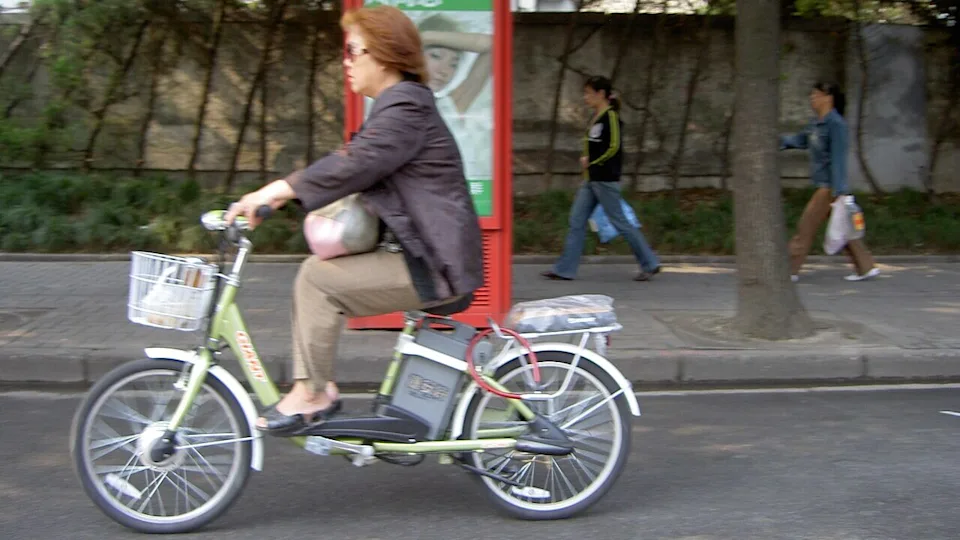
Image Credit: Andrew Gatt – CC BY 2.0, Wikimedia.
The bill’s core idea, though simple, was unprecedented for California: owners of most electric bicycles would have to register their machines with the California Department of Motor Vehicles, receive a state‑issued license plate, and carry proof of ownership tied to the bike’s serial number.
Operating one without meeting these requirements would become an infraction subject to fines.
Critics Warn of Barriers and Unintended Consequences
One side of the aisle feels the bill was overdue. The number of e‑bikes on California streets has exploded in recent years. Class 2 and Class 3 models — those capable of speeds up to about 20 and 28 miles per hour — now account for the vast majority of e‑bikes sold and ridden in the state.
These faster, throttle‑equipped machines can outpace traditional bicycles and mingle with both car traffic and foot traffic on mixed‑use paths.
At press events, Bauer‑Kahan and others pointed to a surge in injuries and near misses, describing scenarios where unidentifiable riders zoomed past pedestrians, crossed busy intersections with little accountability and evaded enforcement because police could not easily trace the bikes back to their owners.

Image Credit: Stanistani – Own work, CC BY-SA 3.0, Wikimedia.
If enacted, the bill would create a dedicated Electric Bicycle Registration Fund and require the DMV to write and implement regulations. Vendors and riders would now be entering a process more familiar to car owners than to cyclists: submit the e‑bike’s details, pay applicable fees and affix a visible plate to the frame.
Advocates argued this would make it easier to enforce traffic laws and investigate crashes in a world where electric bicycles increasingly share space with cars, buses, pedestrians and scooters.
Critics Warn of Barriers and Unintended Consequences
But from the moment the bill was unveiled, it set off a firestorm among cycling advocates, urban planners and climate activists. Groups like Bike East Bay quickly denounced the measure as misdirected and harmful to California’s broader goals of expanding sustainable, active transportation.
The argument from this side of the aisle includes that the root causes of danger on roads were poor street design and a lack of safe, protected infrastructure — not the absence of plates on bicycles.

Image Credit: nCycle team: Hussain Almossawi – Marin Myftiu – Franco Moro – Marcello Fantuzzi – CC BY-SA 4.0, Wikimedia.
They also warned that a mandatory registration regime could create financial and administrative barriers for those who rely on e‑bikes for daily life and could even pave the way for biased policing in communities that have historically faced disproportionate traffic enforcement.
Another often-raised point is what critics describe as a factual mismatch at the heart of the bill: it targets legal Class 2 and Class 3 e‑bikes used by commuters and families, yet many of the most hazardous incidents that fuel public fear involve heavily modified bikes or “e‑motos” that already operate outside the law.
By sweeping up everyday riders into a DMV‑style bureaucracy, the legislation could chill adoption of a low‑emission alternative to cars at a moment when climate advocates say electrified mobility is essential.
A Clash Over the Future of Mobility
Behind the rhetoric and statistics lies a larger cultural tension. California has long positioned itself as a laboratory of transportation innovation, a place where self‑driving cars and clean energy technologies are tested on real streets.
But that reputation also comes with pressure to manage the unintended consequences of new mobility trends. E‑bikes hold the potential to reduce traffic congestion and pollution, but their rapid rise — outpacing infrastructure and clear safety guidelines — has left lawmakers searching for rules that feel fair, effective and forward‑looking.
As AB 1942 makes its way through committee hearings and public comment, the debate unfolding in Sacramento captures a larger question facing cities worldwide: Can regulations keep pace with technology without stifling the very mobility options they aim to improve? In California, that answer is still very much in motion.
Read More