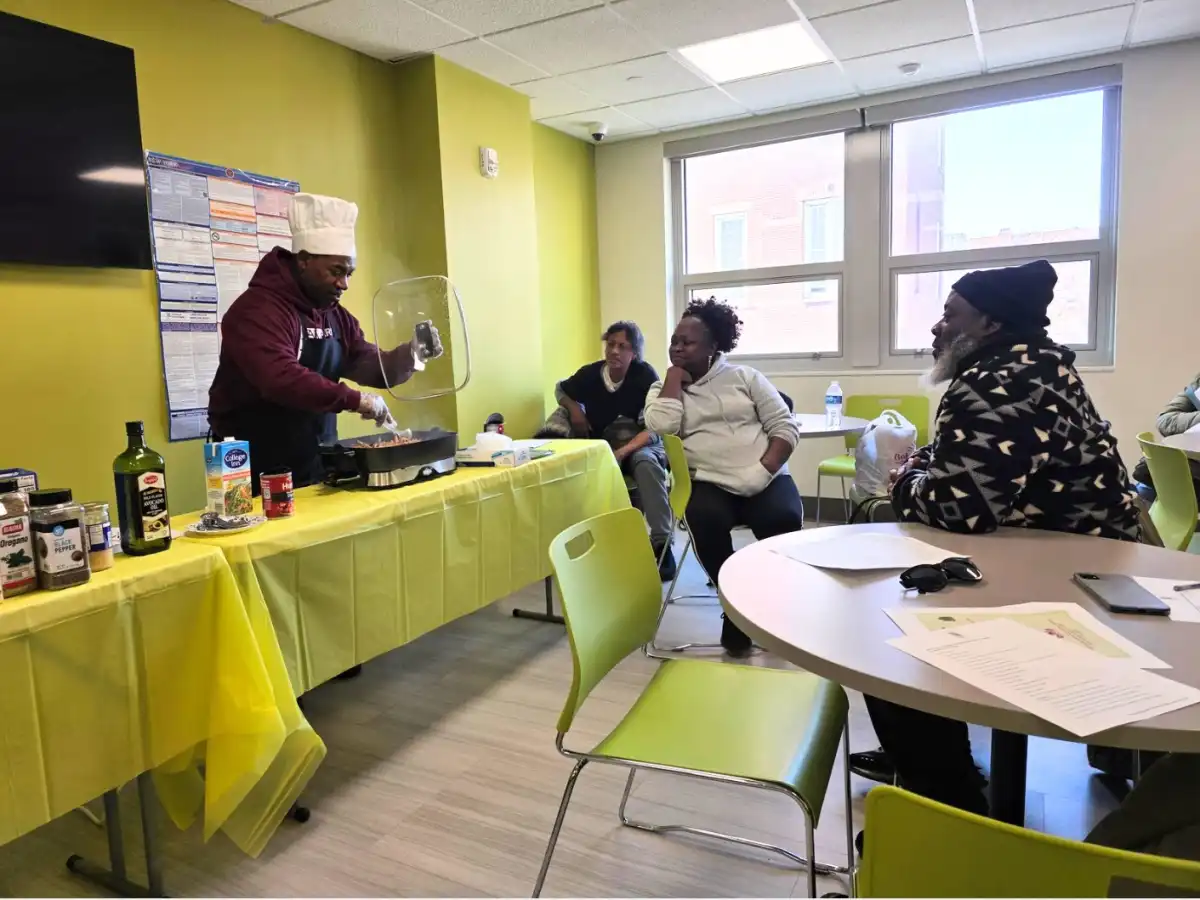
Jamel Lewis (in chef hat) leads a healthy cooking demo at Samaritan Daytop Village on Dec. 16, 2025.
Photo by Emily Swanson
Just two years ago, Jamel Lewis was living a life that was anything but healthy. He was addicted to crack and cocaine and rarely ate, when he did, he subsisted on Little Debbie Honey Buns topped with ice cream.
Today, Lewis is a completely different person. He has been sober for nearly two years and leads a healthy cooking program at Samaritan Daytop Village in the South Bronx, where he whips up dishes like Italian-style pasta with beans, chicken and vegetables and helps educate people who were once in his shoes.
The bad habits were hard to break —even though he knew his choices were harming him— Lewis told the Bronx Times during a visit to his cooking demo. “This thing can lie to you a lot,” he said, pointing to his brain. “I was prescribing myself the wrong answer.”
About two years ago, Lewis said he woke up in an Albany hospital after being hit by a car. This was no accident, as the driver was someone he owed money to, he said.
But Lewis now believes the incident —and his survival— was a sign that he needed to change his life. As his mother told him, “God did that to you, because you just weren’t getting it.”
Lewis, a Marine Corps veteran, began a treatment program in Albany and later came to the city, where he graduated from the 43rd Street Veterans Program in Manhattan. The program was created for vets suffering from addiction and PTSD. It was instrumental in getting Lewis’ life back on track.
“Just getting more structure back into my life was huge, and just understanding that, hey, I’m not by myself. I’m not alone,” he said.
During that program, he began an internship with PARC (Peer Alliance Recovery Center) Bronx. There, Lewis found his niche. He began to not only appreciate a healthier lifestyle but found he was great at leading others in search of the same.
Lewis gradually began to view healthy eating as “a foundational thing for all kinds of recovery,” whether from addiction, trauma, illness or tragic event. After years of eating Honey Buns, he discovered that getting good nutrition greatly improved his attitude and energy level.
Now, Lewis is a community health worker who leads Samaritan participants in cooking demos and online sessions with a doctor available to answer health questions. He has earned certifications that qualify him to be a peer educator, for example, from the American Diabetes Foundation.
By putting mental health first, everything else falls into place, Lewis said.
“We work on mind, body and soul,” he said. “The opportunity to be able to do this has solidified my recovery.”
‘Food is mood’
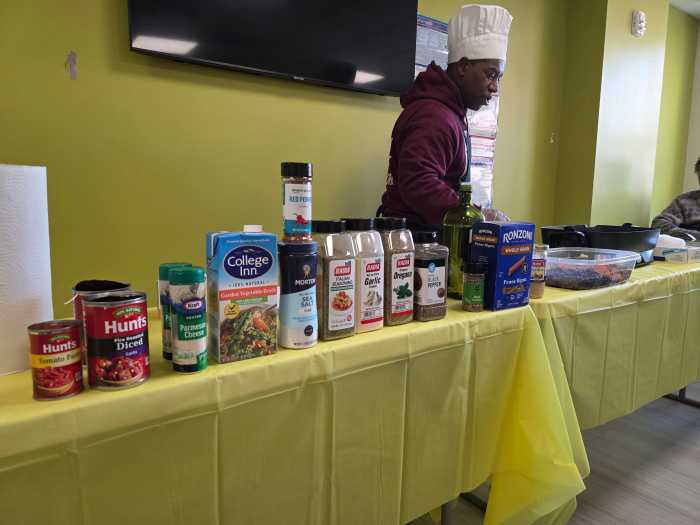
The savory smell of garlic and onion wafted through the room as Lewis led a group of seven participants in demonstrating how to cook a one-pan, Italian-style pasta with beans, grilled chicken and veggies.
He began the session with two mantras: “I love myself today,” and “I am in alignment with reaching my goals.”
As he cooked the dish in an electric skillet, he walked the group through the health benefits of each component. For instance, avocado oil tolerates high heat while preserving its fatty acids and antioxidants, he said, while whole-grain pasta helps you feel full longer and contains a good amount of fiber to support the digestive system.
As Lewis discovered after quitting the Honey Buns, many physical and mental health ailments can be improved with diet changes. Getting proper nutrition also helps the brain recover from the damage done by addiction and depression, he said, imploring the group to remember the motto: “Food is mood.”
In the end, not only was the dish colorful and delicious, it was also budget-friendly, coming out to about $1.50 per serving, said Lewis.
As he bantered with the group, some appeared to have extensive knowledge about health and nutrition, whereas others had barely considered it. But all said they were all grateful for the opportunity to try something new together.
One woman said she had recently been diagnosed as pre-diabetic and thanked Lewis for counseling her through the setback. That feeling of helping others and sharing their experiences has become invaluable, according to Lewis.
“We learn together. No matter if I have two years of sobriety or 25 years, I can learn something from my members,” he said. “They always bring something to the table.”
Reach Emily Swanson at eswanson@schnepsmedia.com or (646) 717-0015. For more coverage, subscribe to our newsletter and follow us on Twitter, Facebook and Instagram!