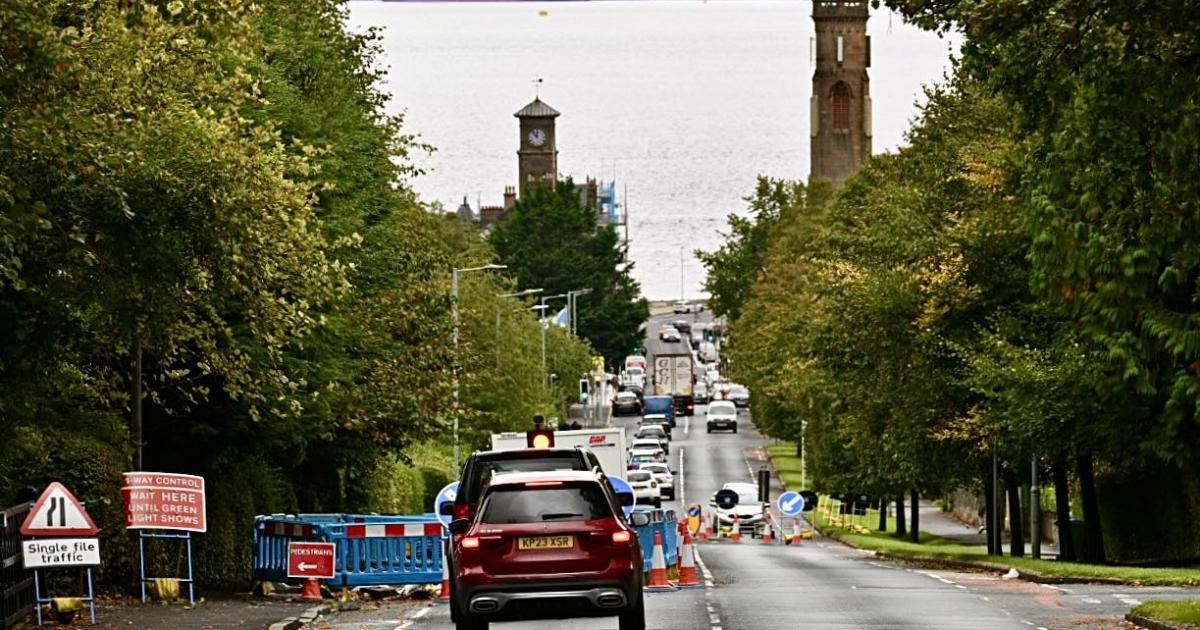
Between mid-2023 and mid-2024, the Office for National Statistics (ONS) said the area dropped 0.31 per cent, or 270 people.
Only Westminster, Lambeth, Kensington and Chelsea, and Isles of Scilly had bigger population drops.
But it’s also in the face of an overall UK growth of more than three-quarters of a million people in the year to June 2024.
That’s the second-largest annual numerical increase since the late 1940s.
There are a record 69.3 million people estimated to be in the UK, up 1.1 per cent.
READ NEXT: More: Helensburgh children’s worker warned for racist ‘slanty eyed’ comment
Net international migration – the difference between people moving to the country and leaving – contributed most to population growth in all four nations of the UK, the ONS said.
Some 1,235,254 people were estimated to have immigrated to the UK in the 12 months to June 2024 while 496,536 were likely to have emigrated, meaning net migration was 738,718.
This accounted for 98 per cent of the UK’s overall increase in population across this period.
There were slightly more births (662,148) than deaths (645,909) in the year to mid-2024, which added just 16,239 to the total.
Nigel Henretty of the ONS said: “The UK population has increased each year since mid-1982.
“Net international migration continues to be the main driver of this growth, continuing the long-term trend seen since the turn of the century.
“The rate of population increase has been higher in recent years, and the rise seen in the year to mid-2024 represents the second largest annual increase in numerical terms in over 75 years.”
Along with new population figures for 2024, the ONS has revised its estimates for 2011 to 2023 in line with the latest available migration data.
They show the UK population grew by 4.7 million in the decade from mid-2014 to mid-2024, a rise of 7.2 per cent.
This is a slightly slower rate of growth than in the preceding 10 years from 2004 to 2014, which was 7.8 per cent.
Growth has been notably higher in the 21st century than during the second half of the 20th century, however.
The UK population stood at 50.3 million in 1949 and took 19 years to reach 55 million (in 1968) and a further 37 years to hit 60 million (2005).
It then took only 10 years to increase from 60 million to 65 million (2015).
The rate of growth in the most recent 12-month period has not been consistent across the UK.
There was faster rate in England in the year to June 2024 (1.2 per cent) than in Scotland (0.7 per cent), Wales (0.6 per cent) or Northern Ireland (0.4 per cent).
Both Wales and Scotland saw negative natural change – more deaths than births – in this period.