

 Air Ambulance Wigston
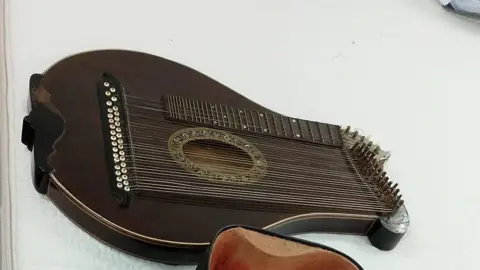
An antique chord harp discovered in a house clearance has been plucked off the shelves of a charity shop in Leicestershire.
The Arion Schulz Zither chord harp was donated to the Air Ambulance Wigston home retail store about a week ago, manager Debbie Green said.
The instrument, which dates back to 1882, came with the original case and replacement strings and has since been sold for £75.
Green said: “It came from a man and a lady clearing their mother’s house out.”
![Air Ambulance Wigston A look inside the opening in the body of the instrument. Written inside is: The Arion Zither [PATENT] Invented by Curt Schulz, Zitherist to H.R.H The Princess of Wales 43, Clifton Gardens, London, W. 1882](https://ichef.bbci.co.uk/news/480/cpsprodpb/d552/live/18ff4bc0-ed56-11f0-a4da-995b47177868.jpg.webp) Air Ambulance Wigston
Air Ambulance Wigston“I obviously knew it was a musical instrument but I did not know what it was. So I put it upstairs in order to do some research on it,” Green added.
“I have seen the sitar here one time.”
Green said it was a joy to sell “beautiful little treasures” – often donated from house collections – in the charity shop.
“You do not know what you have got until you go there [to homes]. It is nice to see it when it comes in,” she said.
Inside the body of the instrument, writing showed that it was invented by Curt Schulz – who was the Zitherist to H.R.H Princess of Wales of the time.
 Air Ambulance Wigston
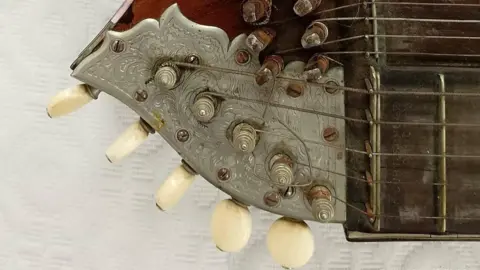
Will Gilding, from Gildings Auctioneers in Market Harborough, said the “roots” of the instrument go way back.
He said: “That sort of instrument has been in play throughout most of western history, it is fair to say.
“They often feature in old monastery paintings, and I think some examples date to the medieval period.
“We see a few of them come through the saleroom every now and then. It is quite a quiet instrument.”
Gilding said the Zither became “more popular” in the late 19th Century.
“They would have been an instrument played, I suspect, in the salon,” he said.
“The salon would have been a prized room to host your guests in. Ladies would retire to the salon for an evening of entertainment for poetry readings and musical playing.
“It was obviously an instrument for high society and the educated classes.”