Published on
July 12, 2026
By: Tuhin Sarkar

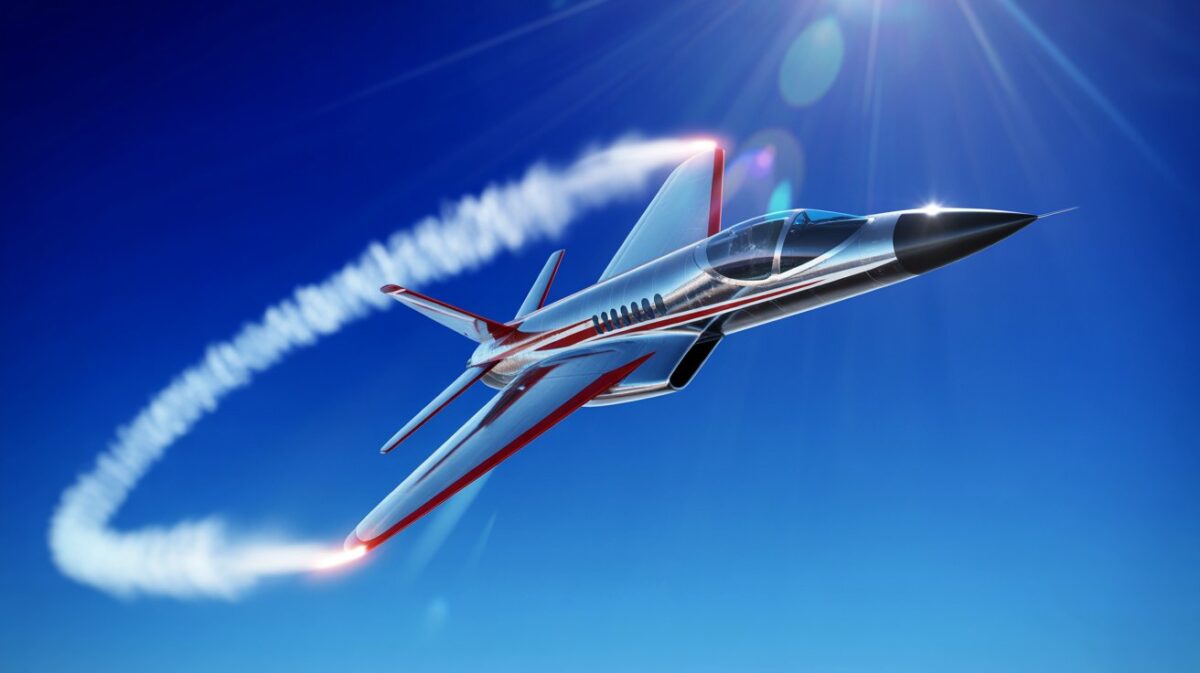
Image generated with Ai
United States overtakes Japan, the United Kingdom, France and more countries in the high-stakes aviation battle to bring back commercial supersonic passenger flights. New updates reveal how faster travel could transform the future of the airline industry.
The United States now overtakes Japan, the United Kingdom, France and more countries in the high-stakes aviation battle to bring back commercial supersonic passenger flights, and new updates revealed today could reshape the future of the airline industry. As a result, regulators are accelerating new rules while aerospace companies push ahead with quieter, faster aircraft capable of flying above the speed of sound. Moreover, these developments promise dramatically shorter travel times, stronger global connectivity and fresh commercial opportunities. Consequently, the renewed race is no longer theoretical; instead, it is becoming a defining moment that could transform international aviation for decades.
The global race to restore commercial supersonic passenger travel is accelerating, with the United States taking the lead through new Federal Aviation Administration (FAA) regulations while Japan, the United Kingdom, France, Germany, China, Australia and India continue investing in advanced aircraft technologies, quieter engines and next-generation aerospace research.
The World is Entering a New Era of Supersonic Aviation
Commercial supersonic aviation is once again becoming a global priority as governments, aerospace manufacturers and research organisations invest billions of dollars in technologies capable of making faster-than-sound passenger travel practical, quieter and more sustainable. Nearly five decades after the retirement of the Concorde era and the long-standing restrictions on overland supersonic flights, multiple countries are now pursuing new aircraft that promise dramatically shorter travel times while meeting modern environmental and safety expectations.
The latest momentum comes from the United States, where the Federal Aviation Administration (FAA) has proposed new noise-based certification standards that could eventually permit civil supersonic flights over the continental United States without the disruptive sonic booms that previously limited such operations. At the same time, countries across Europe, Asia and Oceania are developing advanced propulsion systems, quieter aircraft designs and international certification frameworks that could shape the future of high-speed commercial aviation.
United States Leads the Global Push for Commercial Supersonic Aviation
The United States has emerged as the clear global leader in the modern supersonic aviation race, combining regulatory reform with technological innovation and significant private-sector investment. The FAA’s proposed rules on noise certification represent the most substantial regulatory shift since overland supersonic flights were banned during the 1970s, giving manufacturers a clearer pathway to certifying next-generation aircraft.
Advertisement
Advertisement
American aerospace companies including Boom Supersonic, Hermeus, Boeing and Lockheed Martin are actively developing aircraft capable of exceeding Mach 1 while significantly reducing the noise traditionally associated with sonic booms. NASA is also playing a critical role through its X-59 Quiet SuperSonic Technology (QueSST) programme, which aims to demonstrate that supersonic flight can be achieved with only a gentle sonic thump rather than the loud boom experienced by earlier aircraft.
Why is the FAA proposing new rules for supersonic aircraft?
The FAA’s proposed regulation introduces a certification system focused on aircraft noise rather than relying solely on speed restrictions, reflecting significant advances in aerospace engineering and acoustic technologies over the past several decades. Regulators believe that modern aircraft designs can achieve supersonic speeds while minimising or even eliminating the disruptive ground-level sonic boom that previously made such operations impractical over populated areas.
Advertisement
Advertisement
The proposed standard is intended to provide manufacturers with clear technical requirements during aircraft development, allowing companies to complete certification programmes with greater confidence. Later this year, the FAA also plans to introduce an additional proposal covering landing and take-off noise standards, creating a comprehensive regulatory framework for commercial supersonic operations.
A major step towards faster air travel
If next-generation supersonic aircraft enter commercial service, journey times across the United States and between international destinations could be reduced dramatically, creating a new era of high-speed transportation. Aircraft capable of flying above Mach 1 could significantly shorten business travel, improve cargo efficiency and expand connectivity between major economic centres.
According to the FAA, aircraft travelling at Mach 1 or faster operate at approximately 770 miles per hour or more, compared with conventional commercial airliners, which typically cruise between 550 and 600 miles per hour. This increase in speed has the potential to reshape airline scheduling, reduce travel fatigue and improve productivity for both passengers and businesses.
Government highlights innovation and economic opportunity
US Transportation Secretary Sean P. Duffy described the initiative as more than simply restoring faster air travel, presenting it as an opportunity to reinforce American leadership in aerospace innovation. He said the regulatory changes are designed to support technological advancement while enabling a new generation of aircraft capable of operating safely and efficiently.
Advertisement
Advertisement
Duffy also stated that the administration intends to move quickly in creating an environment that encourages investment in advanced aviation technologies. According to the Department of Transportation, the initiative aligns with broader efforts to modernise aviation infrastructure and position the United States as a global leader in next-generation aircraft development.
Advances in technology are changing the supersonic equation
The principal challenge facing earlier supersonic aircraft was the sonic boom generated when travelling faster than the speed of sound, producing loud shockwaves that disturbed communities beneath flight paths. These concerns ultimately resulted in restrictions on overland commercial supersonic operations that have remained in place for decades.
Modern aerospace technology, however, has introduced new possibilities through improved aircraft shaping, lightweight composite materials, advanced propulsion systems and sophisticated flight management techniques. These innovations are expected to reduce or eliminate the traditional sonic boom, allowing aircraft to operate at supersonic speeds while significantly lowering noise experienced on the ground.
Understanding Mach cutoff technology
One of the most promising developments supporting the FAA’s proposal is a technique known as Mach cutoff, which combines aircraft design, flight altitude, atmospheric conditions and operating speed to prevent the sonic boom from reaching the Earth’s surface. Instead of travelling to the ground, the pressure waves bend and refract back into the atmosphere before reaching populated areas.
This approach enables aircraft to maintain supersonic flight while dramatically reducing community noise exposure, potentially removing one of the biggest barriers to overland commercial supersonic travel. Continued research is expected to refine these operational methods further as manufacturers progress towards certification.
FAA working with global aviation partners
The FAA is not developing these standards in isolation but is working alongside international organisations and research institutions to establish globally recognised safety and noise requirements. Collaboration with the International Civil Aviation Organization (ICAO), NASA, aviation manufacturers and academic experts is helping regulators develop standards based on scientific research and real-world testing.
Advertisement
Advertisement
International cooperation will also play a vital role in ensuring that future supersonic aircraft can operate seamlessly across national borders. Harmonised certification standards could reduce regulatory complexity for manufacturers while enabling airlines to introduce international supersonic services more efficiently.
Executive Order reinforces national aviation strategy
The latest regulatory proposal follows Executive Order 14304, titled Leading the World in Supersonic Flight, which directs the FAA to support the safe return of commercial supersonic aviation. The Executive Order also encourages the agency to strengthen aviation safety agreements with foreign regulators to facilitate international operations once aircraft receive certification.
By combining domestic regulatory reform with international cooperation, policymakers aim to create an environment where American-designed supersonic aircraft can compete successfully in global markets. The initiative is also expected to stimulate investment across aerospace manufacturing, engineering, research and advanced technology sectors.
Manufacturers gain greater regulatory certainty
For aircraft developers, regulatory clarity is often one of the most important factors influencing investment decisions and certification timelines. The FAA’s proposed standards provide manufacturers with a clearer understanding of future compliance requirements, reducing uncertainty during the aircraft design process.
Companies developing next-generation supersonic aircraft have spent years investing in technologies intended to reduce noise while improving fuel efficiency and operational performance. The proposed framework allows these firms to continue refining their aircraft with greater confidence that certification pathways are becoming increasingly defined.
Potential benefits for travellers and the wider economy
The successful introduction of civil supersonic aircraft could deliver benefits extending well beyond shorter journey times. Faster travel may strengthen business connectivity, improve access to distant markets, increase tourism opportunities and enhance time-sensitive cargo transportation across domestic and international networks.
Advertisement
Advertisement
The aerospace industry could also experience substantial economic gains through increased research investment, manufacturing activity and the creation of highly skilled engineering jobs. As aircraft development accelerates, suppliers across multiple sectors could benefit from growing demand for advanced materials, propulsion technologies and specialised manufacturing capabilities.
Regulatory timeline points towards 2027
The FAA intends to complete both the proposed certification standards and the forthcoming landing and take-off noise regulations by the middle of 2027. Once finalised, these rules are expected to establish the regulatory foundation necessary for certifying future commercial supersonic aircraft operating within the United States.
Although commercial services are still several years away, the proposed rule marks an important milestone in restoring supersonic passenger travel. With regulatory development now progressing alongside rapid technological innovation, the aviation industry is entering a new phase that could redefine long-distance travel for future generations.
Japan Focuses on Quiet Supersonic Technologies
Japan has established itself as one of the world’s leading research hubs for quiet supersonic aviation through sustained investment in aerospace innovation and international collaboration. The Japan Aerospace Exploration Agency (JAXA) has partnered with global research organisations to study low-boom aircraft configurations and improve aerodynamic performance for future commercial aircraft.
Japanese engineering companies are also contributing expertise in propulsion systems, lightweight materials and aircraft manufacturing technologies that will support the next generation of supersonic passenger jets. Rather than focusing solely on producing an airliner, Japan is positioning itself as a key technology provider capable of supplying advanced components and research to the global aerospace industry.
United Kingdom Builds Advanced Propulsion Technologies
The United Kingdom continues to play a major role in high-speed aviation by concentrating on next-generation propulsion systems capable of supporting both supersonic and hypersonic aircraft. British aerospace expertise, particularly in advanced engine development, remains among the strongest in the world, with companies such as Rolls-Royce and Reaction Engines pursuing technologies designed for future high-speed transport.
Advertisement
Advertisement
Although the UK is not currently developing a commercial supersonic passenger aircraft independently, its engineering capabilities are expected to remain essential to international aerospace programmes. British research into efficient propulsion and thermal management systems could become a cornerstone of future commercial supersonic operations.
France Builds on the Legacy of Concorde
France remains one of the most experienced nations in commercial supersonic aviation because of its central role in developing Concorde alongside the United Kingdom. Although Concorde retired more than two decades ago, French aerospace expertise continues to influence research into advanced aircraft design and sustainable aviation technologies.
Airbus and France’s national aerospace research organisations are participating in European studies examining future high-speed transport concepts, aerodynamic efficiency and environmentally responsible aircraft development. This experience gives France a unique position in helping shape the next generation of commercial supersonic aircraft.
Germany Advances European Aerospace Research
Germany is strengthening Europe’s contribution to future supersonic aviation through extensive investment in aerospace engineering, aircraft materials and propulsion research. The German Aerospace Center (DLR) works alongside Airbus and European partners to investigate technologies capable of improving aircraft efficiency while reducing operational noise and emissions.
Rather than pursuing a national passenger aircraft programme, Germany focuses on scientific research and advanced manufacturing capabilities that support collaborative European aerospace initiatives. This strategy allows German expertise to contribute across multiple international aircraft development programmes.
China Accelerates High-Speed Aircraft Development
China is rapidly expanding its aerospace ambitions by investing in advanced civil aviation technologies alongside broader national aerospace programmes. Chinese researchers and manufacturers are exploring several supersonic aircraft concepts that could eventually reduce domestic and international travel times while strengthening the country’s position within the global aviation industry.
Advertisement
Advertisement
Government-backed aerospace organisations continue investing heavily in propulsion systems, aerodynamic research and advanced manufacturing techniques. Although many projects remain under development, China is widely expected to become one of the most influential players in the future commercial supersonic market.
Australia Invests in Future High-Speed Flight
Australia is contributing to the global supersonic landscape through advanced propulsion and hypersonic technology research that may ultimately benefit future civil aviation. Several Australian aerospace companies are developing innovative engine concepts capable of supporting extremely high-speed aircraft while improving operational efficiency.
Although Australia’s current focus extends beyond commercial passenger transport, the technologies emerging from its aerospace sector could eventually influence the design of future supersonic airliners. Continued collaboration with international partners is likely to expand Australia’s role within the evolving high-speed aviation ecosystem.
India Expands Aerospace Research Capabilities
India is steadily strengthening its aerospace research capabilities through government-led programmes focused on advanced flight technologies, supersonic propulsion and future aviation systems. Organisations including the Defence Research and Development Organisation (DRDO), the Indian Space Research Organisation (ISRO) and the National Aerospace Laboratories (NAL) continue investing in technologies that support both defence and civilian aerospace innovation.
While India has not announced a commercial supersonic passenger aircraft programme, its growing engineering expertise and expanding aviation industry position the country to become an important contributor to future international aerospace projects. Continued investment in research infrastructure and advanced manufacturing is expected to enhance India’s long-term role in global aviation development.
International Cooperation Will Shape the Future
The return of commercial supersonic travel will depend not only on technological innovation but also on international cooperation among aviation regulators, manufacturers and research institutions. The FAA is already working closely with the International Civil Aviation Organization (ICAO), NASA, industry partners and academic organisations to establish globally accepted noise standards for future aircraft.
Advertisement
Advertisement
These collaborative efforts are intended to ensure that next-generation supersonic aircraft can operate safely across international airspace while maintaining consistent certification requirements. Harmonised regulations will help manufacturers reduce development costs and accelerate the introduction of commercial services worldwide.
The Future of High-Speed Passenger Travel
The renewed global interest in supersonic aviation reflects growing demand for faster, more efficient international transportation capable of supporting modern business, tourism and trade. Advances in aircraft design, propulsion systems, sustainable materials and acoustic engineering have brought the industry closer than ever to overcoming the challenges that ended the first era of commercial supersonic travel.
If regulatory frameworks continue evolving alongside technological progress, passengers may once again experience routine flights travelling faster than the speed of sound within the next decade. The United States currently leads this transformation, but Japan, the United Kingdom, France, Germany, China, Australia and India are all contributing expertise that could define the future of global aviation.
The latest developments demonstrate that the global race to restore commercial supersonic passenger flights has entered a decisive phase, with the United States taking a commanding position through regulatory reform, technological innovation and strong collaboration between government agencies, aerospace manufacturers and research organisations. While Japan, the United Kingdom, France and more countries continue investing in advanced propulsion, quieter aircraft designs and next-generation aerospace technologies, the United States has moved first by creating a clearer pathway for certification, giving manufacturers greater confidence to accelerate aircraft development.
Furthermore, the proposed regulatory changes extend beyond simply introducing faster aircraft, because they establish the foundation for an entirely new era of commercial aviation. If modern low-boom technologies perform as expected, airlines could eventually offer significantly shorter domestic and international journeys without causing the disruptive noise that previously prevented widespread overland supersonic operations. This would improve passenger convenience, strengthen business connectivity, expand tourism opportunities and create new possibilities for high-value cargo transport across global markets.
Looking ahead, the success of this transformation will depend on continued technological progress, international regulatory cooperation and rigorous safety certification. Nevertheless, the momentum now gathering across the aviation sector suggests that faster-than-sound commercial travel is moving closer to reality than at any time since the retirement of Concorde. As governments refine regulations and manufacturers complete testing programmes, the aviation battle highlighted by the latest new updates could ultimately reshape the future of the airline industry, redefining how people and goods move around the world while ushering in a new generation of faster, quieter and more efficient air travel.
Advertisement
Advertisement
Frequently Asked Questions (FAQs)
Which country is leading commercial supersonic aviation today?
The United States currently leads through FAA regulatory reforms, NASA research programmes and private-sector aircraft development led by companies such as Boom Supersonic and Hermeus.
Why is Japan important in supersonic aviation?
Japan specialises in low-boom technologies, aerodynamic research and advanced engineering through JAXA and leading aerospace manufacturers.
Is the United Kingdom building a supersonic passenger aircraft?
Not currently. The UK is primarily focused on advanced propulsion technologies and aerospace engineering that will support future international programmes.
Why are France and Germany involved?
Both countries contribute through Airbus and European aerospace research programmes focused on aircraft design, propulsion, materials and environmental performance.
What is China developing?
China is investing in indigenous supersonic aircraft concepts, advanced propulsion systems and aerospace manufacturing to strengthen its future commercial aviation industry.
Is India developing commercial supersonic aircraft?
India is currently investing in aerospace research through DRDO, ISRO and NAL, laying the foundation for future participation in advanced civil aviation technologies rather than developing a commercial supersonic passenger aircraft at present.
When could commercial supersonic flights return?
Although timelines vary, the FAA expects to finalise new certification rules by mid-2027, while several manufacturers aim to introduce commercial supersonic aircraft before the end of the decade, subject to certification and operational approval.
Advertisement
Advertisement