Malaysia should stop viewing China’s Greater Bay Area (GBA) merely as a market to sell into and instead position itself as a strategic partner in building integrated regional supply chains, according to Federation of Malaysian Manufacturers (FMM) President Jacob Lee Chor Kok.
Speaking to BusinessToday on the sidelines of the GBA-ASEAN Summit 2026 organised by the South China Morning Post in Hong Kong, Lee said the next phase of ASEAN-China economic cooperation should move beyond traditional trade towards joint manufacturing, innovation and technology partnerships.
Rather than asking what China can manufacture for ASEAN, he said businesses should instead ask a more important question.
“We need to reconstruct the model between the Greater Bay Area and ASEAN. We should go beyond asking what China or the GBA can manufacture for ASEAN, but rather what we can build together for ASEAN, China and the global market.”
The message comes as geopolitical tensions, supply chain realignment and shifting investment patterns reshape manufacturing across Asia.
A changing regional landscape
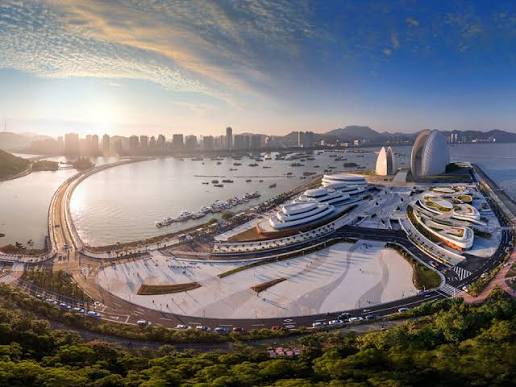
The GBA — comprising Hong Kong, Macau and nine cities in Guangdong Province — has emerged as one of China’s most important innovation and manufacturing hubs, contributing over US$2 trillion in economic output.
Lee believes the region presents significant opportunities for Malaysian manufacturers, particularly as global companies seek more resilient supply chains following the Covid-19 pandemic, the US-China trade dispute and ongoing conflicts in the Middle East.
“The geopolitical tensions, tariff hikes and conflicts have created urgency for deeper supply chain integration between the Greater Bay Area and ASEAN,” he said.
“We need to build more resilient and integrated supply chains.”
He noted that even Malaysia, despite being an oil-producing nation, is experiencing shortages of several critical industrial materials due to disruptions in global supply chains.
“There are around 34 critical materials currently facing shortages. We need to work together with China and the GBA to develop alternative supply sources.”
Malaysia’s neutrality becomes an advantage
Lee believes Malaysia’s long-standing neutral foreign policy has become an increasingly valuable economic asset.
Unlike countries that have aligned themselves more closely with either Washington or Beijing, Malaysia has maintained balanced diplomatic and trade relations with both major powers.
“The neutrality policy adopted by the Malaysian government is helping Malaysia steer through geopolitical competition,” he said.
This has strengthened Malaysia’s position as a preferred destination under the “China Plus One” strategy, where multinational companies diversify manufacturing operations outside China without leaving the region entirely.
According to Lee, investment interest has expanded beyond China to include Taiwan, Japan, Europe and the United States.
“The China Plus One policy, and even what some call the Taiwan Plus One strategy, is benefiting Malaysia.”
Japan, he noted, has recently emerged as one of Malaysia’s largest foreign investors, while negotiations for the Malaysia-European Union Free Trade Agreement are expected to conclude by year-end.
Not just attracting investment—but creating value
While Malaysia continues attracting foreign direct investment (FDI), Lee stressed that future policies must focus on creating greater domestic value rather than merely hosting manufacturing facilities.
Malaysia’s trade with China reached approximately RM630 billion last year, making China the country’s largest trading partner.
However, Lee cautioned that rising imports alongside exports indicate Malaysian manufacturing still relies heavily on imported components.
“If imports are mainly going into our production floors, then our value-added remains relatively low,” he said.
“We want to increase local content so that Malaysian companies benefit more from these investments.”
He pointed to the government’s New Industrial Master Plan 2030 (NIMP 2030) and the New Investment Incentive Framework (NIIF), which increasingly reward investors based on outcomes such as high-value employment, localisation of supply chains and technology transfer.
Hong Kong’s technology ecosystem
One of the key attractions of the Greater Bay Area, Lee said, lies in its mature innovation ecosystem.
FMM has already signed memoranda of understanding with both the Hong Kong Productivity Council (HKPC) and the Hong Kong Applied Science and Technology Research Institute (ASTRI) to facilitate technology collaboration.
Following the agreements, Hong Kong engineers have begun visiting Malaysian factories to assess automation and process improvement opportunities.
“They’ve visited about 60 to 70 factories,” Lee said.
“They come back with technical solutions and proposals.”
However, Lee believes the current engagement model remains too slow.
“I personally think this approach is too slow and too costly.”
Instead, he wants Hong Kong technology firms to establish operations in Malaysia or form joint ventures with local companies.
“This will speed up Industry 4.0 adoption and digital transformation.”
Affordable technology for SMEs
Lee said one of the GBA’s biggest advantages is its ability to offer practical and affordable industrial technologies suitable for small and medium enterprises (SMEs).
He recalled purchasing laser-cutting equipment more than three decades ago at prices exceeding RM3 million.
Today, comparable machinery from China can cost below RM100,000 while delivering sufficient capability for SME operations.
“Chinese companies build machines suitable for SMEs instead of over-engineering them,” he said.
“The technology is affordable enough for smaller manufacturers to upgrade.”
He acknowledged that while Chinese manufacturers create intense competition for Malaysian technology providers, they simultaneously lower barriers for SMEs to modernise.
“It’s a love-hate relationship.”
Bigger projects favour stronger companies
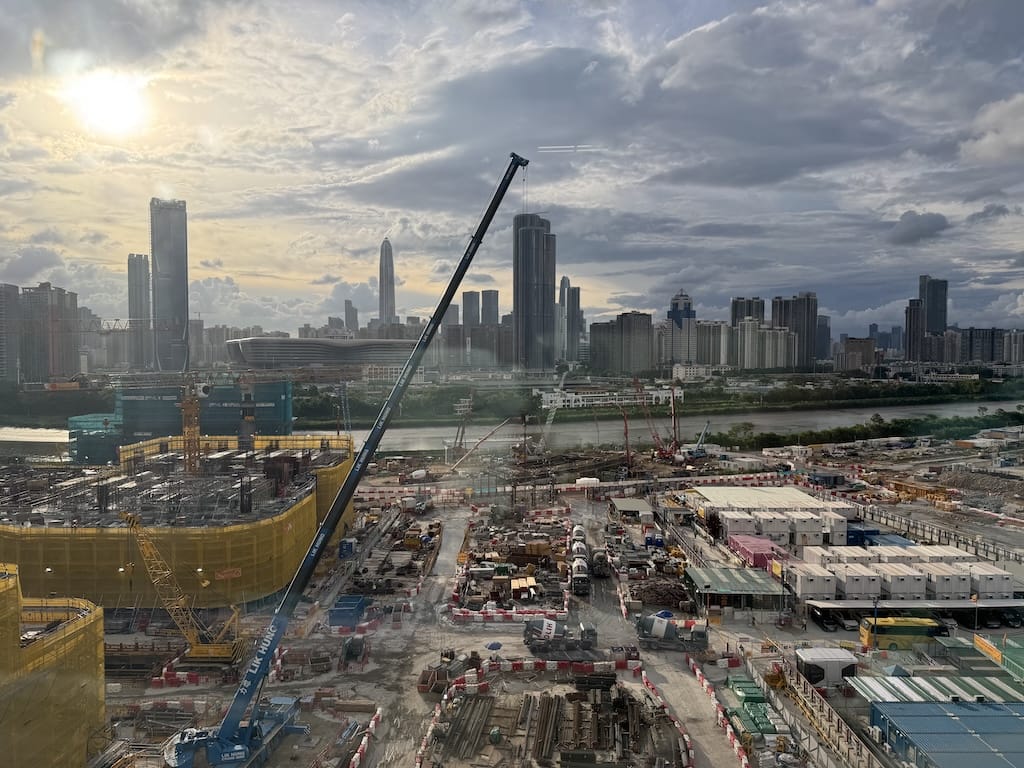
Lee expects opportunities arising from power infrastructure, automation and advanced manufacturing to become increasingly larger and more capital-intensive.
This will favour companies with stronger balance sheets capable of financing upfront project costs.
“The larger projects require stronger funding capability.”
At the same time, he expects closer collaboration between Malaysia and the GBA to create opportunities for Malaysian firms to participate in regional value chains rather than competing solely on labour costs.
Branding remains Malaysia’s weakest link
Despite Malaysia’s manufacturing capabilities, Lee believes the country continues to underperform in global branding.
He cited cocoa as an example.
Malaysia ranks among the world’s major cocoa producers, yet consumers associate premium chocolate with Switzerland and Belgium instead.
“They don’t even grow cocoa trees,” he remarked.
Similarly, Malaysia’s Musang King durian commands premium prices globally but still captures only a small share of China’s overall durian market compared with Thailand and Vietnam.
“It’s about branding.”
Innovation will determine Malaysia’s future
Ultimately, Lee believes Malaysia cannot rely indefinitely on cost competitiveness.
The country must transition towards becoming an innovation-driven manufacturing economy.
“We need research, development and innovation.”
He noted that while Malaysia has introduced major policy frameworks such as NIMP 2030, the National Energy Transition Roadmap (NETR), the National Artificial Intelligence roadmap and digital economy initiatives, success will depend on developing sufficient research talent.
“You go to China and you’ll see researchers everywhere.”
Malaysia, he argued, needs a critical mass of researchers capable of commercialising new technologies and creating globally competitive products.
FMM has already signed memoranda of understanding with more than 10 universities to accelerate research, commercialisation and industry collaboration.
“We have to move away from cost-driven manufacturing to innovation-driven manufacturing.”
Looking beyond market access
For Malaysian companies, Lee believes the Greater Bay Area should no longer be viewed simply as an export destination.
Instead, it should become a strategic base for technology partnerships, research collaboration, advanced manufacturing and integrated supply chain development.
With global manufacturers reassessing production networks amid geopolitical uncertainty, he argues Malaysia has an opportunity to strengthen its position—but only if it moves beyond assembling products to creating technology, intellectual property and globally recognised brands.
“The question is no longer what the Greater Bay Area can manufacture for us,” Lee said.
“It’s what we can build together.”