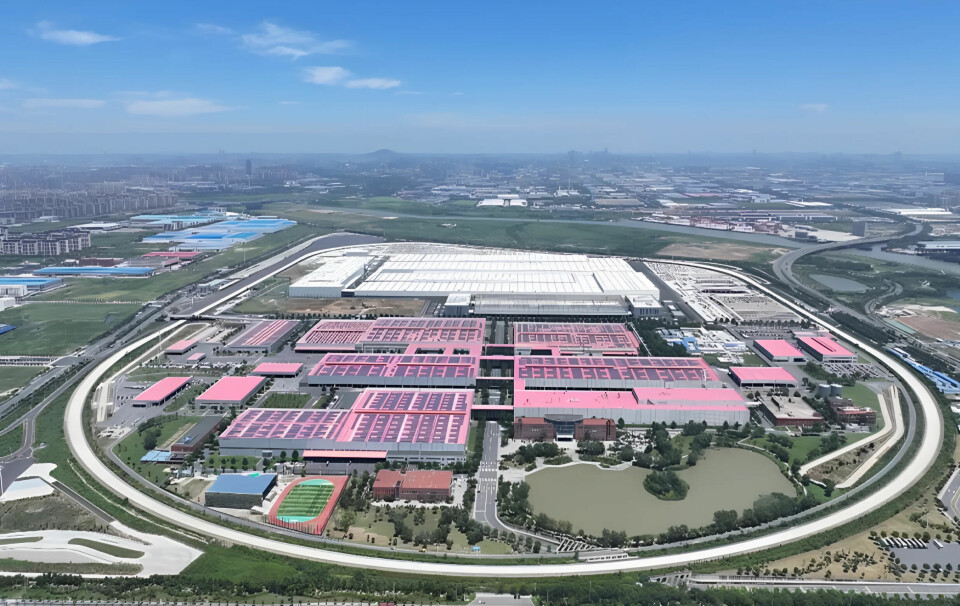
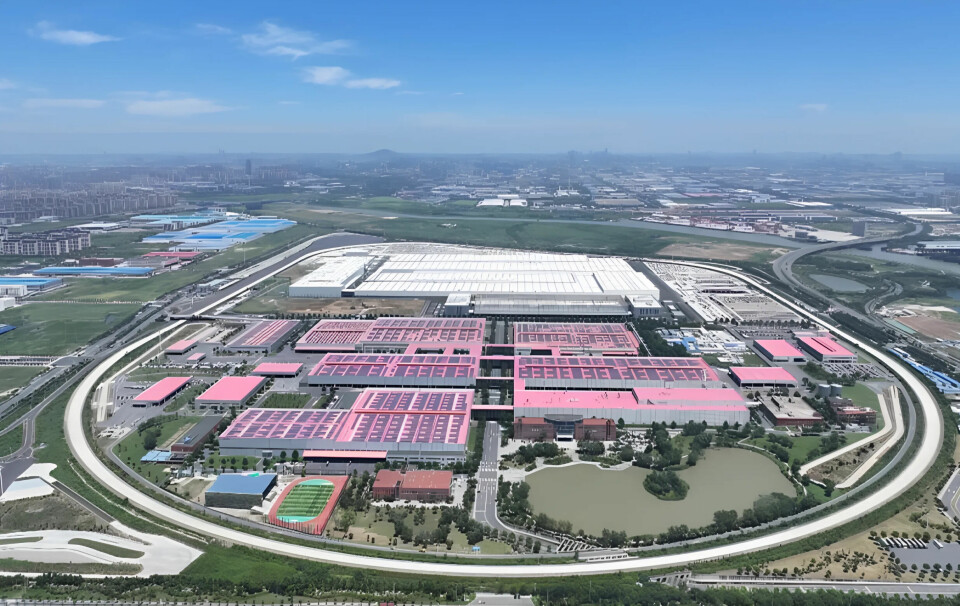
In Feixi, on the outskirts of Hefei in China’s Anhui Province, a purpose-built plant manufactures one of the most technically ambitious passenger cars in the world. The facility, constructed specifically for the Maextro S800, is rated for 200,000 units per year and has already undergone a second phase of production-line modification to accommodate forthcoming SUV and MPV variants. It is, by any industrial measure, a serious capital commitment.
The plant was constructed by JAC Group, which handles manufacturing, while Huawei supplies the software, intelligent driving systems and in-cabin technology that define the vehicle’s commercial proposition. This is not a partnership of convenience. It reflects a deliberate industrial architecture that Huawei has been refining since 2021 under what it calls the Harmony Intelligent Mobility Alliance, or HIMA – a framework through which Huawei contributes product definition, design logic, user experience, quality control and advanced software to vehicles built by established Chinese manufacturers.
The HIMA portfolio, which spans brands including Aito (with Seres Group), Luxeed (with Chery), Stelato (with BAIC Group) and Maextro (with JAC), is expected to exceed 17 models in 2026. Maextro sits at the apex of this structure. As AMS has tracked in its coverage of China’s surging EV export engine and the broader realignment of global manufacturing strategies, the industrial strategy underpinning this expansion is more sophisticated than it once appeared from the outside.
From affordable EVs to ultra-premium ambitions
The trajectory of China’s automotive export ascent has been startling in its velocity. China exported 8.32 million vehicles in 2025, a year-on-year increase of 30%, maintaining its position as the world’s largest exporter for the third consecutive year, with new energy vehicle exports reaching 3.43 million units, a 70% increase. That volume – built overwhelmingly on competitively priced NEVs – created the industrial and financial foundation from which more ambitious upmarket plays are now being launched.
China’s Electric Ascent
China vehicle exports — 2025
World’s largest auto exporter, for the third consecutive year
Driven overwhelmingly by competitively priced new energy vehicles
Total vehicles exported
8.32m
▲ +30% year-on-year
New energy vehicle exports
3.43m
▲ +70% year-on-year
NEVs as share of total exports
41%
of export volume
Export volume in context
Growth since 2020
8×
total export volume
Consecutive years ranked No.1
3 yrs
world’s largest auto exporter by volume
NEV volume has created the industrial and financial foundation from which more ambitious upmarket plays are now being launched — including China’s first serious challenge to European ultra-luxury.
The critical question for the global premium and ultra-luxury segments is whether the same structural advantages that made China dominant in affordable electrification can be successfully applied at the other end of the market. The Maextro S800 is the most direct attempt to answer that question.
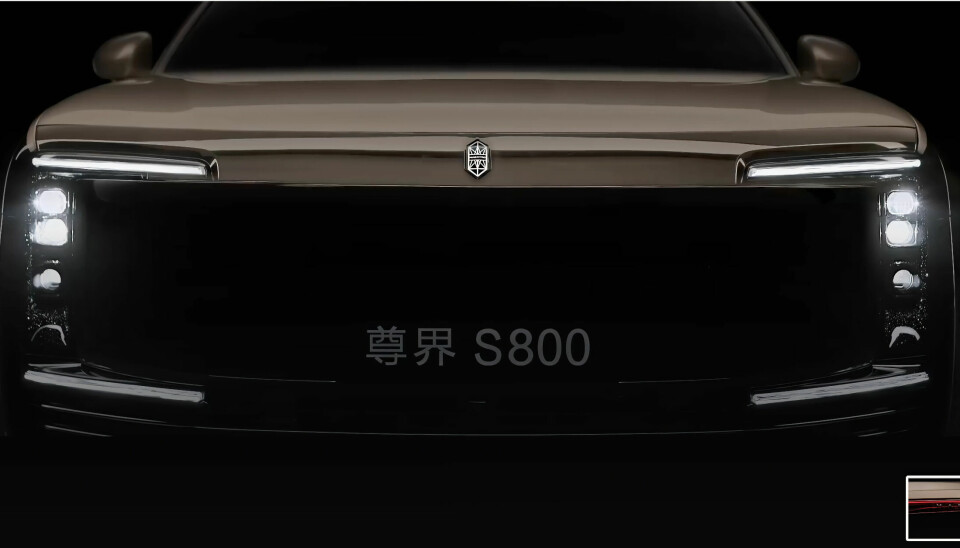
The S800 was officially launched on 30 May 2025 and is priced from ¥708,000 to ¥1,018,000 – approximately $104,500 to $150,300 at today’s exchange rate – positioning it directly against vehicles such as the Mercedes-Maybach S-Class and the BMW i7 at a meaningful price discount. The vehicle measures 5,480mm in length with a 3,370mm wheelbase, making it larger than a Maybach S-Class, and is available with either dual- or triple-motor configurations delivering between 523 and 852 horsepower, depending on specification.
At a unification event in Shanghai in December 2025, Richard Yu, head of Huawei’s smart car business, described the move as “a shift from isolated efforts to ecosystem-driven collaboration,” as executives from Huawei and its five automotive partners – Seres, Chery, BAIC, JAC and SAIC – committed to deeper alignment across software platforms, service networks, charging infrastructure and joint marketing.
The interior specification is where Huawei’s technology ambitions are most visible. The S800 features a 76-inch head-up display that projects information across the full windshield and a 43-speaker audio system. The vehicle is fitted with Huawei’s ADS autonomous driving platform and, more recently, the world’s highest-resolution 896-line LiDAR system for a production vehicle, capable of detecting objects as short as 14cm from a distance, with recognition range for low-reflectivity targets improving by 190% over previous generations. The production implications for Western carmaking is critical.
Huawei’s ecosystem model and what it means for manufacturing
Understanding what Huawei is building in the automotive space requires distinguishing it from conventional OEM structures. Huawei does not manufacture vehicles and has been explicit about that intention. Instead, its HIMA model positions the company as a technology and product-definition partner that controls the software, user interface and intelligence layer while manufacturing partners provide the capital, plant capacity and traditional engineering expertise.
At a unification event in Shanghai in December 2025, Richard Yu, head of Huawei’s smart car business, described the move as “a shift from isolated efforts to ecosystem-driven collaboration,” as executives from Huawei and its five automotive partners – Seres, Chery, BAIC, JAC and SAIC – committed to deeper alignment across software platforms, service networks, charging infrastructure and joint marketing.
The commercial logic has echoes of Apple’s strategy in consumer electronics: own the operating system, the retail environment and the user relationship, while manufacturing partners absorb capital-intensive production risk. Huawei showrooms already co-display premium smartphones and wearable devices alongside vehicles, reinforcing a unified ecosystem identity. For investors watching the value distribution in the automotive supply chain, this model raises a structural question: if software and intelligent systems become the primary source of consumer preference and pricing power in ultra-luxury vehicles, who actually captures the premium?
The manufacturing implications for JAC are also significant. In December 2025, JAC received regulatory approval for a ¥3.5 billion private placement, with funds verified and issued by February 2026, entirely directed at financing a 200,000-unit mid-to-high-end intelligent vehicle production capacity expansion. That is a committed industrial investment at scale, reflecting a genuine belief in the commercial case rather than a tentative pilot programme.
For deeper context on how Chinese vehicle manufacturers are simultaneously reshaping global production economics, see AMS’s analysis of China’s surge ahead of Europe and Japan in the global EV race.
Read the article
China: Fierce domestic competition sees international brands suffer lower sales and a contraction of output
As China’s domestic brands consolidate and grow both at home and internationally, the international brands, which have benefited from growth in the Chinese market over the years, now face serious headwinds.
The Grand Design and a $295,000 provocation
Maextro’s ambitions extend beyond the current S800 range. Richard Yu, chairman of Huawei’s consumer business group, announced on social media platform Weibo that an ultra-premium S800 Grand Design variant, with an estimated price of around ¥2 million ($295,200), will be officially launched in late June 2026.
The Grand Design adds bespoke exterior styling including two-tone paintwork, gold accents, more ceremonial proportions and Huawei’s latest ADS 5 autonomous driving technology, pushing the sedan further into the territory traditionally occupied by chauffeur-driven European flagships. At its estimated price, it would sit within range of a Rolls-Royce Ghost, which starts at well above $350,000. That comparison is the point.
Maextro’s 2026 roadmap is framed as a systematic expansion, with plans to launch up to six new models spanning a ¥400,000 to ¥1.3 million price range, encompassing sedan, SUV and MPV formats, and S800 series sales targeting 30,000 units for the year. Whether those targets are achievable remains to be seen, but the structural ambition is unambiguous.
The production-side challenge for BMW, Mercedes and their peers is structural. Premium manufacturing in Germany, the United Kingdom and elsewhere carries labour, regulatory and supply-chain costs that Chinese competitors – operating purpose-built, highly automated facilities with deep integration into domestic battery and semiconductor supply chains – simply do not face
What European manufacturers are actually defending
The response from established European luxury manufacturers has thus far been measured. Rolls-Royce executives have argued publicly that their customers prioritise exclusivity and customisation over technology-laden interiors – a position that is not without merit at the very pinnacle of the market, where bespoke commission processes and decades of craftsman heritage constitute genuine competitive barriers.
That argument, however, grows more complicated as the technology gap narrows and as the definition of luxury itself shifts for a new generation of wealthy buyers in Asia. Reviewers of the S800 have noted that while European brands retain an edge in ride refinement and bespoke craftsmanship, the Maextro’s autonomous driving capabilities, in-cabin software experience and sheer technology specification are difficult to match at any price point – let alone at a fraction of the European equivalent.
The production-side challenge for BMW, Mercedes and their peers is structural. Premium manufacturing in Germany, the United Kingdom and elsewhere carries labour, regulatory and supply-chain costs that Chinese competitors – operating purpose-built, highly automated facilities with deep integration into domestic battery and semiconductor supply chains – simply do not face. As AMS has noted in recent coverage of Mercedes production chief Michael Schiebe’s AI and flexible EV strategy, European OEMs are responding with automation, AI integration and platform flexibility, but the cost-structure differential is not something technology alone can fully eliminate.
Separately, as documented in coverage of Zeekr’s premium EV push in Europe, the Chinese premium challenge is not confined to the ultra-luxury segment. Geely’s Zeekr, Nio and others are attacking the upper-mid premium space in European markets with growing credibility – creating a multi-front competitive environment for European brands that extends well beyond what any single model represents.
The geopolitical variable
The Maextro S800 is currently sold only in mainland China and, to a limited extent, the UAE. Huawei’s HIMA alliance does not yet operate across the major Western markets that would represent the most consequential test of its luxury credentials. The reasons are as much geopolitical as commercial.
Huawei has been subject to US export restrictions since 2019, and the presence of its technology in vehicles sold in Western markets raises data sovereignty concerns that several governments are actively legislating around. Any meaningful European or North American expansion of HIMA-branded vehicles would require navigating regulatory frameworks that are explicitly designed with Chinese technology systems in mind.
That constraint is, for now, a limitation on the pace of disruption rather than a structural ceiling on it. As AMS has reported from the 2026 Beijing International Automotive Exhibition, Chinese manufacturers are already embedding themselves within European engineering ecosystems through research and development centres and technology partnerships – a strategy designed to transform Chinese brands from external exporters into participants within local regulatory systems.
The timeline may be longer for ultra-luxury than for mass-market EVs, but the strategic intent is not fundamentally different.
Manufacturing logic at the heart of the challenge
What the Maextro S800 ultimately represents, viewed through a manufacturing rather than a consumer lens, is the most advanced expression to date of a model that inverts conventional automotive value-chain assumptions. The historical logic of the global luxury car industry was that brand heritage, accumulated manufacturing craft and decades of platform investment created barriers that new entrants could not readily replicate. The Maextro challenges each of those assumptions simultaneously.
Its factory is newly built, purpose-designed and scalable. Its technology stack is current, not legacy. Its software supplier is one of the most capable in the world at hardware-software integration. And its price points – even for the forthcoming Grand Design at approximately $295,000 – undercut the European competition by a margin that demands a serious strategic response.
The parallel with the broader trajectory of Chinese automotive manufacturing is instructive. As coverage of factory strategies dividing the global industry in 2026 makes clear, the central competitive variable in this era of transition is manufacturing flexibility combined with software capability. China’s leading manufacturers have both. The question for Europe’s traditional luxury producers is not whether that challenge is real – the S800’s sales figures in China have already answered that – but how quickly, and on what terms, the contest moves beyond the one market where it is currently being fought.