Good morning. Fortune’s newest Most Powerful Women list is out and there are some familiar tech faces on it, including AMD’s Lisa Su, Alphabet’s Ruth Porat, Huawei’s Meng Wanzhou, and Anthropic’s Daniela Amodei.
Among this year’s notably ascendant? Meta’s new president Dina Powell McCormick, who leaps 19 spots to No. 58. As colleague Ellie Austin writes, DPM—seemingly “one of the busiest women on the planet”—has quickly become a Beltway whisperer for Mark Zuckerberg and his AI ambitions. (President Trump’s approval helps.)
The list and Austin’s profile are worthy of your attention. Today’s tech news follows. —Andrew Nusca
Want to send thoughts or suggestions to Fortune Tech? Drop a line here.
China restricts travel for top AI talent
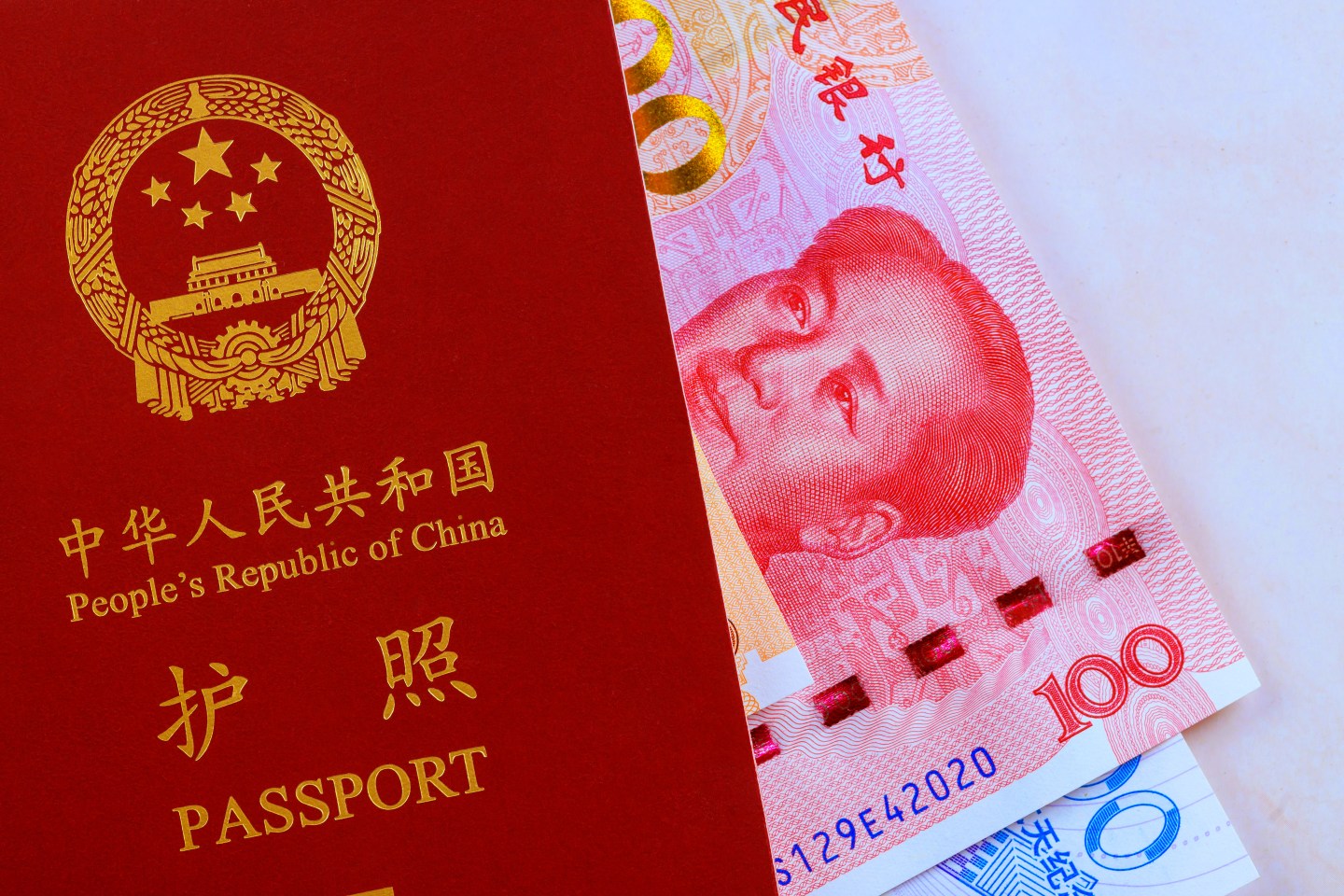
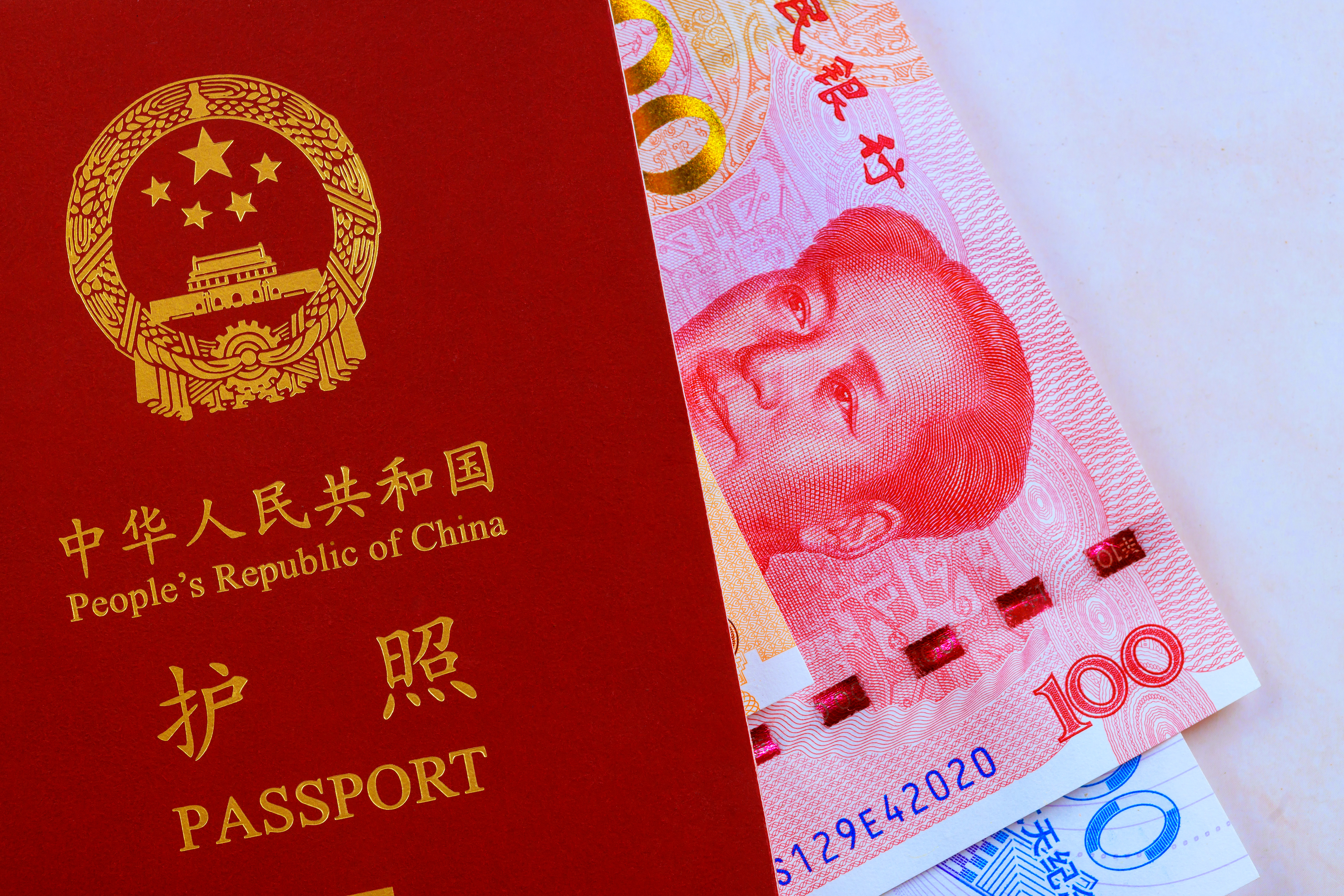
China is reportedly restricting overseas travel for top AI talent working at domestic companies like Alibaba and DeepSeek.
The escalation is, of course, intended to safeguard China’s homegrown tech trade secrets as it competes more aggressively with the U.S. on all things AI.
According to a Bloomberg report, individuals involved in “advanced AI work” considered strategically important to China must seek “approval from relevant authorities” before traveling abroad.
This sort of thing isn’t new, at least not from Beijing. Passport holds on academics, public sector employees, and executives at state-owned enterprises have been implemented for years.
But the AI focus and deeper reach into the private sector? That’s new.
Those subject to restrictions include “startup founders, researchers and executives,” according to the report, though the parameters—by seniority? by role?—remain unclear.
Whatever the case, Beijing means business. In April, government officials demanded that Meta unwind its $2 billion acquisition of Manus, an AI company born in China but headquartered in Singapore. It also blocked Manus’ co-founders from leaving the country.
Those kinds of moves could put a damper on the ability of Chinese firms to attract and retain top AI talent in the future. Or as Carnegie China director Damien Ma told the Chinese-language newspaper Lianhe Zaobao earlier this month: When it comes to talent retention, “carrots are more important than sticks.” —AN
Micron is now a trillion-dollar company
A tech company based in Idaho? How about a trillion-dollar tech company based in Idaho?
As of Tuesday, memory chip maker Micron—based in Boise since its 1978 founding when it was, yes, seed-funded by a potato tycoon—is now worth more than $1 trillion for the first time.
Micron joins 11 other U.S. companies in the exclusive club. All but one, Berkshire Hathaway, are household-name tech firms.
The milestone comes courtesy of a 19% stock surge on Tuesday, but it’s no fluke. Micron shares have been shattering their own records consistently since September 2025 as the AI boom ripples across the globe.
Then, the company’s shares traded around $140; today, they’re nearly $900.
To say Micron has the wind in its sails is a vast understatement. It is a semiconductor firm in an age of AI. It is one of the world’s largest makers of memory and storage. Along with SK Hynix and Samsung, it is one of the top three purveyors of so-called high bandwidth memory (HBM) that AI demands. It is the only one that’s American at a time of heightened nationalism.
Micron is working furiously to keep pace with these conditions. The company is aggressively building out its manufacturing capabilities (in Idaho, New York, and Virginia) as it and its rivals work through the biggest global memory supply crunch in decades.
The upside isn’t limited to HBM: Micron happens to have market-leading businesses making DRAM (for servers and PCs, a.k.a. where your active browser tabs live) and NAND flash (for mobile devices, a.k.a. where your smartphone pics live).
How high can Micron shares go? UBS this week raised its price target from $535 to $1,625. Buckle up. —AN
Drew Houston steps down as Dropbox CEO
Silicon Valley CEOs aren’t typically the kind to stick around in the same gig.
There are exceptions, of course. Jensen Huang has been running Nvidia since the year Bill Clinton took office. Though he’s twice shared the role, Marc Benioff has been on top of Salesforce since the New York Knicks were last in the NBA Finals. And Michael Dell has been running his namesake company for a total of 39 years, not counting his three-year…well, let’s call it a sabbatical.
On Tuesday Dropbox co-founder Drew Houston, 43, announced that he is stepping down after a 19-year run as CEO. Product chief Ashraf Alkarmi will step up to share the cloud storage company’s top gig for a temporary stretch, after which Houston will permanently transition to executive chairman. (Houston remains the company’s largest individual shareholder.)
“My focus right now is making sure Dropbox is in the strongest possible shape,” Houston wrote. “But knowing myself, it won’t be long before I’m getting credit card alerts for my Cursor token spend.”
It’s been a wild ride. After a spectacular 2018 IPO, Dropbox has worked to become profitable and defend its turf as the entire category of cloud storage became a feature in bigger tech companies’ platforms. Today Dropbox earns half a billion dollars of profit on some $2.5 billion in annual revenue. Its shares loosely trade at about the same price as the company’s public debut.
The next chapter is all about AI, of course. Houston told CNBC that he’s bullish on the company’s prospects amid the new world order: I’ve never met a Dropbox customer who’s like, ‘I’m just using so much ChatGPT I’m going to cancel my Dropbox subscription.’” —AN
More tech
—American Airlines, Starlink strike a deal for in-flight Wi-Fi.
—Spain blocks Kalshi and Polymarket until it investigates alleged gambling law violations.
—Qualcomm will reportedly supply chips to Bytedance for use by AI agents in the latter’s Doubao chatbot.
—Suno, the generative AI music startup, is reportedly fundraising at a $5 billion valuation.
—OpenAI poaches ServiceNow’s CMO, Colin Fleming, to lead marketing for its “OpenAI for Business” division.
—The Netherlands blocks Kyndryl’s acquisition of IT supplier Solvinity.
—When will AI replace Google’s CEO? The job “is not that complicated,” Sundar Pichai says.