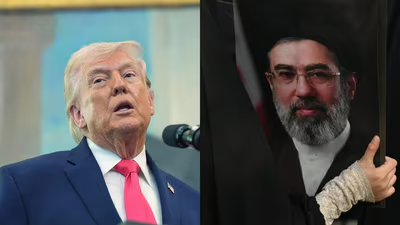
The United States and Iran continue to remain at odds amid peace negotiations. On Tuesday, the Iranian foreign ministry stated that while conclusions have been reached on several points, that does not mean a deal to end the war is “imminent.”

In the 14-point memo exchanged between the US and Iran, one of the key points is the permanent end of the war and all hostilities in the region, including Israel’s intensive military operation in Lebanon.
However, with Lebanon’s inclusion in the deal uncertain, and the dispute over Iran’s nuclear programme and uranium stockpile, the delegations once again find themselves in limbo.
Where do the negotiations stand?
Iran’s nuclear programme and ambitions continue to be a sticking point for both parties. While Iran has stated that it is ready to assure the world that it has no plans to pursue a nuclear weapon, Washington has described its programme as a “red line” for US President Donald Trump and demanded that Iran surrender its enriched uranium stockpile.
As per the latest update, both sides have stated that they have made progress on the peace deal, which would allow for a 60-day pause in fighting and more room for negotiation for a final deal.
Based on details shared by Trump and US Secretary of State Marco Rubio, the Strait of Hormuz will also be opened once the peace deal is agreed upon, including ending the US’ naval blockade on Iranian ports.
Follow the latest on the US Iran war
Where is the holdup?
As of now, the issues which stand out are the exclusion of Lebanon from the deal and Iran’s nuclear ambitions.
The US believes that Iran remains on the verge of developing a nuclear weapon, which Tehran has denied. Washington has repeatedly stated that Iran cannot have a nuclear weapon at any cost, even if it means extending the war.
A key part of the agreement also remains that Iran hands over its enriched uranium to the US to be disposed of, which Tehran has refused.
The fighting in Lebanon between the Iranian proxy group Hezbollah and Israel continues, despite an extended ceasefire. Israel has stated that it will maintain its right to defend itself on all fronts, including Lebanon.
In a statement on X, Israeli prime minister Benjamin Netanyahu reiterated this and stated that he had backing from Trump.
Also Read | Trump floats Iran-US peace deal, but burning questions still remain: HT decodes
Another sore point is sanctions and Iran’s frozen assets. In all previous relays, Iran has demanded monetary and economic compensation from Washington for the damages caused during the war. Tehran has also demanded the release of its frozen funds and removal of sanctions in order to recover its economy.
Citing people close to the matter, Tasnim news agency said on Sunday that “without the release of a specific portion of Iran’s blocked assets in this very first step – along with a clear mechanism for the guaranteed, continued release of all blocked assets – there will be no agreement.”
However, CNN reported, citing US officials, that Iranian assets will only be released after the Strait of Hormuz is reopened.
How will the deal be finalised?
An Iranian delegation is currently in Oman for more negotiations on the deal with the US. If approved by the Iranian side, the framework will go to the Supreme National Security Council. If the council approves, the text then goes to Supreme Leader Ayatollah Mojtaba Khamenei.
From the US side, the deal must satisfy Trump and his administration, who have said there must be a deal or the conflict will end in another way, hinting at more strikes.
“We’re either going to have a good agreement, or we’re going to have to deal with it another way,” Marco Rubio said during his visit to India.