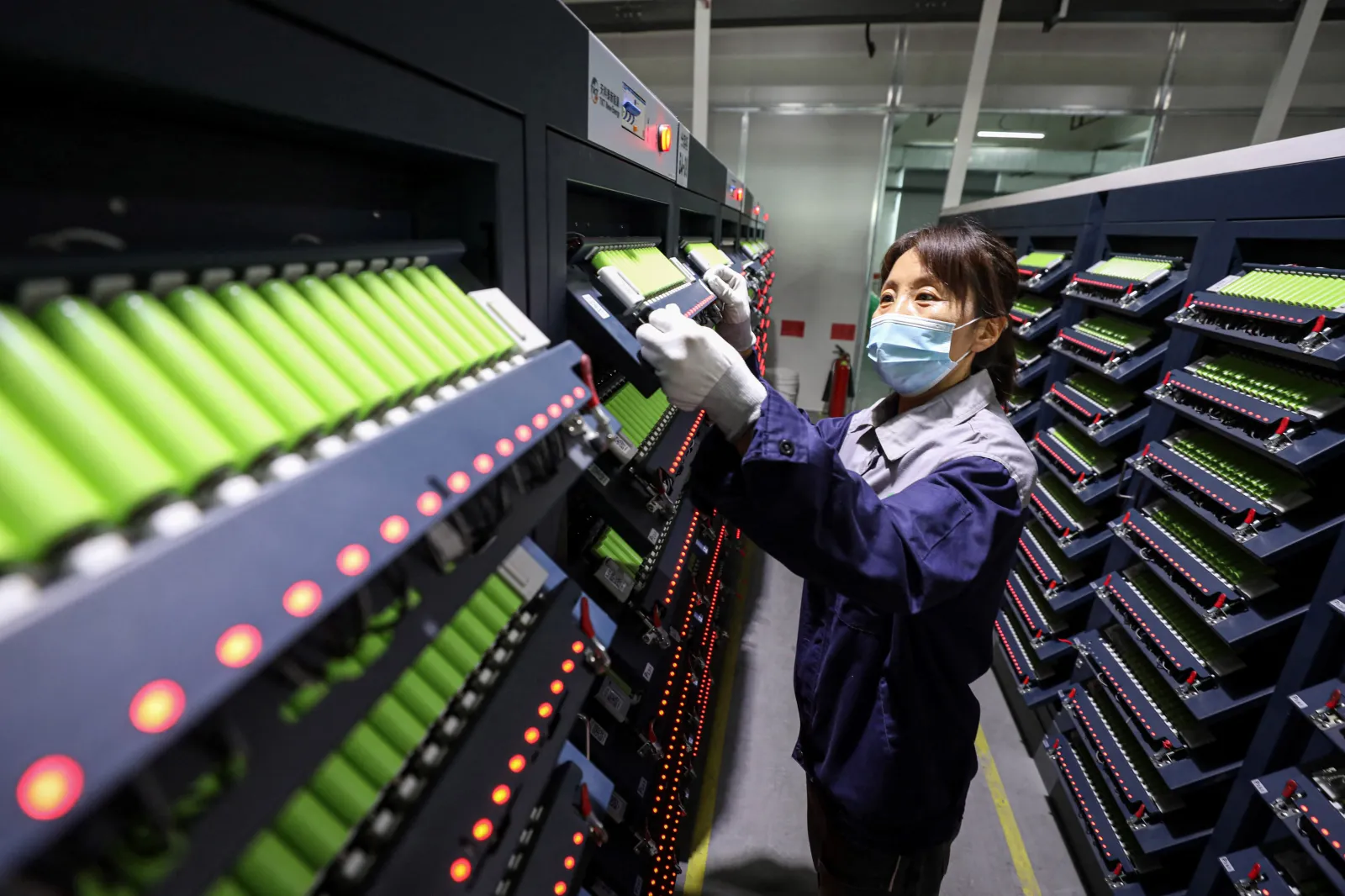
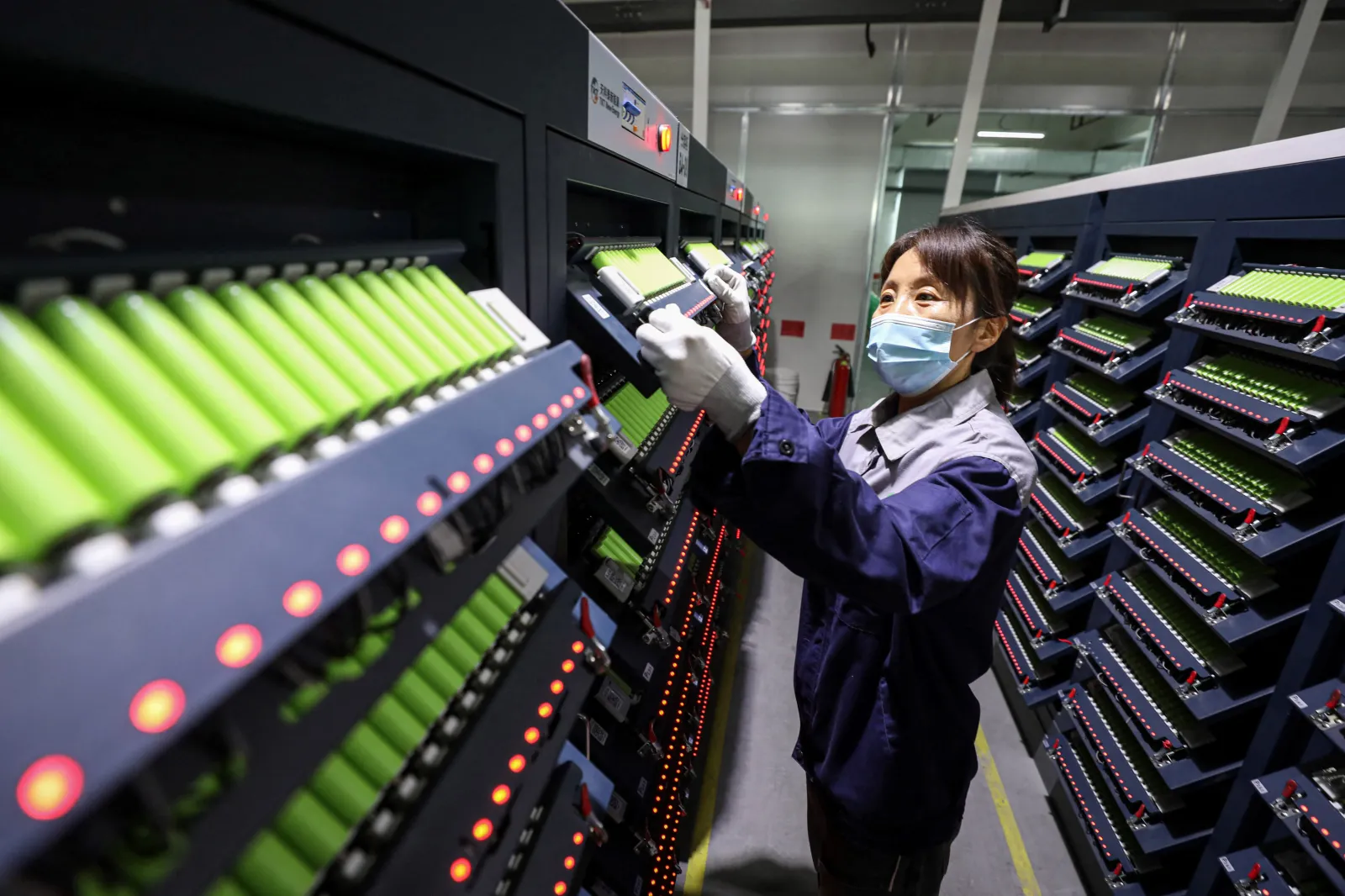
China’s Gotion Inc. has abandoned a $2.4 billion flagship factory to make battery parts in Green Charter Township, near Big Rapids, Michigan. Township residents, after a vigorous campaign, forced an exhausted company and weary state government to walk away from the project last year.
Did the Green Charter residents, in their successful effort, also set back the United States’ ability to obtain valuable technology from China?
Industry experts think that’s a risk, but the U.S. has other ways to obtain the tech.
Not everyone is happy with the result in Green Charter Township. The end of Gotion’s plans in Michigan “represents more than just another failed economic development deal,” writes Michael Anderson of industry publication Battery Technology. “For an industry still learning to compete with Asian manufacturing prowess, it signals a troubling pattern: political opposition may be undermining the U.S.’s ability to acquire the technical expertise needed to build a competitive domestic battery sector.”
“The question now,” Anderson declares, “is whether other states and communities will learn from Michigan’s experience—or repeat it.”
Illinois residents are now gearing up to stop Gotion in their state.
The Chinese company had originally planned to split U.S. operations by manufacturing battery cells in Michigan and shipping them to Manteno, Illinois, for assembly into battery packs.
In September 2023, Illinois Govenor J.B. Pritzker announced that Gotion would build in his state a $2 billion plant to produce lithium batteries for electric vehicles (EVs). The state then awarded the company incentives, including tax benefits.
Now, after defeat in Michigan, the company plans to both manufacture and assemble in Manteno, an hour south of Chicago. Its Illinois plant has already begun operations.
The opposition to the Chinese company in Illinois has been fierce. About 50 townspeople first gathered in a parking lot, one evening in September 2023, where they decided to organize and fight the Chinese company. They formed the Concerned Citizens of Manteno, which filed a lawsuit against the Village of Manteno and Gotion in the Circuit Court of Kankakee County.
The latest amended complaint states the plaintiffs oppose the plant for “environmental, national security, health, safety, and good governance reasons.” Among other claims, the residents argue that Manteno officials did not adhere to local rules when they greenlighted the Gotion plant, especially prohibitions against “highly toxic chemicals.” Gotion is contesting the allegations.
Residents have received help from Washington. In February 2025, Florida Senator Rick Scott and others sponsored the No Official Giveaways of Taxpayers’ Income to Oppressive Nations Act—the NO GOTION Act—to prohibit tax credits for green energy projects for companies affiliated with China’s Communist Party (CCP).
Opponents are also concerned about Gotion’s business practices. Representative John Moolenaar (R-MI), chairman of the House Select Committee on the Strategic Competition Between the United States and the Chinese Communist Party, cited “indisputable evidence” that the “CCP-aligned” battery maker is “deeply connected to forced labor.”
As the website of Manteno’s Concerned Citizens states of the Gotion plant, the community “does not want it or need it, cannot afford it, and has laws which do not allow it.” The anti-Gotion Freedom Party last April elected two to the six-member village Board of Trustees and prevailed in the mayoralty race.
Four other trustees support Gotion, but new Mayor Annette LaMore tells me some of them are changing their minds because the company is not keeping promises to the village, especially pledges regarding the operation of a fire brigade.
If Manteno residents block the plant, will the U.S., as writer Anderson suggests, lose out? As Bloomberg reported this month, analysts believe Chinese companies hold “a substantial edge on batteries” over U.S. rivals.
Clearly the U.S. needs battery technology. There are, however, more effective ways for U.S. companies to obtain it. For instance, Ford has a licensing agreement with China’s Contemporary Amperex Technology Co., and General Motors has a battery joint venture with South Korea’s Samsung SDI.
In any event, the U.S. will have to wean itself off China’s batteries soon. Next year, U.S. law will prohibit Chinese-origin rare earth products in military platforms, a restriction that will hit batteries. Companies should expect a wider ban in the near future as Washington becomes more concerned about China’s involvement in crucial supply chains.
Meanwhile, the residents of Manteno are continuing their efforts. “The No-Gotion fight is truly a David versus Goliath one,” Jeanne Ives, a former Illinois state representative and leading critic of the Manteno facility, told me last month.
Robby Dube, the Eckland & Blando attorney for both the Green Charter and Manteno residents, is nonetheless optimistic. As he said to me a few weeks ago, “The fight goes on in Illinois, but it’s a fight we’ve demonstrated can be won.”
Gotion’s slogan is “A Global Approach to Electrification.” The company, however, has yet to find the right approach to residents in the U.S.
Gordon G. Chang is the author of Plan Red: China’s Project to Destroy America and The Coming Collapse of China. Follow him on X @GordonGChang.
The views expressed in this article are the writer’s own.