The Trump Administration said recently that China conducted a nuclear explosive test and tried to conceal it from the world. The press doubts the story and insists President Trump is courting nuclear war if he tests America’s nuclear arsenal. So credit the Administration for adding details to the record and educating the public about the threat from China and Russia.
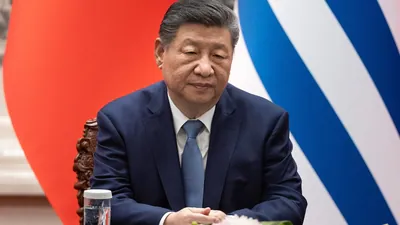
Chinese President Xi Jinping. (AFP)
“On June 22, 2020, we are aware that China conducted a nuclear explosive test,” the State Department’s Christopher Yeaw said at the Hudson Institute last week, reinforcing what the Administration alleged this month in Geneva. State said China had used a technique known as decoupling to muffle the register and evade detection.
Mr. Yeaw, an assistant secretary at State, added details: “The probable explosion occurred right near the Lop Nur nuclear test site” in China. A station in Kazakhstan detected a 2.75 magnitude event. There is “very little possibility I would say that it is anything but an explosion, a singular explosion.”
The event was “entirely not consistent with an earthquake” or “the ripple fire explosion that you get in mining,” he added. It “is quite consistent with what you would expect from a nuclear explosive test of some certain yield.”
China is denying the allegation at a decibel so high (“entirely unfounded”) it suggests that State has struck a nerve. Beijing insists it doesn’t conduct testing with yield, in voluntary accordance with an international treaty it hasn’t ratified. Yet the empirical record is that China and Russia will act in their own perceived interest regardless of international nuclear norms.
The U.S. government has said for years that Moscow may be conducting nuclear testing with yield. Beijing is on an unconstrained nuclear break out to 1,000 warheads by 2030, and refuses to even discuss arms control with the U.S.
Don’t buy that the alleged test in China wouldn’t matter if it was of low nuclear yield. That isn’t reassuring. The Pentagon warned late last year in a report that China “is probably pursuing nuclear weapons with yields below 10 kilotons,” so Beijing can “conduct limited nuclear counterstrikes against military targets and control nuclear escalation.”
In other words, China could be writing its nuclear blackmail playbook for a Taiwan crisis. The free world is at a known disadvantage in such tactical nuclear weapons, and Beijing wants to present the U.S. with the terrible options of surrender or resort to strategic weapons and risk a larger nuclear war.
Russia commands as many as 2,000 tactical nukes, and the recently expired New Start treaty did nothing to constrain them, which alone made the pact unworthy of renewing. One of the biggest contributions Mr. Trump could make would be a crash project to deploy a sea-launched nuclear cruise missile on U.S. Navy submarines before he leaves office.
Mr. Trump has reserved the right to test U.S. nuclear weapons “on an equal basis” with adversaries, which is not an escalation. The world has changed since the U.S. stopped testing nuclear weapons in the 1990s, and simulations and modeling aren’t a perfect substitute.
The U.S. nuclear deterrent has been a force for peace in the world for 80 years, but preventing a nuclear exchange requires a capable and credible American arsenal. The State Department is right to explain, as it did this month, that it’s time to end the era “of U.S. unilateral restraint” that has limited only the free world’s defenses.