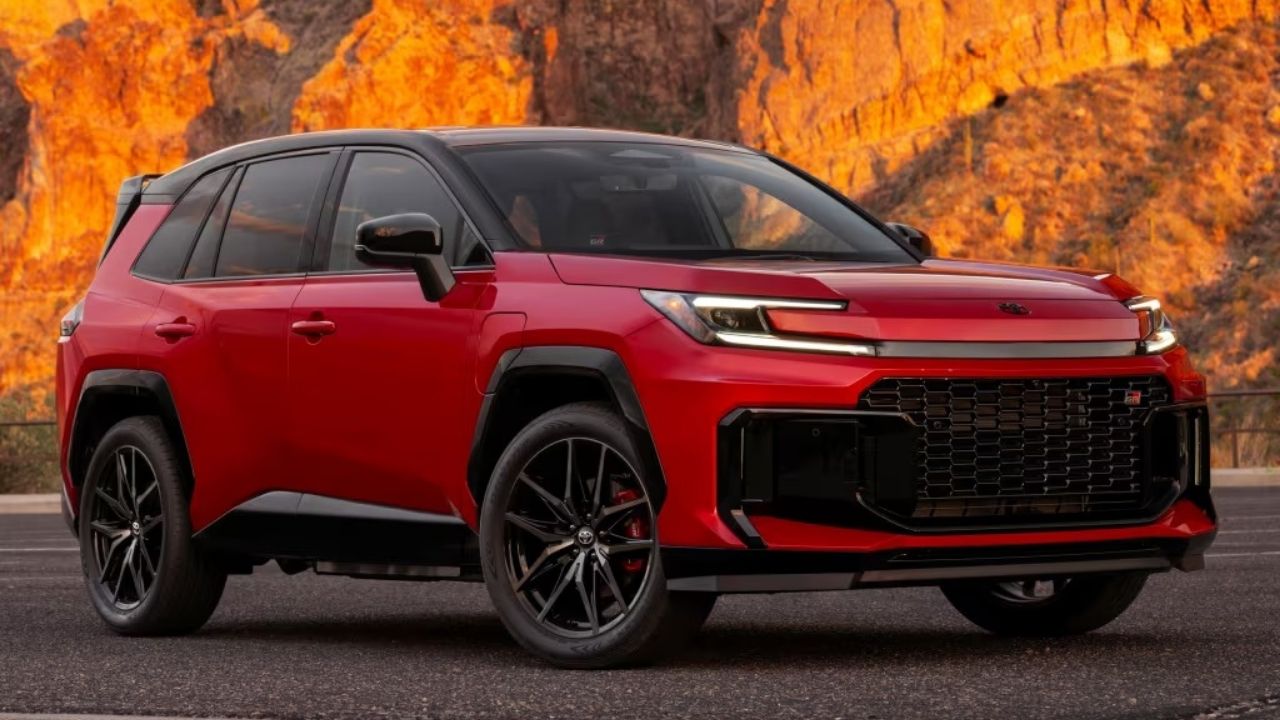
Toyota’s RAV4 has become one of the defining vehicles of the modern U.S. market, to the point that the company has found itself in an unusual position. Demand is so strong that Toyota is encouraging dealers to steer shoppers toward less popular models, not because interest is fading, but because supply cannot keep up.
The pressure has intensified as Toyota transitions production of the next generation RAV4 across multiple plants. The redesigned RAV4 was revealed in 2025, and the staggered changeovers needed to build the next generation across multiple plants in Kentucky, Ontario, and Japan are expected to constrain early availability. Even before that changeover, the RAV4 was already operating near the ceiling of Toyota’s production capacity.
In simple terms, Toyota is facing a textbook problem of demand outpacing supply. The response is not to cool the market but to rebalance the showroom.
Dealers Told To Make up the Difference With Other Models

At a meeting held during the National Automobile Dealers Association event in Las Vegas, Toyota Motor North America executive David Christ delivered a clear message. If RAV4 inventory remains tight, dealers will need to make up part of that shortfall by selling other vehicles in Toyota’s lineup.
Toyota and Lexus have been operating with relatively lean inventories, and there is little indication that conditions will normalize quickly. Christ noted that a large share of Toyota’s available stock is concentrated in pickup trucks, which gives the brand more breathing room in that part of the portfolio. Passenger cars and crossovers, however, remain a more uncertain picture that will depend on how the year develops.
This kind of constraint has a real-world effect at the dealership level. When a high-demand model becomes scarce, pricing pressure often shifts from manufacturer strategy to retailer behavior.
Tight Supply Can Lead To Unwanted Price Markups
Limited availability has already produced some uncomfortable side effects. Some dealers have reportedly added markups to the new RAV4, in some cases several thousand dollars above the manufacturer’s suggested price.
That approach risks undermining the reputation the RAV4 has built over years. Part of the model’s appeal has always been its rational value proposition: strong resale, proven reliability, and a practical package that makes sense for a wide range of households. When shoppers see a mainstream compact SUV priced like a premium product, it can damage trust and push buyers to competitors.
Toyota does not directly control every dealer pricing decision, but the brand’s long-term strength depends on keeping core models aligned with their image in the market.
Toyota Sees an Opportunity to Spotlight Overlooked Vehicles

Toyota is also treating the situation as an opening to elevate models that have not always been in the spotlight. With fewer RAV4s available, Toyota believes 2026 could be a chance to promote vehicles like the Toyota Crown and Crown Signia, the all-electric bZ, and the upcoming Toyota C-HR EV more aggressively.
From a business perspective, the logic is straightforward. If the flagship compact SUV cannot be delivered in sufficient numbers, the company would prefer to capture that demand elsewhere within the brand rather than lose it entirely. It is also a way to broaden consumer awareness of products that sit outside Toyota’s traditional bestsellers.
This strategy matters in a market where pricing is volatile and policy uncertainty, including potential tariff impacts, can shift the economics of certain models quickly.
Strong 2025 Results Give Toyota Room to Maneuver

Toyota’s recent sales performance provides some cushion. In 2025, Toyota reported an 8.1% increase in deliveries to 2,147,811 vehicles, while Lexus set its own record with a 7.1% gain to 370,260 vehicles sold. That kind of momentum stands out in a period many analysts have described as likely to see broader market cooling.
Looking ahead, Christ suggested 2026 could be stable and strong, but he also acknowledged the pace of sales will depend heavily on pricing trends and the effect of tariffs. The key question is whether the market remains affordable for buyers or whether higher costs begin to slow demand.
If Toyota can match or exceed its 2025 performance while managing RAV4 constraints, it will reinforce the brand’s ability to navigate supply challenges without damaging customer confidence. Just as important will be whether Toyota can limit excessive dealer markups, because buyers tend to remember most clearly when a value-focused nameplate stops feeling like a value.
This article originally appeared on Autorepublika.com and has been republished with permission by Guessing Headlights. AI-assisted translation was used, followed by human editing and review.