Travelling across China’s Greater Bay Area (GBA) can be an incredibly rewarding experience, not the least because of the region’s rich culture and wealth of attractions. With 11 cities to its name, including Macao, Hong Kong, Guangzhou and Shenzhen, the GBA is a sprawling metropolis that houses everything from casinos and ancient temples to skyscrapers and natural wonders, catering to visitors of all ages and backgrounds.
Admittedly, embarking on a trip to the GBA can have its challenges for first-time visitors who may be unfamiliar with the area, language and culture – but this can be mitigated if you prepare in advance and know what to expect.
[See more: Here’s how to get to some of the Greater Bay Area cities from Macao]
To help you out, we’ve compiled a list of our top tips when travelling to the GBA for the first time. Keep reading to find out how you can make your journey to the region a smooth and memorable one.
1. Ensure you have WeChat Pay or Alipay set up
Although cash is still readily used in Macao and Hong Kong, the same cannot be said for the nine mainland GBA cities, where the electronic payment platforms WeChat Pay and Alipay reign supreme.
Even though physical money is still legal tender in the mainland, you’ll quickly find it to be a liability, as some businesses and taxis may not have enough cash on hand to give you the correct change. Even street hawkers will proffer a laminated QR code for you to scan when it comes to making payment.
[See more: Six apps you need to survive in mainland China]
Many mainland restaurants also prefer diners to order and pay online by scanning a QR code. Ride-hailing services such as Didi, shared bicycles and shared power banks can only be paid for digitally.
Thankfully, Alipay and WeChat Pay are relatively easy to set up for non-Chinese residents, without requiring a Chinese phone number. Their payment systems can also be linked to your international credit or debit cards.
For more information on how to set up these apps, click here for Alipay and here for WeChat Pay.
2. Allow yourself some time
All this talk of the GBA’s amazing connectivity, high-speed rail services and “one hour living circles” might tempt you into trying to cover too much in a day. Resist the temptation to do a whistlestop tour. Instead, slow down, spend a night or two somewhere and savour your chosen GBA destinations.
[See more: Here’s how to claim your tourist tax refund in China]
The 11 cities that comprise the GBA are each distinct, with a wide range of attractions and landmarks that are difficult to jam into a one-day itinerary. Even the GBA’s smallest city, Macao, would exhaust the visitor trying to cover many of the city’s main spots in a single day. Doing so would be impossible in a sprawling metropolis like Shenzhen or Guangzhou.
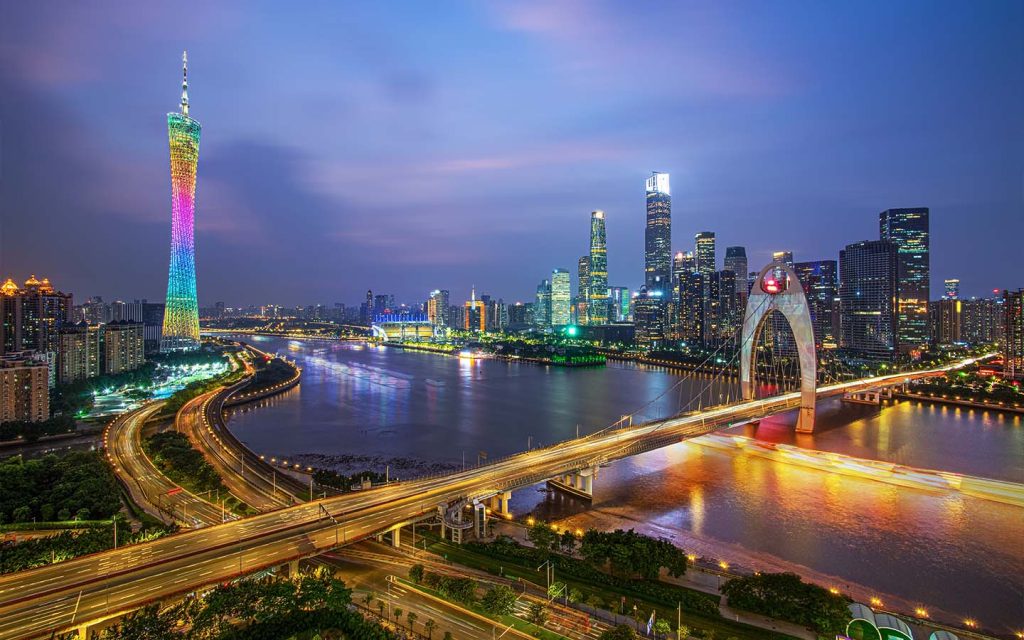
3. Use the high-speed rail when travelling between mainland GBA cities
When travelling between Macao and Hong Kong, the ferry or bus are both good transport options. Sailing takes around 1 hour, while a bus trip via the Hong Kong-Zhuhai-Macao Bridge will last for roughly 40 minutes.
For travelling between mainland GBA cities, high speed trains are advisable, as they are fast, clean and convenient. A high speed rail trip from Zhuhai to Guangzhou, for instance, takes only about 1 hour, costing just 70 yuan. Similarly, a fast train journey from Guangzhou to Shenzhen takes as little as 31 minutes and is priced at a reasonable 75 yuan.
[See more: Here’s how to rent a share bike in China]
High-speed rail tickets can be purchased at a station’s ticketing booths and machines, the official Railway12306 app or website, as well as through third-party platforms such as Trip.com.
4. Consider visiting the islands and lesser-known cities in the GBA
All too often when people think of the GBA, they can only name the main cities – Macao, Hong Kong, Guangzhou, Shenzhen and Zhuhai. This does a disservice to the region’s other equally vibrant cities, including Zhongshan, Jiangmen, Dongguan, Zhaoqing, Foshan and Huizhou.
Zhongshan, for instance, was the hometown of Dr. Sun Yat Sen, the revolutionary who was instrumental in ending more than 2,000 years of imperial rule in China in 1911. In honour of the trailblazer, the city features various monuments and attractions bearing his various namesakes, including the Museum of the Former Residence of Dr. Sun Yat Sen, Sunwen West Road Pedestrian Street and Dr. Sun Yat Sen’s Memorial Hall.
Meanwhile, Foshan is a must-visit for kung fu fans due to its connection with renowned martial artists such as Ip Man, Wong Fei-hung and Bruce Lee.
Similarly, the other lesser-known GBA cities feature a mix of contemporary, historic and natural attractions such as Licha Ancient Village in Zhaoqing, Songshan Lake in Dongguan, Shuidong Street in Huizhou, and the UNESCO World heritage dialou towers in Jiangmen.
[See more: Here’s a guide to the ‘other’ Greater Bay Area cities]
For more information, click here for our guide on the overlooked cities in the GBA.
The islands around the GBA cities are also worth a visit, as they offer travellers a nice change of pace from the hustle and bustle of urban life. If you’re in Zhuhai, consider Wailingding Island, Wanshan Island or Dong’ao Island.
Hong Kong also has plenty of outlying islands, including hidden gems such as Peng Chau, Tap Mun and Po Toi.
Those who find themselves in inland Guangzhou should also consider making the trip to the historically-important Shamian Island.

5. Transport payment methods between Macao, Hong Kong and the rest of the GBA are not always interchangeable
The standard transport smart cards issued in Macao, Hong Kong and the mainland GBA cities are not all-in-one transit cards that allow for travel across all cities in the region. For instance, a Macao Pass transport card cannot be used in place of Hong Kong’s Octopus card and vice versa.
Having said that, there are special transport cards that allow for payment across not only within the GBA, but also across most major cities in mainland China. These include the MacauPass-ChinaT-Union mCard and the Octopus-China T-Union Card.
[See more: You can now use your MPass-China T-Union mCard on Hong Kong’s subway system]
Digital payment options are somewhat easier, with Alipay recognised as a form of public transport payment across the GBA.
6. Prioritise using public transport instead of taxis when in Macao
If you’re looking for an efficient and convenient mode of transport within a GBA city, taxis and online ride hailing services like Didi are generally a good option. The exception to this is Macao, where there is a shortage of taxis. More often than not, you’ll find yourself either queuing for some time at the taxi stands or fruitlessly trying to hail a vehicle on the streets.
While there is a radio taxi app and hotline, these services are far from perfect, with the lack of English-speaking drivers and taxi shortage hampering their usability for foreign visitors.
[See more: These are the best tips for getting a taxi in Macao]
To make matters worse, Macao taxi drivers have earned a bad reputation for their reckless driving and poor customer service. Those thinking of using Uber, Didi or other such online ridehailing services can also forget about it, as the local government has outlawed them on the basis that these “unlicensed” cars are “not appropriate to effectively compensate for the lack of available taxis in Macao.”
You might have to accept the inevitable and either board a bus, make use of free casino shuttles or ride the LRT train system.

7. Purchase a GBA SIM card for multi-city trips
Those planning to travel between the SARs and mainland GBA cities should consider purchasing a GBA prepaid SIM card, as they offer you plenty of mobile data for an affordable price. Another advantage is these cards allow you to access Google, Facebook, Instagram and YouTube in mainland China without having to resort to a VPN.
[See more: Here’s how to use a Hong Kong SIM card in Macao]
These are a variety of SIM cards that fit different needs, with China Mobile’s Hong Kong Tourist SIM perfect for those staying for a short period of time, and China Telecom’s GBA Prepaid Data SIM perfect for those looking for flexibility. These cards can be purchased online or in Macao and Hong Kong. For more details, click here.
8. Don’t expect anyone to speak English when you’re outside touristy areas
Spoken English proficiency in the GBA can vary considerably depending on the context and the person you are talking to. Younger Chinese and professionals working in the tourism, hotel and business sectors are likely to speak English to varying degrees of fluency. Having said that, the language is not ubiquitous throughout the region, as the dominant languages remain either Mandarin in mainland China and Cantonese in Macao and Hong Kong.
[See more: The Hong Kong-Zhuhai-Macao bridge hits the 100-million crossing milestone]
Of course, there are plenty of translation apps such as Google Translate, Baidu Translate and DeepL to help you overcome the language barrier. Keep in mind that a VPN is required if you are using Google services in the mainland.
Even if you don’t speak Mandarin or Cantonese, learning some of the basic phrases can go a long way when it comes to breaking the ice.
Source link