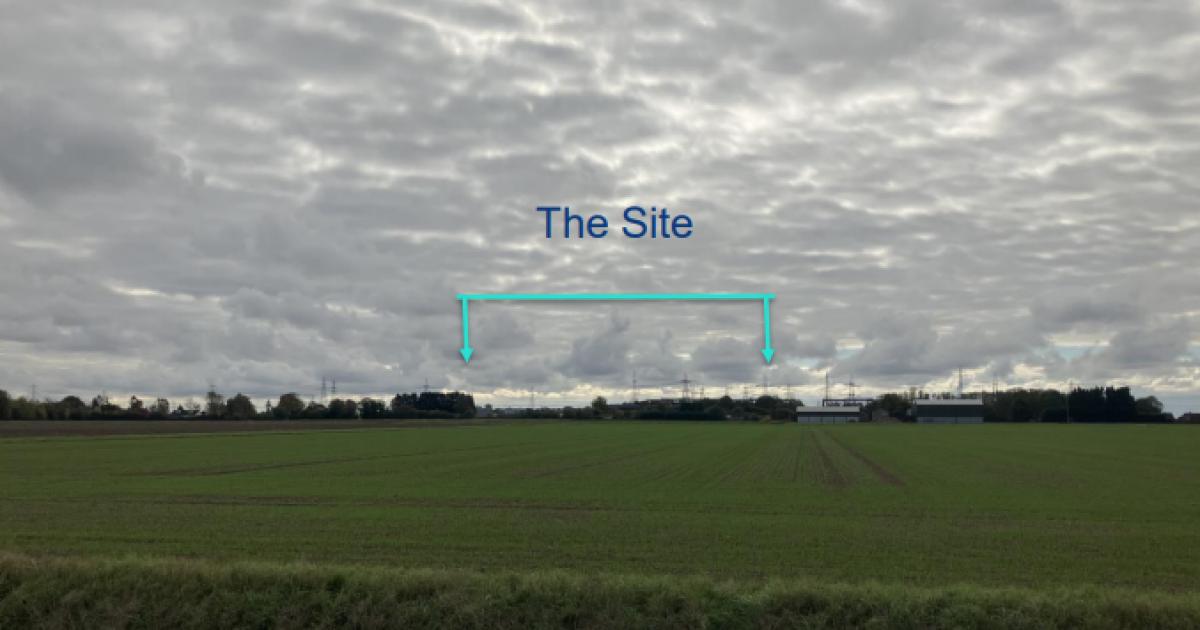
The four-hectare complex, seen as a vital part of the UK’s net zero ambitions, will see 612 batteries, each three metres tall, installed on farmland near the village of Walpole, in the west of the county.
The proposed scheme, covering an area of up to eight football pitches, had already generated strong opposition in the surrounding area but councillors overrode those to give permission for it to go-ahead, following advice from council officials that they should take its national benefits into account.


The 200-megawatt battery energy storage system (BESS) will store energy generated by intermittent renewable sources, including solar farms which are planned for the region, to provide back-up capacity for the National Grid.
The scheme was approved following a lengthy debate among West Norfolk councillors at a meeting on Monday.
While many of the members were critical of the plans, they were required to consider the recommendation by council officers that they approve them.
The officials had drawn up a document arguing that while the loss of agricultural land was recognised, considerable weight should be attached to the benefits of the site, as the government continues to push towards national 2050 net zero targets.
At the meeting, councillors expressed their frustration about national policies which they said left them little room to block the project.
Vivienne Spikings, a Conservative member, said the planning committee was “hamstrung” adding: “If we refuse it, it goes to the National Grid to appeal it and then a rubber stamp.
“We can make suggestions, objections, reasons, but we’re whistling in the wind and it is rather self defeating.”


Walpole Parish Council and various locals had submitted objections to the plans, raising concerns about the loss of high-grade agricultural land, noise and safety risks of battery fires.
Richard Blunt, who represents the Walpole ward, said he did not oppose the energy storage facilities but believed the current scheme was “in the wrong place”.
“It’s like an industrial building being built in a residential area,” he said. “It will be horrendous.”

“I think it’s in the wrong location for this application, you build these things anywhere, so why are we doing it here?”
Case officer Keith Wilkinson replied that while there were nearby homes, “it is not a residential area as you would identify.
“The overall appearance of this is countryside,” he said, adding that proximity to an existing Walpole substation made the site technically suitable.
The site – which will host 68 rows of batteries – is within 50 metres of two properties.

Developers have pledged to install a 3.5m acoustic timber fence to try and contain the sound levels.
Under the permission, the site will operate for 30 years before being decommissioned and restored to farmland.
None of the statutory consultees, including the Environment Agency and Norfolk Fire and Rescue Service, raised objections, subject to conditions on flood protection, noise and traffic management.
Councillors on the planning committee voted ten to two in favour of the plan, with one abstention.