He was sent off 20 times in his career and was even banned from the world’s greatest rugby-playing nation
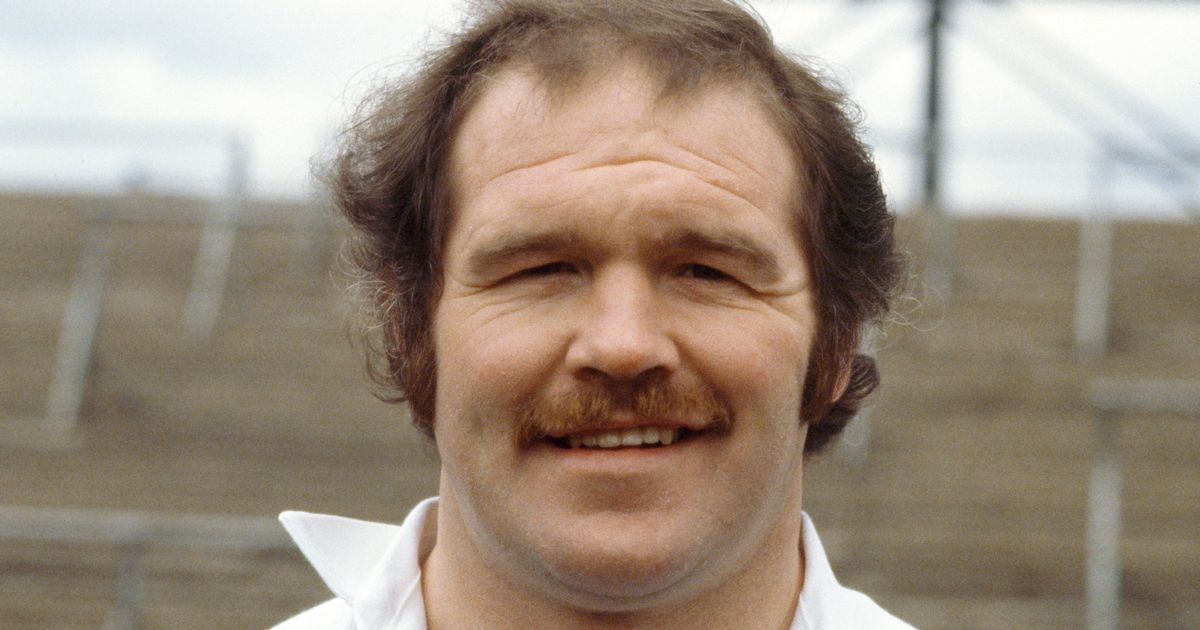
The question of who is the hardest rugby player to have played the game is often one that causes much debate. In terms of Welsh and British candidates, Jim Mills has a stronger case than most.
In numerous respects, Mills was a physical powerhouse ahead of his era – standing 6ft 4ins tall and weighing 18 stones of steel-like muscle, possessing shovel-sized hands and a presence that commanded respect across multiple nations.
The persona of Big Jim the enforcer is one the rugby league icon is fully conscious of, naturally. However, it’s not one the now 81 year old has ever felt compelled to emphasise.
“You don’t go out to make a reputation as a hard man,” explains Mills. “It just comes naturally really,” he previously told WalesOnline.
The reality that he received approximately 20 dismissals throughout his career and was prohibited from competing in the world’s premier rugby nation only amplified that standing.
“Across my career, that’s only around one red card each year!” Mills joked, with one incident proving particularly memorable.
His dismissal for stamping on New Zealand’s John Greengrass’s head during a 1975 encounter in Swansea remains the incident that overshadowed all other sending-offs throughout his extensive and celebrated career.
Mills received a six-month suspension from the RFL. New Zealand imposed an even harsher penalty, implementing a lifetime ban preventing him from competing there.
That lapse in judgement remains something he struggles to comprehend fully – “I have to admit it looked bloody terrible on the telly,” he said. “You know when you look at something and you can’t believe what you’re doing? I can never explain it. Stupidity? Moment of madness?.
“You think, ‘Bloody hell, what have I done here?’.
“When you do something like that there’s no way back,” he said previously.
In recent years, Greengrass and Mills have struck up an unlikely friendship.
Mills, naturally, went on to become a rugby league icon, though his sporting journey could have taken a very different turn.
As a schoolboy, he initially played as a football goalkeeper before a teacher with strong rugby union connections recognised untapped talent in the youngster.
Mills progressed to Cardiff’s first-team, with a promising union career beckoning until a chance encounter on Westgate Street changed everything.
“There was a fella stood across the road on Westgate Street,” recalled Mills. “I found out later it was Eddie Davies, a scout at Halifax.
“Colin Dixon had recommended me as he’d played in the youth with me before going to Halifax.
“This Eddie Davies came across me and asked me if I would be interested in playing rugby league. I said I might do and he said that’s all he wanted to know. Then he just walked away.
“So I carried on as usual and went down through the gates to the Arms Park as I would normally do, thinking nothing of it. I think we were playing Coventry that day.
“The next thing I know, there’s all these directors down from Halifax offering me £4,000.”
Mills acknowledges he wishes he had remained in rugby union longer to pursue a Wales cap and test his limits in the sport. Yet for a 19 year old labouring on a farm, the financial offer proved impossible to resist, prompting his move northward.
Adapting to the new code presented challenges. Still a teenager, Mills initially battled homesickness before finding his feet in his new sporting environment.
Eventually, though, he established himself – with stints at Halifax, Salford and Bradford earning him selection for the legendary Ashes-winning Great Britain squad of 1970.
Following an unsuccessful stint in Australia, he returned home to enjoy the most triumphant period of his career at Widnes. There, he claimed practically every major honour as Widnes dominated cup competitions throughout the decade.
The crowning achievement came with the Challenge Cup triumph in 1975 – a 14-7 victory over “red-hot favourites” Warrington. The two try-scorers that afternoon – Mills and John Bevan – were two players who had previously lined up together years earlier for Cardiff youth.
It serves as strong evidence of the calibre Welsh rugby league possessed during that era – as demonstrated by their showing in the 1975 World Cup, where Wales and England both competed, rather than Great Britain.
That 1975 World Cup would also provide the backdrop for Mills’ greatest moment of regret.
Wales may had emerged narrow 25-24 winners over New Zealand at St Helen’s, but Mills was left anxiously awaiting the outcome following his moment of madness.
“I thought I’d cost us the game when I got sent off.
“I didn’t stamp on his head, I only glanced the side of the cheek.
“That All Black who stamped on JPR’s head never even got told off! It looks worse than what it is.
“I just lost my temper and stamped down. As I was stamping down, his head moved. If I’d aimed for his head, I’d have missed it.
“But I caught his cheek. I didn’t go up to him afterwards as I was worried about punches being thrown if I tried to apologise.
“That’s the last thing we needed. I was in enough trouble.”
Mills received a six-month suspension from the RFL, but officials in New Zealand took a harsher view, imposing a lifetime ban from playing in the country.
He remains adamant it stemmed from his conduct during Wales’ previous tour of New Zealand, when he was caught up in a brawl and branded a “thug”.
Remarkably, his connection with Greengrass extends far beyond that infamous stamping incident.
“I’m actually friends with John now,” Mills disclosed.
The reconciliation started with an unexpected telephone call several years ago.
“This voice came down the other end saying ‘Hello Jim, this is John Greengrass’. I thought it was an Aussie taking the mick so I put the phone down.
“Not long after, the phone rang again and it was his wife, Christine.
“She told me John wanted to chat. I thought ‘Oh god, what’s this going to be about!'”.
As it transpired, Greengrass was travelling to the UK and said he’d regret coming over without seeing Mills. “That stamp was instantly forgotten. We met him at Liverpool airport and he was here for about a week.
“We got on great. He’s a nice lad. You don’t really get to know them well when you’re playing.
“I couldn’t apologise enough but there’s no mark on him! He’s been over again since.
“He keeps telling me to go over there, but I haven’t yet!”.
“I’m glad I made it up with him, because it was the thing from my career that upset me most. I’m glad we sorted it out between us.”
Like numerous others who headed north, Mills is no longer overlooked in these parts – given the growing acknowledgement in recent years of those who switched codes.
Following his retirement from rugby league, Mills remained in Widnes – operating a thriving nightclub for more than 30 years.