September 30 is the last day for the $7,500 EV tax credit in the United States, though some car companies have found a loophole to use it a bit longer. This also happens to be the day of Ford’s Accelerate conference taking place in Detroit. Spearheaded by Ford, the conference features a who’s who of business leaders basically talking shop about how to help the so-called essential economy – tradespeople and blue-collar workers primarily – survive and thrive for the future.
Ford sells a lot of vehicles to this segment, but company CEO Jim Farley’s comments on electrification caught our attention. He opened the event, then sat down for an interview with David Westin from Bloomberg, during which he discussed everything from tariffs to the company’s initial steps with EVs and a brief take on the future of electrification.
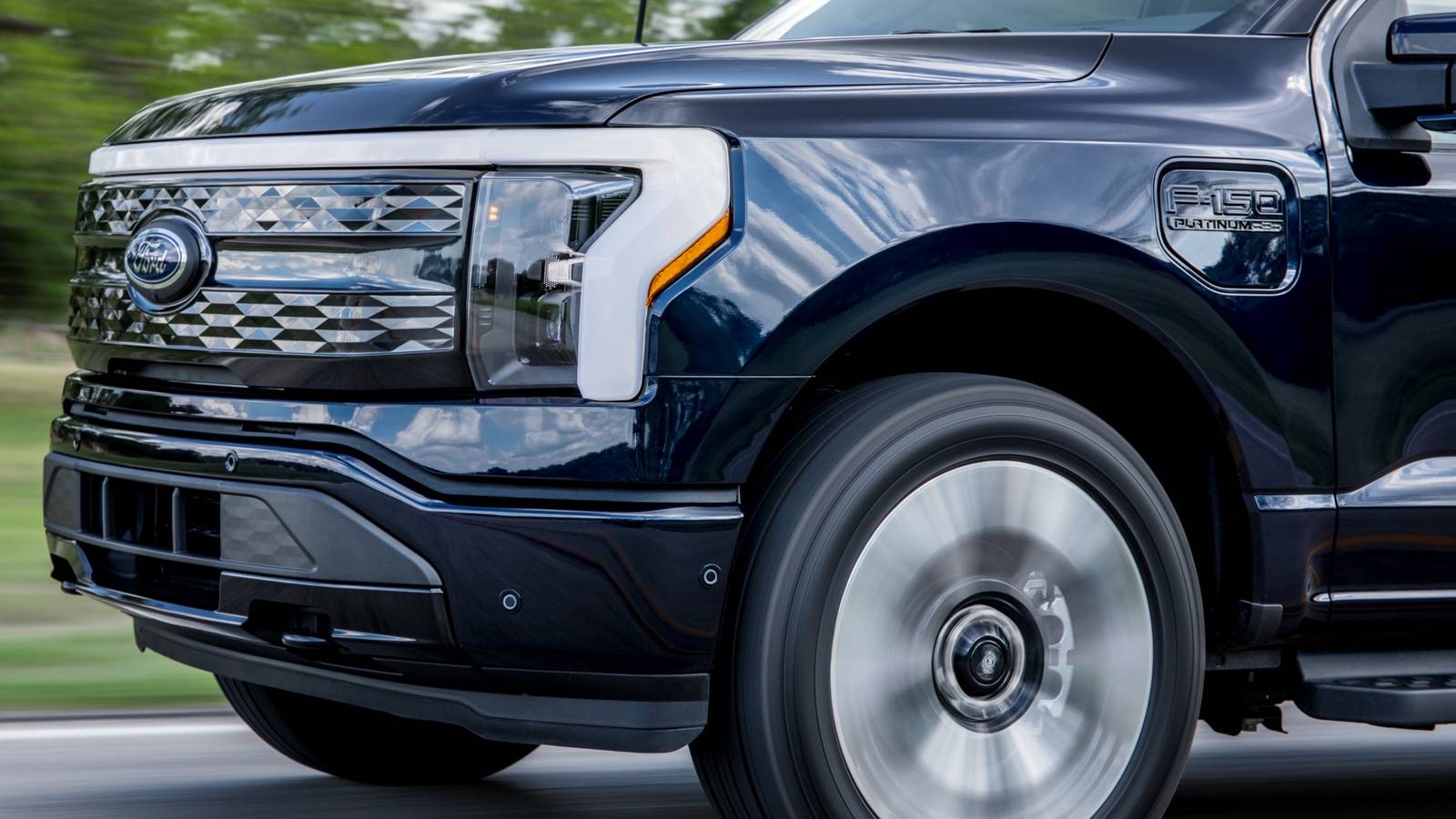
Surprise: People Don’t Want Expensive EVs
Farley has previously stated that big, heavy, expensive EVs don’t make sense. But it was apparently a lesson the company learned a bit late in the game. Noting that customers can be “pesky” when it comes to technology, he admitted that Ford vastly overestimated the EV market.
“They definitely surprised us. Customers are not interested in a $75,000 electric vehicle. They find them interesting; they’re fast, they’re efficient. You don’t go to the gas station. But they’re expensive.”
What they are interested in, according to Farley, are smaller EVs aimed at urban and suburban life where commutes are relatively short. Such vehicles don’t need big batteries compared to large pickup trucks and SUVs, thus lowering the sticker price considerably. But, considering full-size pickup trucks are the best-selling vehicles in America by far, it means the EV market won’t be nearly as robust as Ford initially envisioned.
“That’s maybe five, six, seven percent of the new vehicle industry,” explained Farley. “So I think it’s going to be a vibrant industry, but it’s going to be smaller, way smaller than we thought.”
Ford Is Betting Big On Hybrids And Extended-Range EVs

While EVs aren’t hitting like Ford hoped, Farley believes hybrids will roll in to save the day.
“We think hybrid, EV plug-in, E-Revs, those kind of partial electric solutions, America’s going to fall in love with. Or already is falling in love with. “
There’s some terrific irony in his statement, however. Presently, Ford is very light when it comes to hybrid vehicles. The Maverick and Escape are offered with standard hybrid powertrains, and the Escape is also available as a plug-in hybrid. However, the Escape is headed out the door – it will end production in 2026, and it’s already not available in some locations. The company has no other plug-in options, leaving the Maverick and the F-150 its sole hybrid vehicles for the US. Ford doesn’t break out its F-Series truck sales by trim, but Farley says the F-150 hybrid is extremely popular.
Planning For The Future Isn’t Easy

Getting more hybrids in the lineup means revamping previous EV plans and retooling those factories for hybrid production. In August, Ford announced its plan to build a new $30,000 electric pickup with a scheduled debut for 2027. Details weren’t revealed, but it rides on a new universal EV platform that we expect will offer some kind of range-extended engine as an option at least. Ford has said the truck will have more interior space than a Toyota RAV4 and be as fast as an EcoBoost Mustang. But as we’ve seen in recent months, plans can change almost overnight depending on tariffs, emissions, and political posturing.
“We got rid of $7,500, the EPA rules are completely different than they were six months ago, it looks like,” said Farley. “And that will put more pressure on the essential economy. What I mean by that is, we have to make these partial electric vehicles in the factories that would’ve been EVs. We’re going to have to find a place; what we do with all the battery plants. And we’ll fill them. But it will be more stress because we had a four-year predictable policy. Now the policy changed. It means Ford, our construction companies, we all have to make adjustments. And it’s going to be good for the country, I believe. But it will be one more stress on the supply side.”