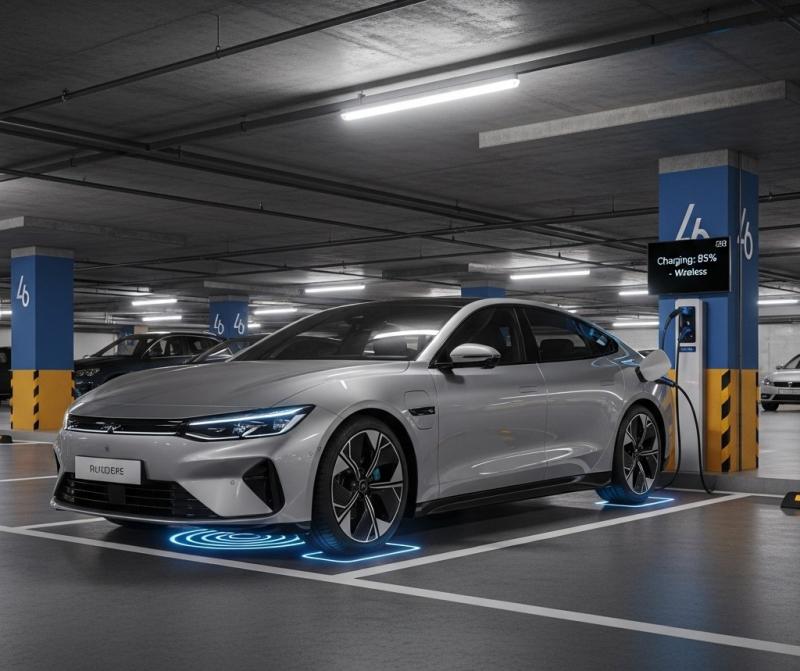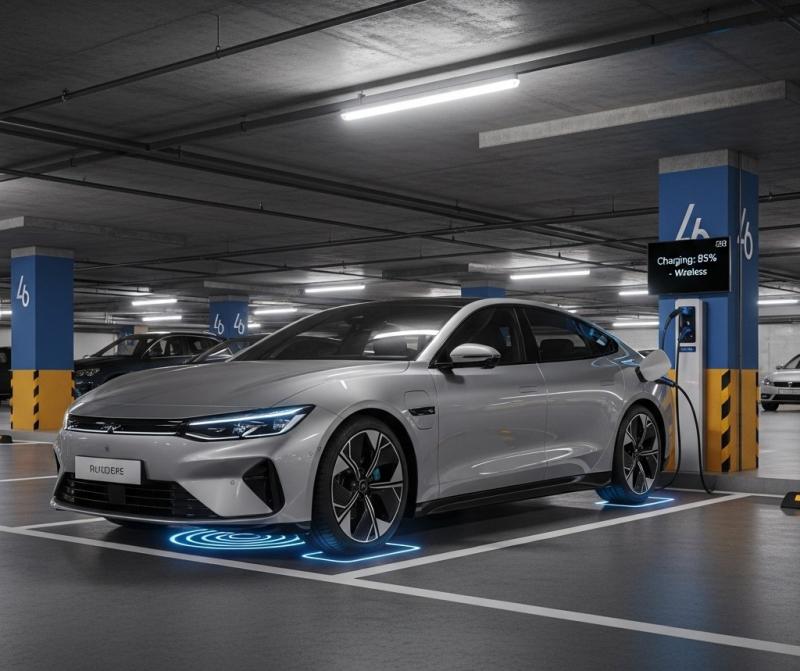
The global wireless EV charging market is on a trajectory of explosive growth, with a new report forecasting its value to surge from an estimated USD 46.5 million in 2025 to a staggering USD 3377.8 million by 2035. This represents an extraordinary Compound Annual Growth Rate (CAGR) of 53.5%, as the industry moves from a niche technology to a mainstream solution for a seamless electric mobility ecosystem.
The market’s rapid expansion is being fueled by a push for seamless, contactless charging and the increasing electrification of commercial fleets and public transportation. With advancements in inductive power transfer, interoperability standards, and system efficiency, wireless charging is set to become a critical component of the future of smart mobility.
Dive Deeper into the Data-View the Full Report Here: https://www.futuremarketinsights.com/reports/wireless-ev-charging-market
Key Market Segments and Growth Drivers
The report highlights several key segments that are leading this transformative growth:
• Commercial Segment Dominance: The commercial end-use segment is projected to account for a dominant 65% market share in 2025. This leadership is driven by the growing electrification of fleet vehicles, buses, and last-mile delivery services. Wireless systems offer significant advantages for commercial operators, including reduced downtime, minimal human error, and efficient energy management, which is crucial for high-frequency usage cycles.
• Stationary Charging Leads the Way: Stationary wireless charging systems are expected to hold a 77% market share in 2025. This segment’s lead is due to its technological maturity, safety, and compatibility. These systems are being widely deployed in private garages, parking lots, and fleet hubs, where their stable infrastructure and ease of use are highly valued. Their ability to deliver consistent energy transfer without manual plugging is a key factor in their rapid adoption.
• BEVs Drive Adoption: Battery electric vehicles (BEVs) are anticipated to generate 81% of the market’s revenue in 2025. As automakers expand their BEV portfolios and governments mandate stricter emission standards, the compatibility and readiness of BEVs for wireless charging are driving sustained segment leadership. Their larger battery capacities and longer charging cycles align perfectly with inductive charging systems.
Competitive Landscape and Regional Overview
The wireless EV charging market is a hotbed of innovation, with key players and startups vying for leadership through strategic partnerships and technological breakthroughs.
Top Key Players:
• WiTricity Corporation: A pioneer in magnetic resonance-based wireless power transfer, WiTricity holds a leading position with a robust IP portfolio and collaborations with major OEMs like Hyundai and BMW. The company played a pivotal role in the development of the SAE J2954 standard, which is critical for market expansion.
• Electreon: This Israeli startup is at the forefront of dynamic (in-motion) wireless charging roads. Its pilot projects in Europe and the U.S. are demonstrating the potential for powering public buses and trucks while in transit, which could revolutionize fleet logistics and reduce range anxiety.
• Qualcomm Technologies, Inc.: Through its early work with Halo technology, Qualcomm laid the groundwork for the sector. While its technology is now licensed by WiTricity, its foundational contributions were essential for early market development.
• HEVO Inc. and Mojo Mobility, Inc.: These companies are key innovators in stationary charging systems, with a focus on safety certifications, grid integration, and interoperability.
The market’s growth is accelerating globally, with a few regions leading the charge.
• China is at the forefront with a remarkable 72.2% CAGR, driven by strong government support, smart city initiatives, and the integration of wireless charging with autonomous vehicle infrastructure.
• India follows closely at 66.9%, fueled by rapid urbanization and the launch of compact EVs with built-in wireless modules. In Europe, Germany and the UK are posting impressive CAGRs of 61.5% and 50.8%, respectively, with growth driven by automotive R&D and policy support for clean transport.
• The U.S. market is also experiencing robust growth at 45.5%, supported by pilot projects for commercial fleets and partnerships between automakers and utility providers.
Challenges and Future Outlook
While the future looks bright, the market still faces challenges, including high setup costs and technical complexity. Installing inductive pads, especially in roads, requires significant civil engineering work and precise alignment mechanisms. However, ongoing standardization efforts like SAE J2954 are helping to boost market confidence and reduce compatibility hurdles. As technology matures and costs decline, wireless charging is expected to become an essential feature in next-generation EVs, ultimately making charging as effortless as parking.
Market Report Now Available. Request Customization or Purchase Here: https://www.futuremarketinsights.com/reports/sample/rep-gb-23156
Explore FMI’s related ongoing Coverage in Automotive Domain:
EV Thermal System Market: https://www.futuremarketinsights.com/reports/ev-thermal-system-market
EV Powertrain Market: https://www.futuremarketinsights.com/reports/ev-powertrain-market
EV Charger Market: https://www.futuremarketinsights.com/reports/ev-charger-market
Contact Us:
Future Market Insights Inc.
Christiana Corporate, 200 Continental Drive,
Suite 401, Newark, Delaware – 19713, USA
T: +1-347-918-3531
Website: https://www.futuremarketinsights.com
About Future Market Insights (FMI)
Future Market Insights, Inc. (ESOMAR certified, recipient of the Stevie Award, and a member of the Greater New York Chamber of Commerce) offers profound insights into the driving factors that are boosting demand in the market. FMI stands as the leading global provider of market intelligence, advisory services, consulting, and events for the Packaging, Food and Beverage, Consumer Technology, Healthcare, Industrial, and Chemicals markets. With a vast team of over 400 analysts worldwide, FMI provides global, regional, and local expertise on diverse domains and industry trends across more than 110 countries
This release was published on openPR.