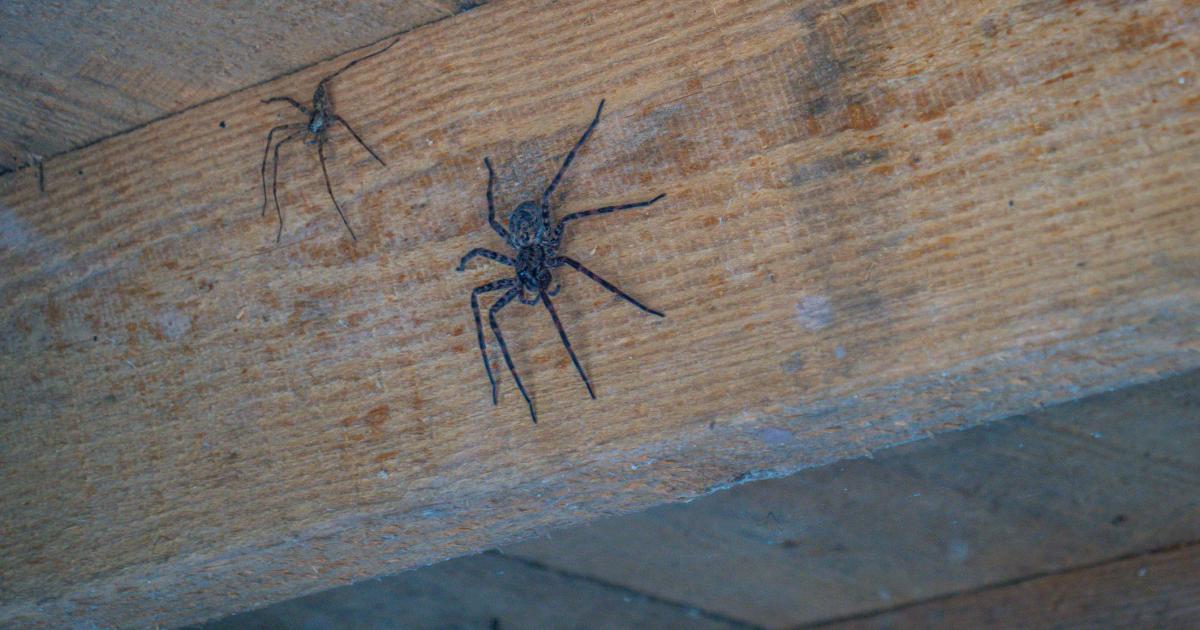
Dr David Gee, a zoology lecturer at the University of Derby, has said the warm spring is the reason behind large numbers of spiders being spotted.
According to the expert, hot conditions earlier this year had led to higher insect populations – providing spiders with more food and a higher survival rate.
“They matured a little earlier this year,” said Dr Gee, who specialises in invertebrate biology.
He told the BBC : “The very large house spiders that we often see running around our living room at night are now big enough that you can actually hear their footsteps.”
Welcome to the UK 😄
It seems there are especially many spiders this year and they seem to have become bigger pic.twitter.com/G6opDeQ2Lp— Mileena_Mi (@Lati25Mi) September 14, 2025
Because more spiders are being produced, Dr Gee said male spiders were having to become more active to look for female counterparts.
“We’re really seeing increased spider behaviour as a function of the success they encountered early on in the growing season,” he said.
When male spiders become sexually mature, they stop building webs and become a “roving individual”.
“They go from being essentially heavyweight boxers with a very strong, large body and essentially become Olympic runners,” said Dr Gee.
Females stay away inside their burrows, surrounded by webbing, so males are having to go out into our homes to look for them.
“As males are all searching, they will occasionally run into each other and sometimes force each other out of an area,” the expert explained.
“This increased competition just leads to more and more spiders having this roaming mode of life and there’s a bit of a turf war going on in our homes.”
Dr Gee says spiders usually found in the south are heading north into even more homes across the UK.
“As a function of global warming – and we’re seeing our environment changing – you do find more and more species, not just spiders, but insects and other species, actually moving further north,” he said.
“As the climate changes, we suddenly find new species of grasshopper, crickets, more spider species that we may not have encountered in the north in centuries. We’re even seeing some species that have made it over the channel.
Recommended reading:
RSPB: Huge spiders thought to be extinct are making comeback
Expert debunks the truth and myths of UK spider season
The UK’s biggest spider that might be lurking in buildings
“We’re actually seeing the whole dynamic of all of these ecosystems changing, which is interesting, but can throw a bit of a spanner in the works when it comes to actually maintaining our own populations of insects.”
Dr Gee also warned arachnophobes that the old adage of using conkers to keep spiders at bay is a myth.
“There’s no scientific evidence whatsoever to suggest that conkers produce any kind of noxious chemical and any volatile oils or anything like that that spiders might actually find unpleasant,” he said.
“It’s a futile effort, and the spiders themselves, they can’t hurt you anyway, so I wouldn’t really worry about it too much.”