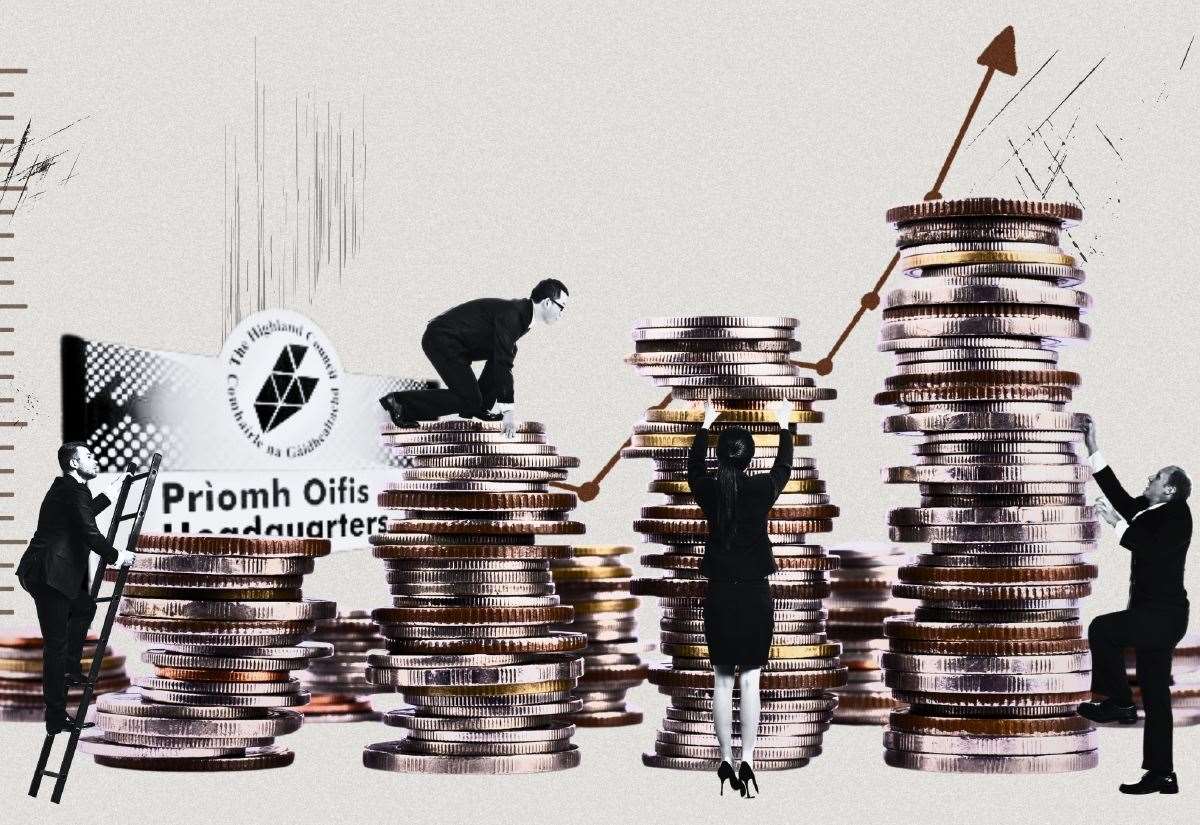

Highland Council is in the top 10 most indebted local authorities in the UK and the third most indebted in Scotland as debt per person rose to £5476.
New figures from the BBC’s shared data unit show that Highland Council’s debt in the final quarter of the 2024/25 financial year stood at just under £1.3 billion.
That was up more than £161 million on the same time in 2023/24 and was likely caused by the Highland Investment Plan which relies on borrowing for investment.
For many, the size of the council’s debt will come as a surprise due to the scale of the figures compared to the relative delivery for services like roads maintenance and school buildings.
Earlier this year we exclusively revealed that the local authority had for years fallen far short on what it was investing in roads leading to significant deterioration.
The rise in the council’s debt is almost certainly linked to the Highland Investment Plan which aims to rebuild schools and other infrastructure – it is valued at £2 billion.
Funded by what will be annual hikes in council tax, a number of projects are already under way and this will have undoubtedly played a part in the £161 million rise in debt.
Within the Scottish context, the Highlands sits behind West Dunbartonshire (£8885) and Aberdeen (£6666) in terms of debt per person.
But in total debt terms the region was not in the top 10 – Edinburgh (almost £2 billion), Glasgow (£1.67 billion) and Aberdeen (£1.5 billion) borrowed more.
But the Highland Council was in the top 10 UK-wide with an overall rise in debt of £161.7 million and expressed as a rise in debt per person of £684.21.
Experts including Jonathan Carr-West of the Local Government Information Unit (LGIU) said the spiralling levels of debt at local authorities was “extremely worrying”.
He said: “That is not a sustainable system. As one local government finance officer said to me, it’s essentially payday loans for local governments.
“I don’t think the government would say that’s it’s long-term ambition. They would say that is what we have had to do to paper over the cracks while we introduce a new funding system for local government.”