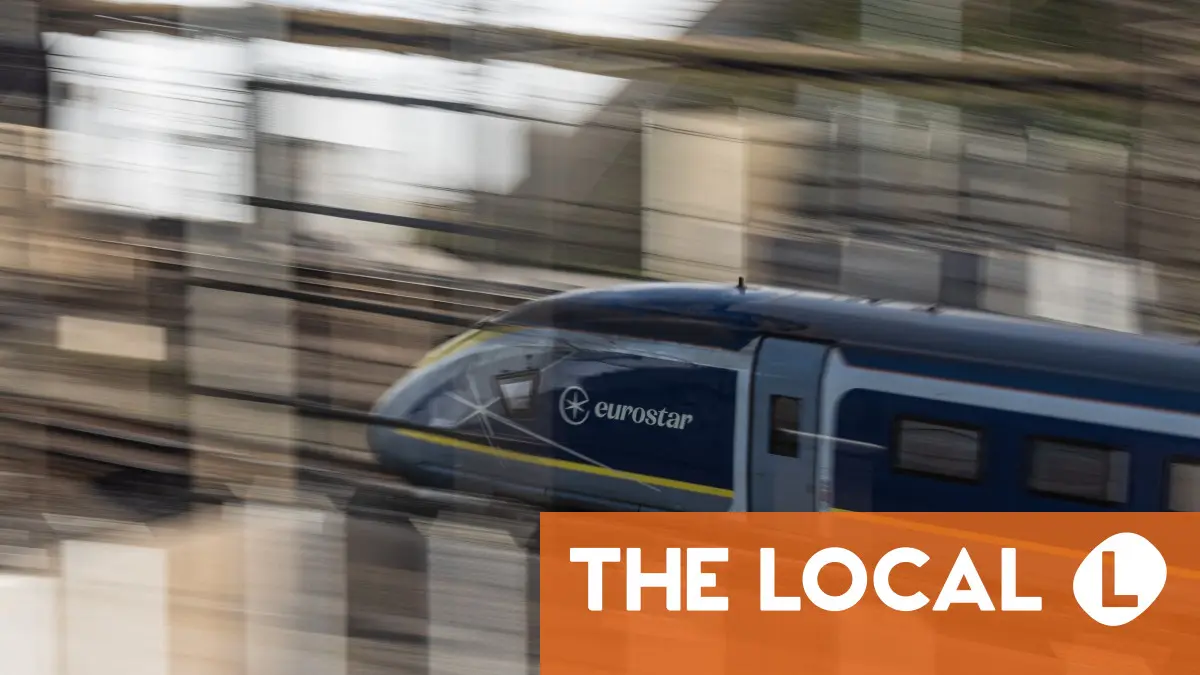
If you’re a regular traveller on the Eurostar then you won’t have failed to notice a slew of news articles about plans to expand the cross-Channel rail service, with promises of new trains, more competition and lower prices – but how likely are these to actually happen?
Behind the optimistic announcements and attention-grabbing press releases, major logistical problems remain.
We spoke to rail commentator Jon Worth to get an idea of what is really feasible, when we can expect to see changes and how that will impact passengers.
The background
Since the 1990s, Eurostar has been providing travellers with a speedy, convenient train ride between mainland Europe and the UK. In 2024, Eurostar reported that 19.5 million customers travelled on their trains, a five percent increase from the previous year, in part thanks to the Paris Olympics.
The company’s cross-Channel routes of London to Paris and London to Brussels saw the greatest increases in passenger numbers, with an additional 280,000 passengers and 250,000 passengers respectively.
Advertisement
Nevertheless, people looking to make a quick, easy trip across the Channel have been frustrated by the pricing and availability of Eurostar’s trains.
In the aftermath of the pandemic and Brexit, Eurostar cut some of its services, like its direct trip from London to Disneyland Paris, and no longer stops at Ashford or Ebbsfleet. While it recently brought back its ‘Snap’ service for last-minute cheaper tickets, standard Eurostar two-way tickets often run well above €100.
Brexit also means extra passport formalities which means that passengers travelling to or from London have to arrive further in advance and the waiting areas – especially at London’s St Pancras – often get very crowded.
Changes afoot?
The combination of Brexit constraints and the increase in interest in rail travel means that there is now a clear motive to improve the situation and try to expand the services.
Contracts have already been signed to expand capacity at the St Pancras International Station in London, which could allow for more Eurostar trains to run daily.
At present Eurostar has the monopoly on cross-Channel train services, while GetLink runs the Le Shuttle service which takes vehicles between Dover and Calais via the tunnel.
But there have been discussions of allowing other operators to use the London-Paris rail line, creating competition for Eurostar.
To get a better idea of how serious these plans could be, The Local spoke with independent railway commentator Jon Worth.
He told The Local he reckons there could be competition with Eurostar in the Channel Tunnel “by as early as 2030”.
“There are many serious players in this delicate dance [for competition along the Channel Tunnel].
“I genuinely expect there will be one rival, but probably not more than one, to Eurostar, by the end of this decade,” he added.
Advertisement
Who are the possible competitors?
Worth outlined three main potential competitors to Eurostar, each with its own unique hurdles to overcome.
Virgin Trains – The company recently announced it had signed a deal with a train manufacturer to purchase 12 high-speed trains that would be used to compete with Eurostar in the Channel Tunnel.
Worth explained: “This is a well-known company with backing from Richard Branson. It is a UK company with a London-based thinking and some operational experience. They have proposed buying only 12 trains, which is about the most minimal strategy any of the rivals might propose.
“The trains are also only expected to be 200 metres long, half the length of a Eurostar train. If Virgin were to be the successful bidder, it would mean that three-quarters of the trains running through the Channel Tunnel would still be Eurostar,” he said.
However, Virgin Trains faces one key challenge: access to the Temple Mills maintenance depot (in East London), which Eurostar currently uses for its trains.
Advertisement
“There is one area the UK has some control over all of this (…) The UK’s Office of Rail and Road has been adjudicating who can maintain their trains in that depot.
“Eurostar says the depot is full, but the ORR says there may be some capacity to maintain more trains there.
“So, if Virgin Trains can get the space, this would be the first domino to fall in competing with Eurostar. The contract they just signed basically says that if they can get guaranteed space in the depot, then they will sign a contract with Alstom (the manufacturer) to build trains.”
READ MORE: Travel to France: Your rights on a delayed or cancelled Eurostar
Gemini – the new company Gemini has announced plans for a much more ambitious service.
“Unlike Virgin Trains, which is taking a conservative approach in how they would run trains through the tunnel, Gemini is extremely radical,” said Worth.
“They want to think about different stations, and maybe repurposing the Stratford International Station.
“The problem is we don’t know which trains they could potentially order, or if they can raise the funds to buy those trains.”
Advertisement
Evolyn/ Trenitalia – Jon Worth believes that Evolyn/ Trenitalia could be the most likely competitor to Eurostar by the end of the decade, as they “have more pieces of the jigsaw together.”
“Evolyn was a private bus company that saw an opportunity as a start-up to run through the Channel Tunnel.
“The family that owns the company has deep pockets, and they are teaming up with Trenitalia (the Italian state railways), so we should consider them together.
“Italian state railways are on an aggressive international expansion, including running routes in France. In contrast to the other potential rivals, they have a long-standing agreement with a Japanese manufacturer, Hitachi.
“They would basically be able to take the same type of train they’ve used in their other operations along the Channel Tunnel. The important point is that they do not have the same depot issue as Virgin Trains. They could maintain their trains elsewhere, maybe in Italy.
“Evolyn/Trenitalia would be a more mainstream rival to Eurostar, though the question is how many trains would they run.
“I would consider at the moment that Evolyn/Trenitalia is the most likely rival to Eurostar,” Worth surmised.
When will there be more information?
At present all of these plans are only at the ideas stage, with no firm commitments.
The next stage is a decision by the UK’s Office of Rail and Road, which is due in the next couple of months.
“We will have more information this autumn about who, if anyone, will get access to the Temple Mills depot, which is essentially important for Virgin, though it’s not unimportant for Trenitalia or Gemini either,” the rail commentator noted.
Companies will then have to begin the formal bidding process, which is likely to take months or years.
How would competition affect pricing?
From the point of view of passengers, one effect of competition could be cheaper ticket prices. The high prices for Eurostar tickets are a regular source of complaint, especially when compared with the price of a budget airline ticket.
However, Worth warned that while competition may slightly lower prices, passengers shouldn’t expect too much.
“There will be no Ryanair train. This is because of the price structure of the Channel Tunnel, which has a per-passenger charge levied by the Channel Tunnel operator.
“I would say with competition, tickets will be cheaper, but don’t hold your breath for an ultra-budget option. Cheaper prices, yes, bargain basement no,” Worth said.
What about other changes coming up?
In the near future, Worth noted that “people might have a slightly improved passenger experience at St Pancras as they expand.”
As far as adding new routes, some are more feasible than others.
“Routes to Western Germany and Switzerland (notably Basel and Zurich) are doable, but French destinations are more complicated,” Worth said.
“It has also been heavily rumoured for more than a year that Eurostar might buy new trains because some of their original trains are more than 30 years old.
“But nothing has been signed. If they signed with Alstom (the train manufacturer), then they could basically blow the competition away…but they have not signed. I do not have an answer as to why they have not done that,” he concluded.