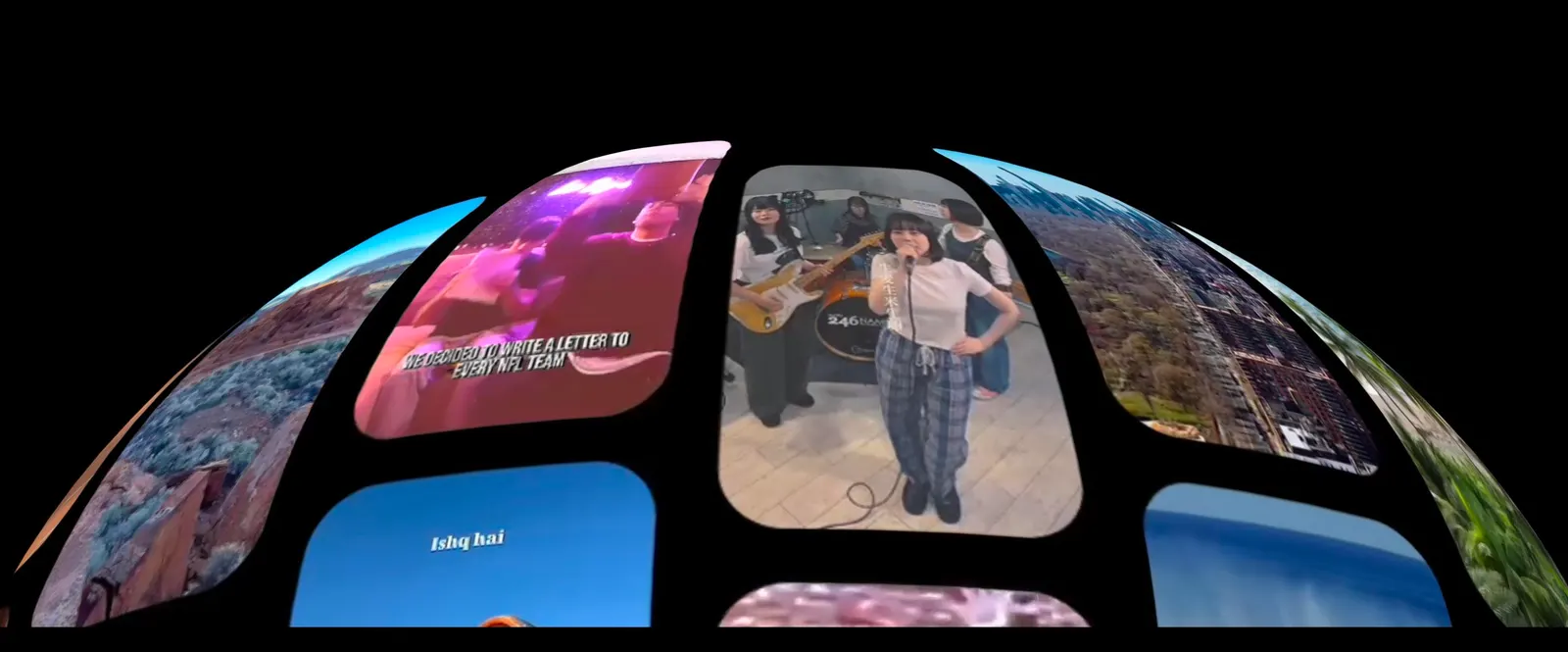
The entire MR team proudly presents our August 2025 issue. If you haven’t received a hard copy, please page through our digital version, and we’ll continue to post individual stories here on MR-mag.com. If you haven’t been getting MR in print, be sure that you are on our mailing list for future issues by completing this form.
“Society is moving so fast. This is how customers live. They wake up with a device in their hands and life begins. The onus is on us to change everything we do to keep pace as fast as society is moving.” —Angela Ahrendts, 2012 CEO Burberry
The 2007 launch of the iPhone sparked the American consumer shift from physical retail interactions to digital ones. By 2015, mobile-first retail strategies became mainstream as product searches on mobile devices overtook those on laptops. Now, mobile commerce is no longer a trend; it has become the dominant standard. The smartphone is a consumer’s emotional glue to the world. Consumers reach for their phones because they want to know, go, buy, do.
The Millennial consumer (29-44 years old, also known as Gen Y), and the Gen Z consumer (13-28 years old) are digital natives and expect seamless digital experiences from retailers. The Gen X consumer (45-60 years old), while considered a digital immigrant/early digital adaptor, nevertheless also expects seamless digital retail experiences.
“We will move from mobile-first to AI-first,” CEO Google Sundar Pichai wrote in his first letter to shareholders in 2016. Today, Artificial Intelligence (AI) is frequently discussed in retail. This rapid pace of technological change can be overwhelming to retailers. But not to consumers who expect digital interactions with retailers and brands.
More than 80% of consumers have been online at least two days before entering a shop. 40% of consumers won’t go into a store unless they can go online first. And 48% of purchases are heavily influenced by digital media and technology.
But what about retailers who haven’t embraced or prioritized mobile or digital? With less budget and smaller Information Technology (IT) Departments, how can they keep up? Even those with large internal IT departments can struggle.
AMAZON TO THE RESCUE?
From resale to direct-to-consumer, Amazon is rapidly becoming the new global fashion marketplace. Whether it is the start of a consumer’s product search, a price comparison during shopping, or researching reviews, a visit to Amazon is on most consumers’ paths to purchase, even if purchases are made elsewhere. Since 2019, Amazon has continued to steadily surpass Walmart in clothing sales. Having captured the value retail market, in April, Amazon launched Saks on Amazon within the US Luxury Stores section of the site. This brings more than 100 luxury fashion and beauty brands to the marketplace. When launched in 2020, Luxury was an invitation-only opportunity for some Prime Members. Analysts are now questioning if Amazon can indeed crack the luxury sector.
The online retail giant (US$17.1B Q1 2025 reported net income) has forever changed consumer behavior and shopping expectations.
Prime membership offers free next-day (sometimes same-day) delivery, free 30-day returns, easy “buy now” one-click payments, and free streaming music and video content (in March 2022, Amazon acquired MGM studios).
Can Amazon Fashion allow those retailers who have stayed behind to catch up? In a word, yes.
EXPANDED MARKET: EXPANDED CUSTOMER REACH
Amazon offers exposure to over 310 million consumers. During the first half of 2024, fashion and accessories represented 27% of sales.
A RETAILER’S WEBSITE AND APP
Instead of setting up and maintaining an eCommerce site and an app (in both iOS and Android), Amazon can be a retailer’s digital footprint. In addition to offering what is expected on a website—product images, descriptions, sizes, prices, colors and size charts—for years, Amazon has used AI to drive:
- Personalized recommendations based on customer browsing, search, and purchasing history, as well as “Customers who bought this also bought that” and “You might also like” cross-selling sections
- Billions of size recommendations each month for hundreds of millions of customers through the analysis of millions of data points, reducing fit-related returns
- AI-generated product descriptions
- Shop the look image search
- Shop the show (app only) offering curated content based on movies, tv shows, sports and live TV
- Customer review summaries with images
- Rufus Virtual (chatbot) shopping assistant and Alexa (voice) shopping assistant. This allows retailers to focus on what they do best—curating carefully selected product assortments—and leverage Amazon’s technology expertise.
SUBSCRIBE & SAVE
Let’s face it. A lot of men hate shopping, and when they find what they like, they buy one in every color, sometimes two, to avoid shopping again. Amazon offers a subscription service that allows a consumer to save money and replenish product they enjoy when they sign up to the Subscribe & Save program.
INFLUENCER MARKETING
The Amazon Influencer Program brings product-related content from influencers (anyone who has a meaningful social media following on YouTube, Instagram, TikTok or Facebook) onto Amazon to help customers research and discover products they might be interested in.
AMAZON WEB SERVICES (AWS)—AN OUTSOURCED IT DEPARTMENT
Finally, for retailers that aren’t prepared to hire an entire web sales department, AWS offers a host of cloud-based tools and pay-as-you-go cloud infrastructure developed specifically for retail, enabling efficient, agile, and customer-centric solutions development, deployment, and AI analytics. Retailers don’t have to be builders, as Amazon has thousands of partners that can help

OPERATIONS, LOGISTICS AND “THE LAST MILE”
Amazon provides retailers robotic-empowered fulfilment centers, delivery route optimization, and demand forecasting—what will sell where and when, reducing overstock or shortages. By building its own extensive last-mile delivery network, Amazon controls the speed, reliability, and quality of the delivery experience, impacting customer satisfaction, loyalty, and trust. Continuous investment in last-mile solutions includes:
- Amazon Flex: Independent contractors using their own vehicles for deliveries.
- Delivery Service Partners (DSPs): Partnering with small businesses to operate their own delivery fleets.
- Amazon Hub Lockers and Counters: Providing secure and convenient alternative delivery locations.
- Route Optimization Technology: Employing sophisticated software to plan efficient delivery routes.
OUTLET OPPORTUNITIES
Retailers don’t always get the right product at the right price in the right place at the right time. Amazon Outlet allows retailers to offer product markdowns, closeouts, discounts, clearance and overstock deals, allowing for a “quiet” way to move inventory.
AMAZON WEB SERVICES (AWS)—AN OUTSOURCED IT DEPARTMENT
Finally, for retailers that aren’t prepared to hire an entire web sales department, AWS offers a host of cloud-based tools and pay-as-you-go cloud infrastructure developed specifically for retail, enabling efficient, agile, and customer-centric solutions development, deployment, and AI analytics. Retailers don’t have to be builders, as Amazon has thousands of partners that can help.
Craig Crawford is a two-time Tabbie award-winning author and founderprenuer of Crawford IT, (https://crawfordit.com) a London-based consulting firm specializing in the digital transformation of brands; Twitter @getamobilelife; Instagram @getamobilelife; +44 07834584785