✅Electric Mobility Push and Energy Efficiency to Propel Electric Vehicle Power Inverter Market
According to the latest study by Persistence Market Research, the global electric vehicle (EV) power inverter market is projected to grow from US$ 9.11 Bn in 2025 to US$ 29.33 Bn by 2032, expanding at an impressive CAGR of 18.20% during the forecast period. This growth is fueled by the global transition to electric mobility, increasing government incentives for electric vehicles, and the ongoing demand for efficient power conversion technologies in EV drivetrains.
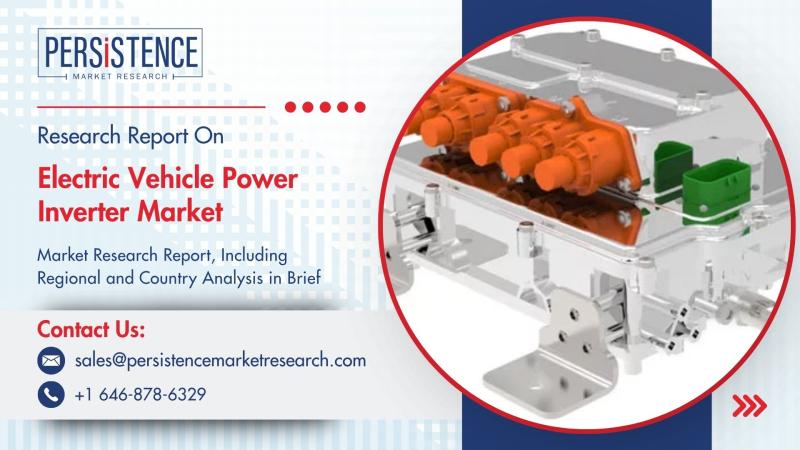
Electric vehicle power inverters are a critical component of EVs, converting the DC power from the battery into AC power to drive the electric motor. As the EV industry matures, power inverters are evolving with higher efficiency, reduced size, and enhanced integration to meet performance and space-saving requirements. The rising adoption of electric cars, hybrid vehicles, and commercial EVs is significantly driving the demand for advanced inverter systems. Automakers and suppliers are increasingly focusing on silicon carbide (SiC) technology to improve energy efficiency and thermal management in power inverters, which further enhances the overall vehicle range and reliability.
🔗Get a Sample PDF Brochure of the Report (Use Corporate Email ID for a Quick Response): https://www.persistencemarketresearch.com/samples/35439
In terms of product types, traction inverters dominate the market owing to their direct role in powering the main electric motor of EVs. Regionally, Asia Pacific is the leading market, driven by high EV adoption rates in China, South Korea, and Japan. These countries have robust automotive ecosystems, strong government backing for EV manufacturing, and advanced infrastructure supporting electric mobility. Europe and North America follow closely, with a growing focus on clean transportation, carbon neutrality goals, and rapid investments in EV infrastructure and R&D.
✅Key Market Insights
➤ The adoption of SiC-based inverters is increasing due to their higher efficiency, compact design, and superior thermal performance.
➤ Asia Pacific dominates global market share due to mass EV production, favorable policies, and advanced local manufacturers.
➤ Rising EV penetration across commercial vehicle fleets is opening new avenues for power inverter manufacturers.
➤ Integration of power inverters into electric drive units (EDUs) is gaining popularity for improved packaging and efficiency.
➤ Increasing focus on lightweight and high-power-density inverters is driving innovations in power electronics architecture.
✅What does a power inverter do in an electric vehicle?
In an electric vehicle, a power inverter plays a vital role in converting DC (direct current) electricity from the battery into AC (alternating current) electricity, which powers the electric motor. This conversion is essential because most EV motors operate on AC. Power inverters also perform regenerative braking by converting AC from the motor back into DC to recharge the battery. In essence, the inverter acts as a bridge between the battery and motor, optimizing performance, efficiency, and energy usage during acceleration, cruising, and braking, making it a key component of EV drivetrains.
✅Market Dynamics
Market Drivers:
The rapid global push toward vehicle electrification, rising fuel prices, and environmental regulations are primary growth drivers for the electric vehicle power inverter market. Automakers are under increasing pressure to reduce carbon emissions and offer zero-emission vehicle options, which is accelerating the development of high-performance inverters. Furthermore, advancements in wide-bandgap semiconductors, especially silicon carbide and gallium nitride, are revolutionizing inverter efficiency and reliability, driving further adoption.
Market Restraining Factor:
High development and manufacturing costs of advanced inverter systems, especially those incorporating SiC or GaN components, pose a significant challenge for mass adoption. Additionally, the complexity of thermal management and electromagnetic interference in compact inverter architectures can impact design scalability, especially in budget and mid-range EV segments.
Key Market Opportunity:
There is a growing opportunity in integrated inverter solutions that combine inverters, electric motors, and gearboxes into a single compact unit. These Electric Drive Units (EDUs) reduce space, weight, and cost while improving efficiency. Moreover, expanding EV penetration in commercial segments such as electric trucks, buses, and delivery vans offers significant growth potential for inverter suppliers targeting high-voltage, high-power applications.
✅Market Segmentation
The electric vehicle power inverter market is segmented based on inverter type, propulsion type, vehicle type, and technology. By inverter type, traction inverters account for the largest share, being the main energy conversion component for driving the electric motor. Auxiliary inverters are also used for powering onboard systems, but their demand is comparatively lower. Traction inverters are experiencing strong demand, especially with the push for all-electric platforms where powertrain efficiency directly impacts vehicle range.
Based on propulsion type, the market includes battery electric vehicles (BEVs), plug-in hybrid electric vehicles (PHEVs), and hybrid electric vehicles (HEVs). BEVs dominate the segment due to their full reliance on electric propulsion, which requires advanced and efficient inverter systems. Meanwhile, vehicle type segmentation includes passenger cars, commercial vehicles, and two-wheelers, with passenger EVs holding the majority share. However, commercial vehicles are anticipated to grow at a faster rate due to electrification in last-mile delivery and public transportation. In terms of technology, silicon-based inverters still hold a major share, but SiC inverters are rapidly gaining momentum due to better energy efficiency and size reduction benefits.
✅Regional Insights
The Asia Pacific region leads the global electric vehicle power inverter market, primarily due to high EV production volumes, supportive government policies, and the presence of major EV and power electronics manufacturers. China continues to be the world’s largest EV market, benefiting from subsidies, a large domestic market, and innovations in powertrain technologies. Japan and South Korea also contribute significantly with strong R&D capabilities and global auto brands investing in electrification.
Europe is witnessing rapid growth due to stringent carbon emissions targets and rising consumer demand for electric mobility. Countries like Germany, France, and the Netherlands are aggressively promoting EV adoption through incentives and infrastructure development. North America, particularly the United States, is seeing a resurgence in EV investment, supported by federal clean energy programs and strategic alliances between OEMs and semiconductor companies. Latin America and the Middle East & Africa remain emerging markets with future potential as EV infrastructure matures.
🔗Dive deeper into the market data: https://www.persistencemarketresearch.com/market-research/electric-vehicle-power-inverter-market.asp
✅Competitive Landscape
The EV power inverter market is moderately consolidated with both established players and emerging tech companies offering advanced power conversion solutions. Strategic partnerships, product innovation, and manufacturing scale are key areas of competition.
✅Company Insights
✦ Robert Bosch GmbH
✦ Mitsubishi Electric Corporation
✦ Continental AG
✦ DENSO Corporation
✦ Toyota Industries Corporation
✦ Delphi Technologies (BorgWarner Inc.)
✦ Infineon Technologies AG
✦ Hitachi Astemo, Ltd.
✦ BYD Co. Ltd.
✦ Valeo SA
✦ Vitesco Technologies
✅Key Industry Developments
One of the major industry shifts is the integration of SiC-based semiconductors in power inverters, led by companies like Infineon Technologies and Mitsubishi Electric. These devices offer better switching efficiency, lower power loss, and smaller heat sinks, enabling more compact and efficient inverter designs. This shift is essential for improving the range and performance of EVs without increasing battery size.
Additionally, many automakers are adopting in-house inverter production to gain better control over supply chains and system optimization. For instance, Tesla and BYD are increasingly designing and manufacturing their own inverters to fine-tune performance with their proprietary battery and motor technologies. This vertical integration approach ensures seamless compatibility and lowers overall system costs over time.
✅Innovation and Future Trends
In the coming years, modular and scalable inverter architectures will be key trends, allowing OEMs to deploy similar inverter platforms across various EV models. This approach reduces design time and cost while improving reliability and serviceability. Moreover, as EVs become more connected and autonomous, smart inverters with onboard diagnostics and communication interfaces will enable real-time monitoring and remote updates, enhancing vehicle performance and safety.
The future will also see a growing trend toward dual and multi-inverter systems, especially in high-performance EVs and all-wheel-drive configurations. These systems allow greater control over torque distribution and regenerative braking, offering improved vehicle dynamics and efficiency. Furthermore, the combination of AI-based inverter control algorithms and next-gen cooling technologies is expected to enhance inverter response times and thermal performance, setting new benchmarks in powertrain engineering.
✅Explore the Latest Trending “Exclusive Article” @
• https://theautonewz.wordpress.com/2025/07/26/automated-parking-system-market-booms-amid-urban-real-estate-pressures/
• https://medium.com/@apnewsmedia/automated-parking-system-market-sees-surge-with-ev-and-green-building-trends-7590e8d51d19
• https://vocal.media/stories/automated-parking-system-market-benefits-for-smart-cities-and-sustainable-living
• https://apsnewsmedia.blogspot.com/2025/07/automated-parking-system-market-driven.html
• https://industreenews.wordpress.com/2025/07/30/automotive-recycling-surge/
✅Contact Us:
Persistence Market Research
G04 Golden Mile House, Clayponds Lane
Brentford, London, TW8 0GU UK
USA Phone: +1 646-878-6329
UK Phone: +44 203-837-5656
Email: sales@persistencemarketresearch.com
Web: https://www.persistencemarketresearch.com
✅About Persistence Market Research:
At Persistence Market Research, we specialize in creating research studies that serve as strategic tools for driving business growth. Established as a proprietary firm in 2012, we have evolved into a registered company in England and Wales in 2023 under the name Persistence Research & Consultancy Services Ltd. With a solid foundation, we have completed over 3600 custom and syndicate market research projects, and delivered more than 2700 projects for other leading market research companies’ clients.
Our approach combines traditional market research methods with modern tools to offer comprehensive research solutions. With a decade of experience, we pride ourselves on deriving actionable insights from data to help businesses stay ahead of the competition. Our client base spans multinational corporations, leading consulting firms, investment funds, and government departments. A significant portion of our sales comes from repeat clients, a testament to the value and trust we’ve built over the years.
This release was published on openPR.