The Klyuchevskoy volcano on Russia’s Kamchatka peninsula began erupting on Wednesday following a powerful earthquake off Russia’s far eastern coast.
Lava began flowing from what is the largest active volcano in the northern hemisphere.The Russian Academy of Sciences’ United Geophysical Service said in a post on Telegram: “A descent of burning hot lava is observed on the western slope. Powerful glow above the volcano, explosions.”
Russian Academy of Sciences
Volcano Erupted Hours after Huge Earthquake
The Klyuchevskoy eruption occurred just hours after a huge 8.8 magnitude earthquake early Wednesday triggered a tsunami that sent waves across the Pacific, prompting evacuations and emergency declarations from Russia to Hawaii and alerts as far south as New Zealand.
The quake is tied for the sixth strongest ever recorded and was upgraded from an initial 8.0 reading.
What To Know
Located in the Kamchatka region, Klyuchevskoy stands at 4,750 meters (15,584 feet) and last erupted in 2023. The volcano is situated approximately 280 miles, or 450 kilometers, north of the regional capital of Petropavlovsk-Kamchatsky.
According to the Kamchatka branch of the Russian Academy of Sciences’ geophysical service, observers reported explosions and visible streams of lava on the volcano’s western slopes.
Scientists had been predicting the eruption for weeks, noting that the volcano’s crater had been gradually filling with lava and the mountain had been emitting ash plumes.
During the day on Wednesday, the volcano sent ash plumes as high as about 1.9 miles (3 kilometers) above sea level, Russian news outlet Meduza reported, referencing state media reports.
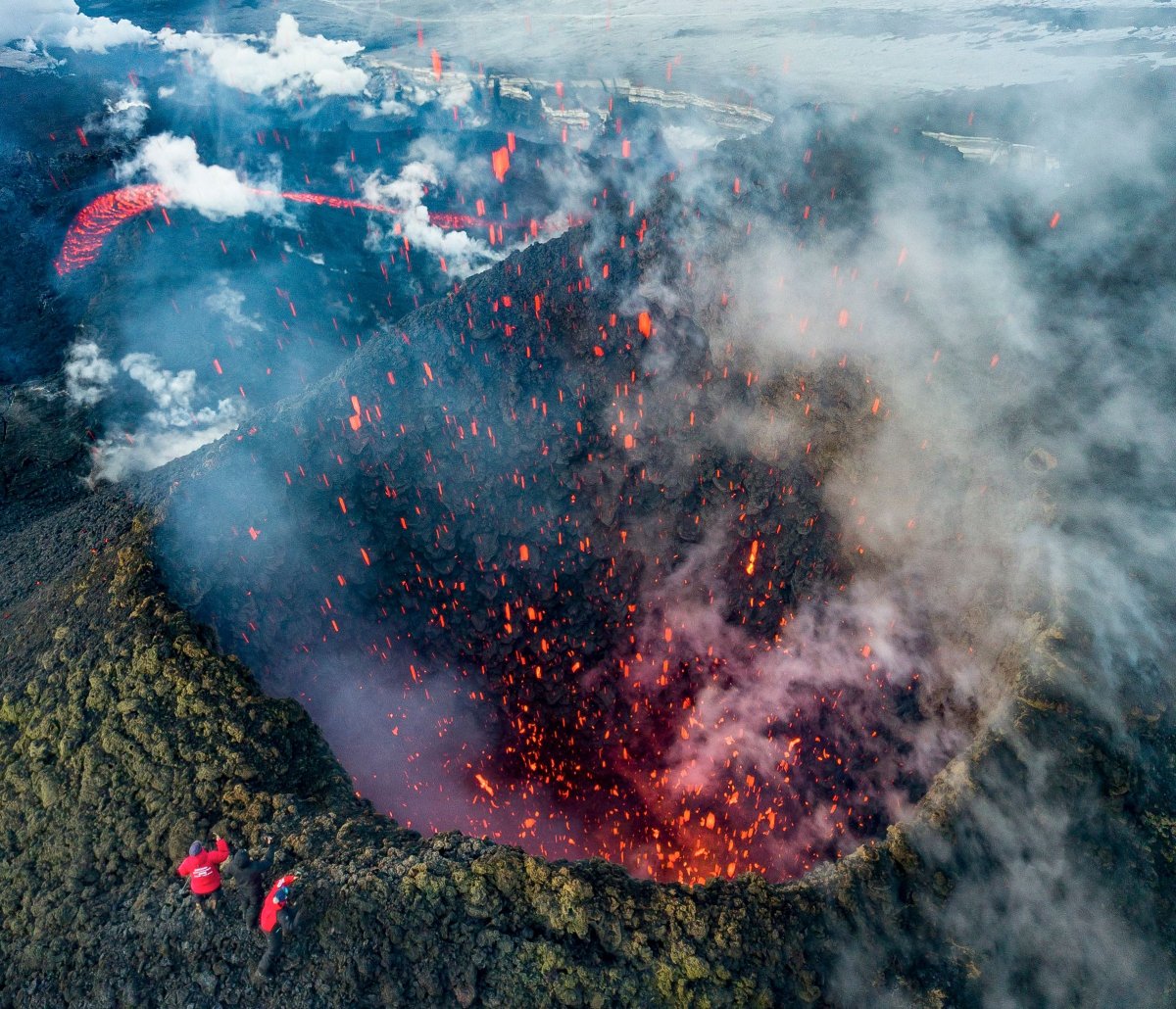
MAXIM FESYUNOV/AFP via Getty Images
On July 19, the Institute of Volcanology and Seismology at the Russian Academy of Sciences’ Far Eastern Branch published an image of the volcano on Telegram showing a lens-shaped cloud above the crater, illuminated by the lava below.
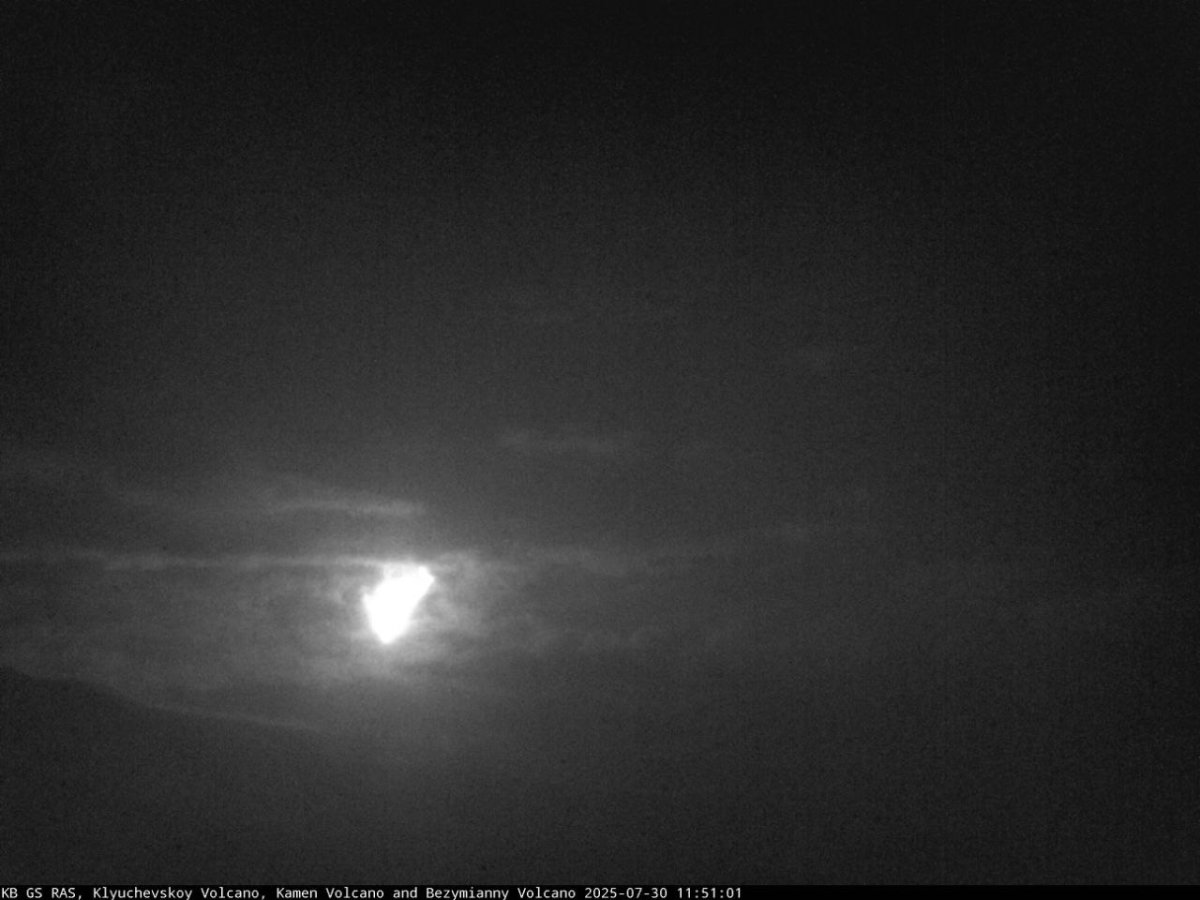
Kamchatka, often referred to as the “land of fire and ice,” is one of the world’s most seismically active volcanic regions, with around 300 volcanoes, 29 of which are active, according to NASA Earth Observatory.
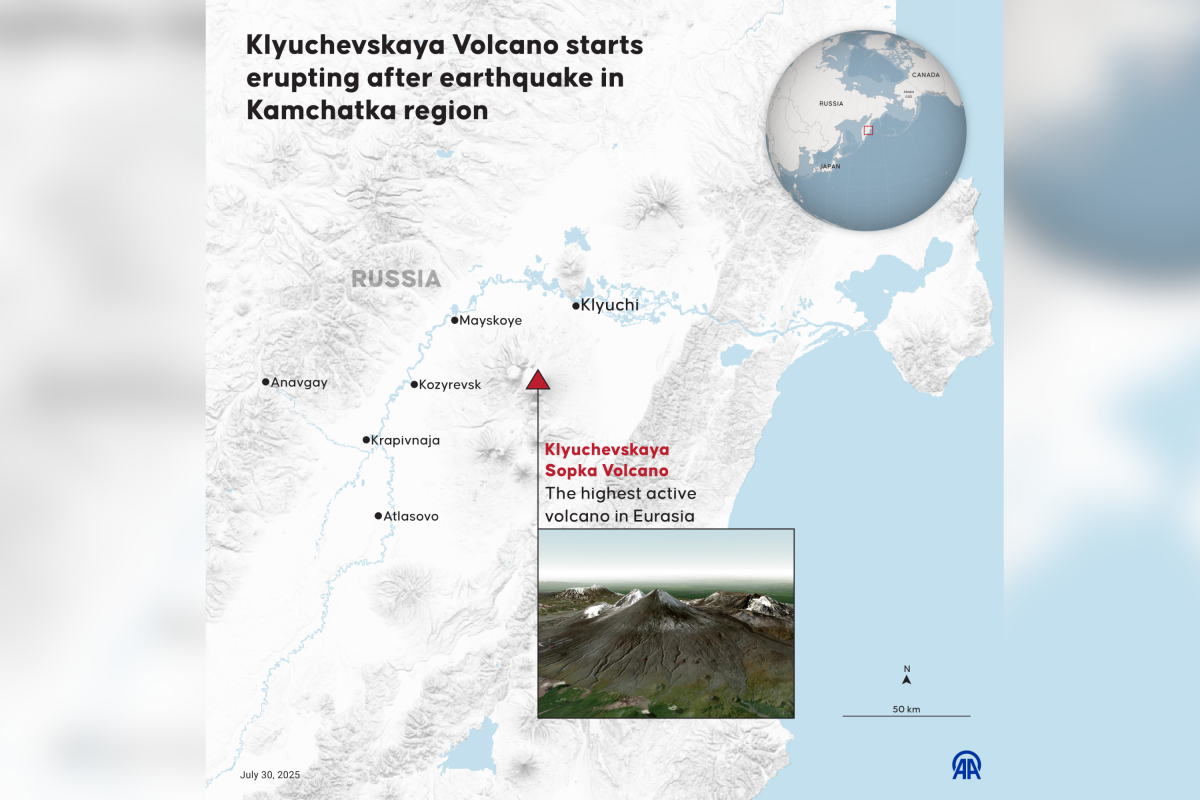
Yasin Demirci/Anadolu via Getty Images
The Tokyo Volcanic Ash Advisory Center (VAAC) has issued an advisory for the Klyuchevskoy eruption, reporting that ash is moving east at 10 knots and could spread hundreds of kilometers in the coming hours.
Updated 7/30/25, 10:24 a.m. ET: This story was updated with additional information.