NEW MEXICO
Indigenous fashion hits runways
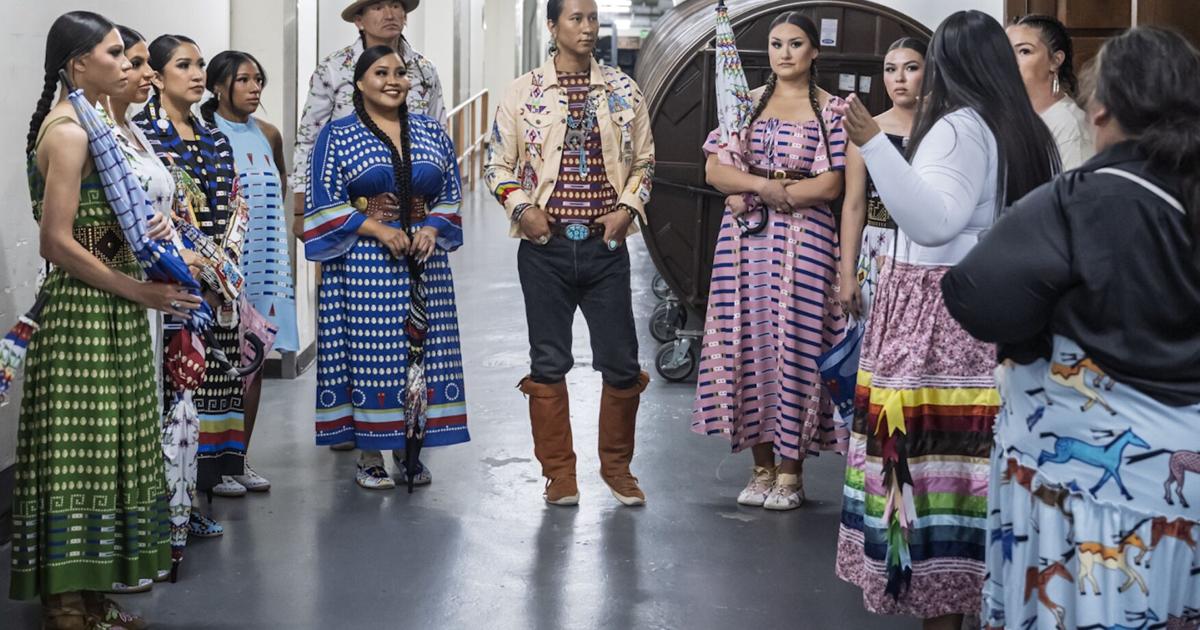
SANTA FE — Fashion designers from across North America brought together inspiration from their Indigenous heritage, culture and everyday lives to three days of runway modeling that started May 9 in a leading creative hub and marketplace for Indigenous art.
A fashion show affiliated with the century-old Santa Fe Indian Market collaborated this year with a counterpart from Vancouver, Canada, in a spirit of Indigenous solidarity and artistic freedom. A second, independent runway show at a rail yard district in the city nearly doubled the bustle of models, makeup and final fittings.
Collections from six Native designers ran the gamut from silk parasols to a quilted hoodie, knee-high fur boots and suede leather earrings that dangled to the waste. Models on the Santa Fe catwalks included professionals, dancers and Indigenous celebrities from TV and the political sphere.
Clothing and accessories relied on materials ranging from of wool trade cloth to animal hides, featuring traditional beadwork, ribbons and jewelry with some contemporary twists that include digitally rendered designs and urban Native American streetwear from Phoenix.
The stand-alone spring fashion week is a recent outgrowth of haute couture at the summer Santa Fe Indian Market, where teeming crowds flock to outdoor displays by individual sculptors, potters, jewelers and painters.
Fashion plays a prominent part in Santa Fe’s renowned arts ecosystem, with Native American vendors each day selling jewelry in the central plaza, while the Institute for American Indian Arts delivers fashion-related college degrees in May.
Santa Fe runway models were set to include former U.S. Interior Secretary Deb Haaland of Laguna Pueblo, adorned with clothing from Michaels and jewelry by Zuni Pueblo silversmith Veronica Poblano.
NEBRASKA
Soda, energy drinks banned from SNAP
Nebraska is the first state to receive a federal waiver to ban the purchase of soda and energy drinks under the benefit program for low-income Americans long known as food stamps.
The move, announced May 19 by U.S. Agriculture Secretary Brooke Rollins, stands to affect about 152,000 people in Nebraska enrolled in the Supplemental Nutrition Assistance Program, or SNAP, which helps families pay for groceries.
Said Nebraska Gov. Jim Pillen in a statement: ”SNAP is about helping families in need get healthy food into their diets, but there’s nothing nutritious about the junk we’re removing with today’s waiver.”
Six other states — Arkansas, Colorado, Kansas, Indiana, Iowa and West Virginia — have also submitted requests for waivers banning certain foods and drinks or, in some cases, expanding access to hot foods for participants, according to the USDA.
The push to ban sugary drinks, candy and more from the SNAP program has been key focus of Rollins and Health Secretary Robert F. Kennedy Jr.

Anti-hunger advocates criticized the ban, saying it adds costs, boosts administrative burdens and increases stigma for people already facing food insecurity.
SNAP is a roughly $100 billion program that serves about 42 million Americans and is run by the U.S. Agriculture Department and administered through states.
Over the past 20 years, lawmakers in several states have proposed stopping SNAP from paying for everything from bottled water and soda to chips, ice cream and “luxury meats” like steak.
MONTANA
Judge blocks transgender care ban
A state district court judge in Missoula on May 13 ruled that a 2023 state law banning many gender transition-related medical services for transgender minors is unconstitutional, prohibiting its enforcement.
The 59-page ruling from district court Judge Jason Marks found that Senate Bill 99, backed by Republicans largely along party lines during the legislative session two years ago, violates the Montana Constitution’s rights to privacy, equal protection and free speech.
The law had been temporarily enjoined before it was scheduled to take effect. The Montana Supreme Court upheld that block in 2024.
The court found that plaintiffs, including transgender teen Phoebe Cross and other minor patients, their parents and medical providers, successfully presented evidence that the law undermines their constitutional rights by curbing access to medical treatments for gender dysphoria, such as puberty blockers and hormones.

The ruling said state attorneys, meanwhile, failed to meet the legal burden of proof that SB 99 properly responded to a legitimate medical risk or was narrowly tailored to achieve the government’s interests.
The decision referenced a long history of Montana court rulings supporting bodily autonomy and privacy in medical decision-making, many of which arose from litigation about abortion restrictions. Those rulings created and have reinforced a high bar for the state to interfere with medical care.
Representatives from the ACLU of Montana and Lambda Legal, civil rights groups that represented the plaintiffs in the case, celebrated the ruling in statements.
Press secretaries for Attorney General Austin Knudsen, whose office represented the state in the lawsuit, did not respond to a request for comment about the ruling. The state could appeal the decision to the Montana Supreme Court.
UTAH
Police say man kidnapped family
SALT LAKE CITY — A Utah man accused of holding his girlfriend and her family in their home for six months on a lie that “cartel” members were after them has been arrested.
Dominic Garcia, 23, faces 28 counts, including seven each of kidnapping and assault, after his arrest on May 17.
He allegedly told police he lied to the family about needing to protect them from a nonexistent “cartel,” according to the police affidavit.
“Dominic said that he continued this lie for several months because he did not know how to stop it in fear that they would not like him,” the affidavit reads.
Garcia moved in with the family of seven in the Salt Lake City suburb of Millcreek in December. Soon after, he allegedly told them his own family had business ties to a cartel and the family needed to protect themselves.

Garcia allegedly began carrying a handgun and repeatedly told family members the cartel would kill them if they did not do as he told.
Other family members allegedly told police Garcia, at times, kept them from leaving the house for more than short periods.
Police went to the house after getting a call from someone inside, according to the affidavit.
“The complainant reported they weren’t able to take it any longer, and they were holding Dominic at gunpoint until police arrived,” the affidavit states.